Historic Seiyun Palace (Palace of the Sultan al-Kathiri)
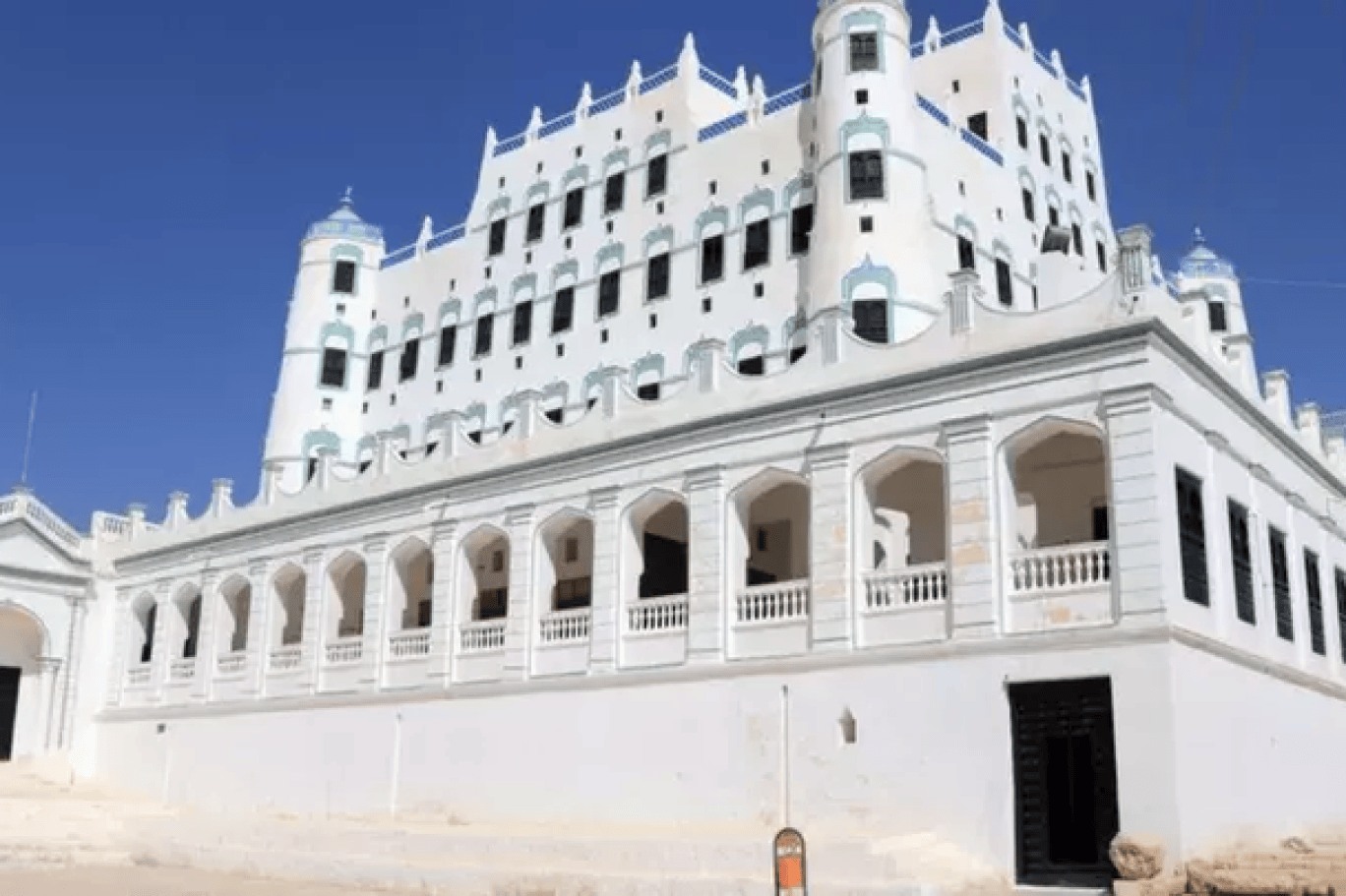
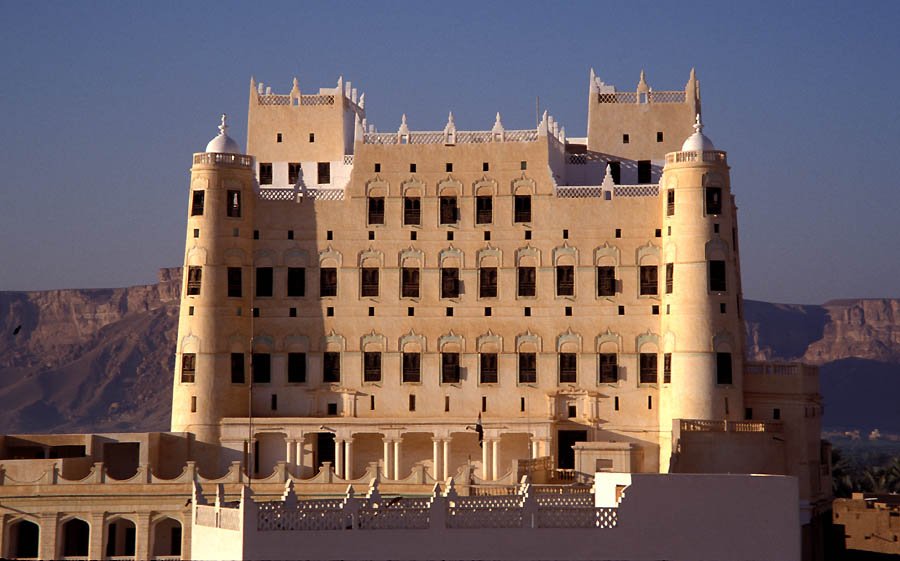
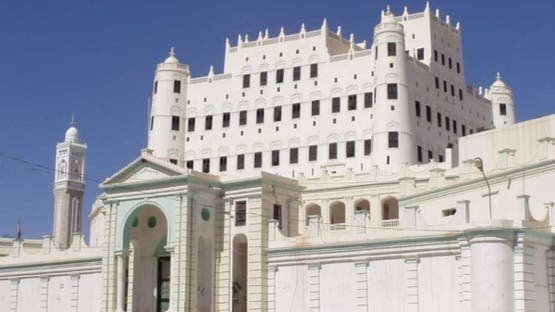
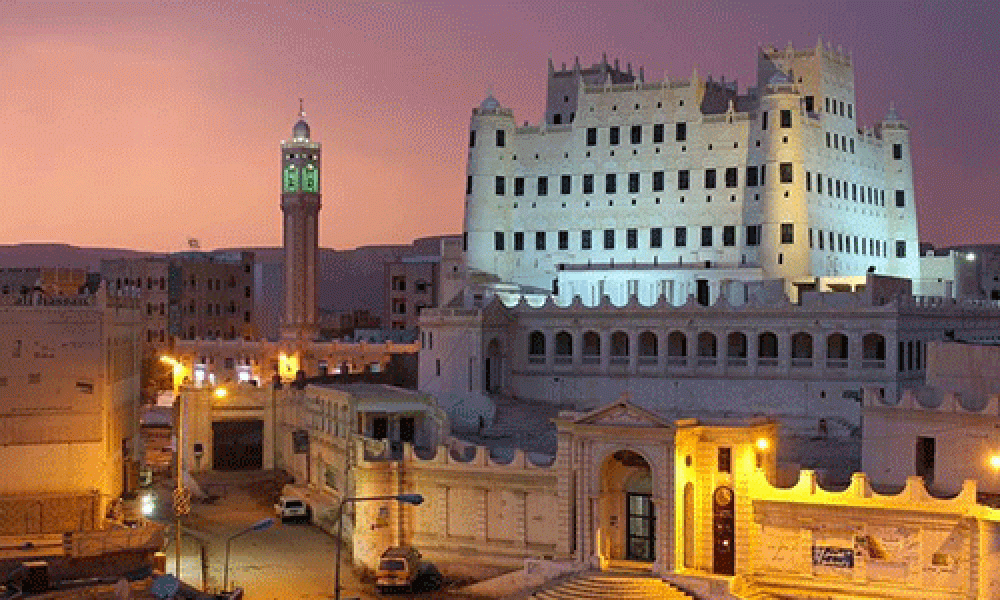
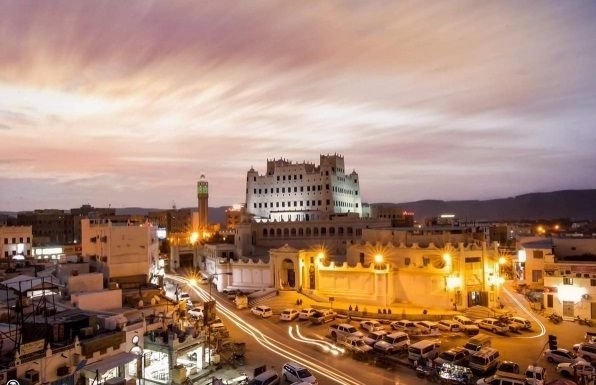
The historic Seiyun Palace, known as the Palace of the Sultan al-Kathiri, is one of the most prominent archaeological and architectural landmarks in Hadramout Governorate and a notable symbol of Seiyun’s historical identity. Standing at the center of the city, with its seven floors and distinctive white façades, the palace embodies the ingenuity of Hadrami mud-brick architecture. For centuries, it was linked to the history of the Kathiri State, serving as a seat of government and a residence for the sultans before becoming a museum landmark preserving an important part of the cultural and historical heritage of Wadi Hadramout.
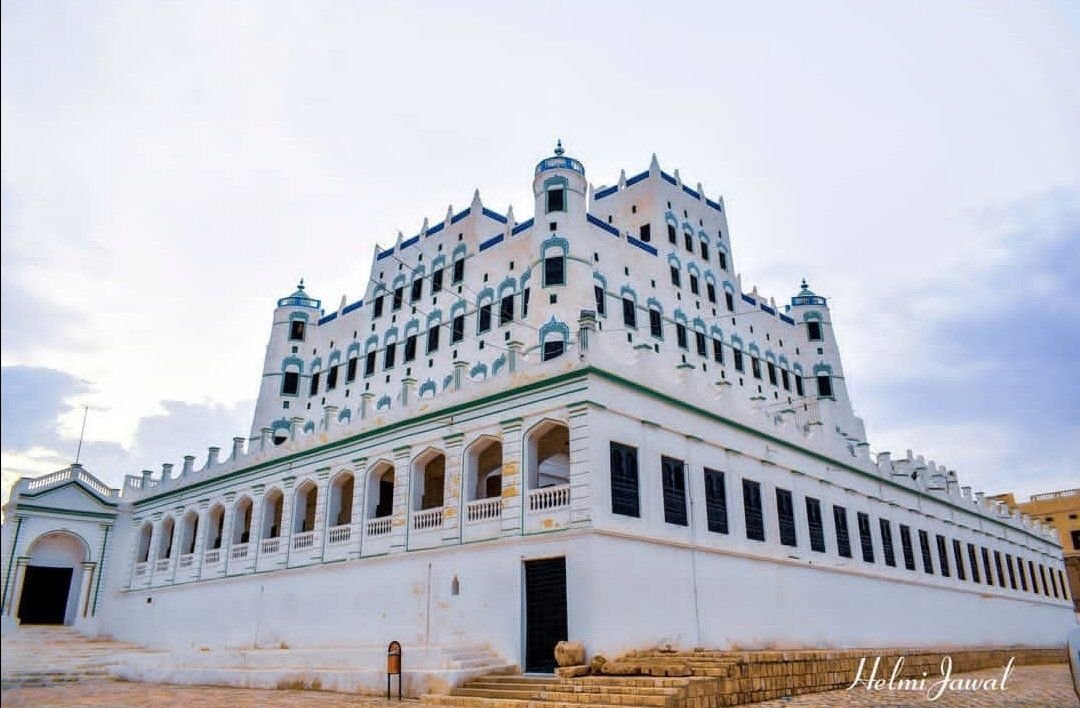
Seiyun Palace: An architectural masterpiece encapsulating centuries of Hadramout’s history
At the heart of Seiyun, in Wadi Hadramout, stands the Palace of the Sultan al-Kathiri, one of the most prominent historical testaments to the ancient Hadrami civilization and the development of mud-brick architecture in the southern Arabian Peninsula. This landmark combines the political significance it acquired during periods of sultanic rule with the architectural value that made it a visual symbol of Seiyun and one of Hadramout’s best-known landmarks.
Geographical location and architectural features
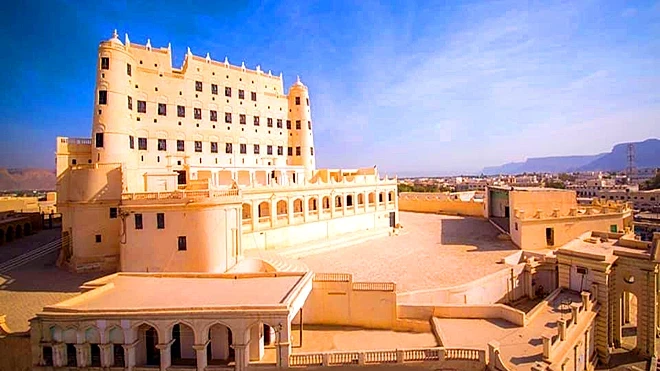
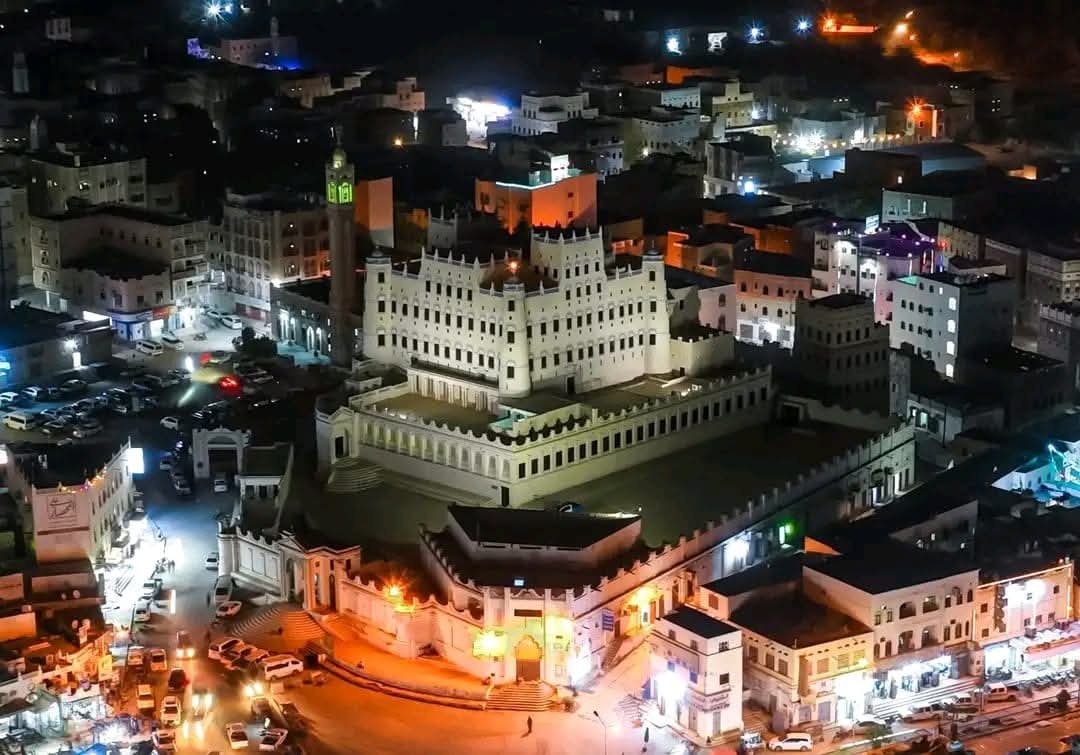
The palace is located in the center of Seiyun in Hadramout Governorate, on a natural rocky elevation approximately 34 meters high. It covers an estimated area of about 6,600 square meters, according to information submitted to UNESCO.
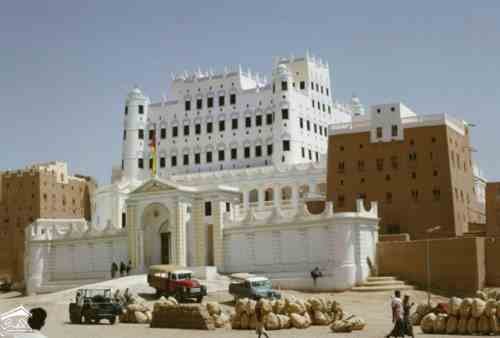
The palace consists of seven floors built using local construction materials, foremost among them mud brick, following traditional engineering methods that reflect the accumulated expertise of Hadrami builders in adapting to the environment and climate.
The building is distinguished by its towering white façades and harmonious architectural composition, as well as the towers positioned at its corners and the regularly arranged windows and openings that give it an appearance combining grandeur, simplicity, and beauty.
Its elevated location also reflects the defensive and administrative functions associated with it, as it provided a view over wide areas of the city and its surroundings.
Origins and historical development
The palace’s roots date back to historical periods before the 16th century AD, when the site was a fortress known as “Hisn al-Duwail,” before undergoing successive expansions and architectural transformations associated with the rise of the Kathiri State in Wadi Hadramout.
The palace gained increasing political importance during the reign of Sultan Badr bin Abdullah al-Kathiri, known as Abu Tuwairiq, whose name was associated with strengthening Seiyun’s position as a center of government and carrying out construction and renovation work on the fortress.
In the following centuries, the building underwent several phases of restoration and expansion under the rulers of the Kathiri State, culminating in development work carried out during the first half of the 20th century, which helped shape its architectural appearance as it is known today.
The palace remained associated with Kathiri sultanic rule until the sultanate ended in 1967, after which it entered a new phase of its history as an archaeological and heritage landmark.
From seat of government to history museum
In 1984, the palace underwent a significant change in function with the opening of the Seiyun Museum inside it, turning the site into a space for preserving and displaying archaeological and historical objects associated with Hadramout.
The museum included collections of archaeological artifacts and heritage objects documenting aspects of the region’s history and its inhabitants’ lives. It also helped introduce the cultural heritage of Wadi Hadramout across its different historical periods.
With this transformation, the palace went from being a center of political power to a cultural landmark that preserves historical memory and offers insight into aspects of local civilization.
Historical and cultural significance
The significance of Seiyun Palace stems from its role as an architectural testament to the history of the Kathiri State and as a prominent example of the mud-brick building techniques for which the cities of Wadi Hadramout are renowned.
Its value is not limited to its architectural character; it also extends to its place in Yemen’s national memory, as its image appears on the 1,000 Yemeni rial banknote, reflecting its symbolic and historical standing.
The palace is also one of the most prominent elements of Seiyun’s visual identity and embodies the close relationship between traditional architecture and the region’s political and social history.
Protection and preservation of the landmark
In recent years, the palace has faced challenges related to erosion, rainfall, and the effects of the circumstances the country has experienced, underscoring the need for ongoing maintenance, restoration, and protection work.
On 20 June 2025, the Republic of Yemen added Seiyun Palace to its Tentative List submitted to the United Nations Educational, Scientific and Cultural Organization (UNESCO), in a step aimed at strengthening recognition of its heritage value and paving the way for the future consideration of its nomination to the World Heritage List.
Preserving the palace is a cultural and historical responsibility that extends beyond Seiyun, as it is an integral part of Hadrami memory and Yemen’s architectural heritage.
Seiyun Palace: The memory of a city and the identity of a civilization
Seiyun Palace remains more than just a historic building; it is an open architectural record recounting periods in Hadramout’s history and reflecting the ability of the Hadrami people to build distinctive structures using local resources.
Between its mud-brick walls and white towers, centuries of political and cultural change take shape, leaving the palace as a witness to the past, a symbol of Hadrami identity, and a legacy worthy of protection and documentation for future generations.
Photo gallery