Mukalla in the Past: The Story of a City That Forged Its Glory Between the Sea and Trade
Mukalla, the capital of Hadramout, holds a rich historical memory extending from its old neighborhoods and commercial port to its markets and houses overlooking the sea. Over the centuries, it evolved from a coastal settlement into a prominent political and economic center, undergoing periods of prosperity and urban expansion that left their mark on the city’s identity and its residents’ lives.
- Date
- 1703
- Place
- Mukalla, Al Mukalla City
- Ago
- 323 years ago
Historical background
Mukalla’s origins were tied to its natural location on the Arabian Sea coast, where its coastal topography provided ships and fishing boats with shelter from winds and waves. This made it a stop for fishermen and sailors before it developed into a commercial and urban center.
Historical sources indicate that the site was formerly known as “Al-Khaisah” and was also associated with the name “Bandar Yaqub.” Documents nominating Yemen’s historic city for the World Heritage Tentative List state that it was used as a small port as far back as the 11th century AD, while more pronounced urban development took place under the Al-Kassad family’s rule from the early 18th century.
When Mukalla came under Qaiti rule in 1881, it entered a new period of expansion that strengthened its position as a center of trade and administration on the Hadramout coast.
Details
From Al-Khaisah to a Coastal City
In its early stages, Mukalla was a natural site where boats sought shelter, with simple fishermen’s dwellings scattered around it. As people settled there and maritime activity grew, an urban center began to take shape along the coast.
Some historical sources state that the site was active during the Rasulid era, although the precise scale of settlement and the date when the city took on its urban form still require distinguishing between different accounts.
The Al-Kassad Era: The Beginning of Commercial Transformation
From the early 18th century, Mukalla underwent significant development with the establishment of the Al-Kassad emirate, which focused on maritime navigation, trade and organizing activity at the port.
The city’s location helped strengthen its trade relations with areas of Wadi Hadramout, India and East Africa, gradually turning it into a center for exchanging goods and marine products.
Mukalla Under Qaiti Rule
After Mukalla came under the rule of the Qaiti Sultanate in 1881, the city expanded in urban and administrative terms, later becoming the sultanate’s capital and seat of government.
Government buildings, markets and palaces were built or developed during this period. Among the most prominent was the Sultan’s Palace, which later became a museum.
The city also acquired a distinctive architectural character that brought together local building styles and influences from India and East Africa, reflecting trade relations and reciprocal migration.
The Port and Markets: The Heart of Economic Life
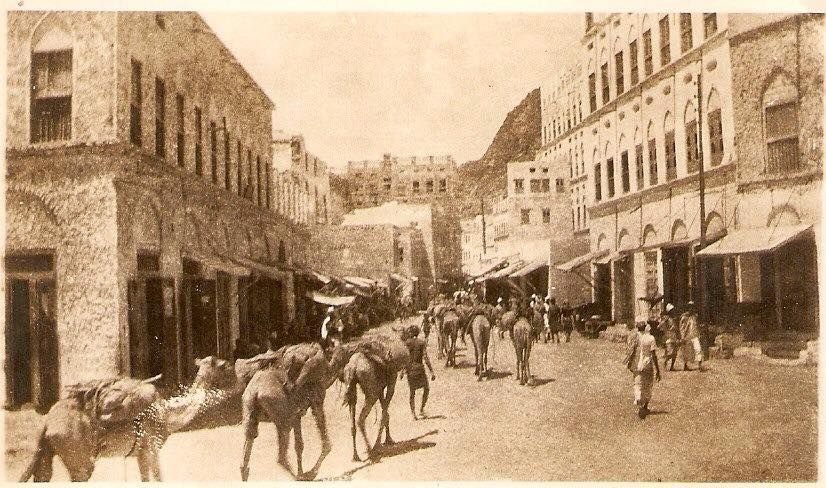
Mukalla’s port was an important economic lifeline. Ships and goods from other ports arrived through it, while local and marine products were exported from the city.
Fishing, boatbuilding and trade flourished around the port, alongside markets that supplied residents with their daily needs.
An academic study published by Aden University in 2026 indicates that the port underwent structural, commercial and administrative changes during the 19th and 20th centuries, reflecting its growing role in maritime trade.
Old Architecture: A White City by the Sea
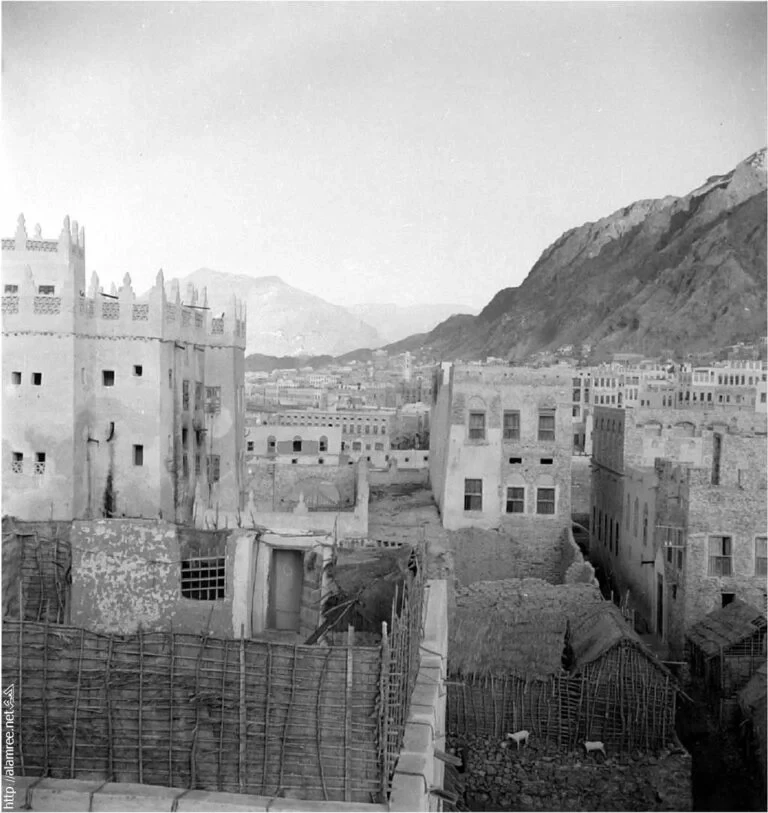
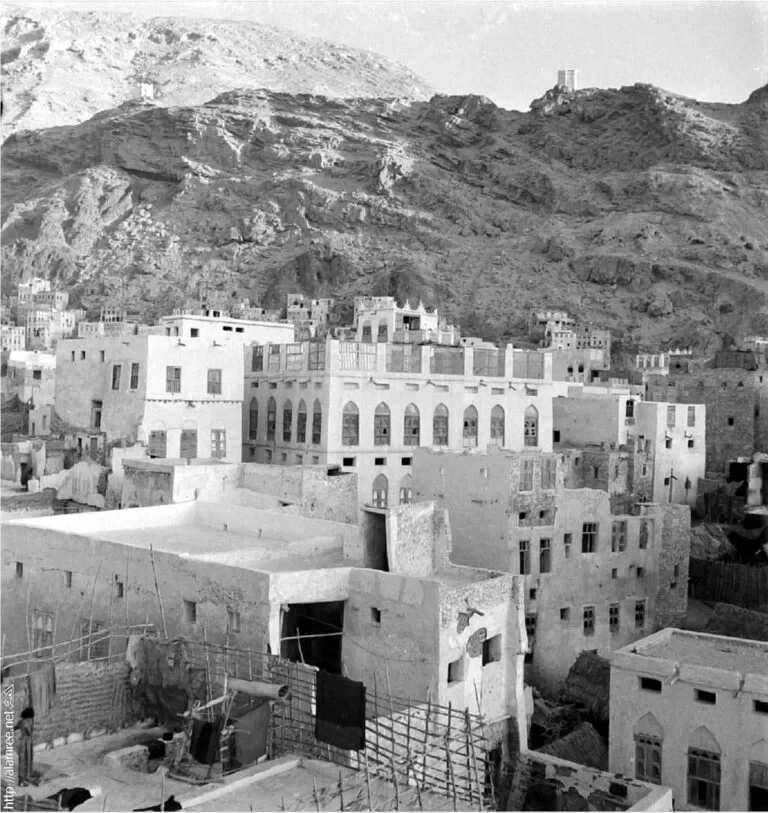
Old Mukalla was distinguished by its closely spaced, tall buildings, many of them constructed from coral stone and coated with plaster and white limewash.
Some historic houses reached five or six stories, with windows and decorative features reflecting a blend of Hadrami, Indian and maritime influences.
This style helped shape the urban landscape for which Mukalla became known, where white buildings stand alongside the sea and the surrounding highlands.
From the Old City to Modern Mukalla
During the 20th century, Mukalla gradually expanded beyond its historic neighborhoods as its population grew and roads, services and institutions developed.
After sultanic rule ended in 1967, the city entered a new administrative and political era, and its urban expansion continued in the following decades.
Through these changes, old Mukalla remained a witness to successive historical periods, despite some of its buildings and facilities undergoing alterations and deterioration, and parts of its architectural heritage being lost.
Historical impact
Mukalla’s location and port helped transform it from a small coastal settlement into a major political and commercial center in Hadramout.
The different periods of rule also left an architectural and cultural legacy visible in the palaces, mosques, markets and old buildings. The city became an example of the interaction between Hadrami culture and influences from India and East Africa.
Mukalla’s old neighborhoods hold social memories associated with the lives of fishermen, traders and sailors, making the preservation of their buildings, documents and historical photographs an essential part of safeguarding Hadramout’s identity.
Photos and documents