
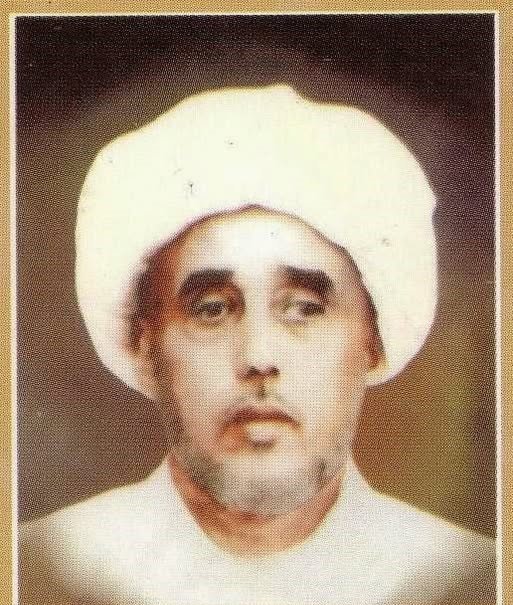
Imam Abdullah bin Alawi al-Haddad
Scholar Born: 1634, Tarim – Hadramout Died: 1720 Tarim
Imam Abdullah bin Alawi al-Haddad was a Hadrami scholar, jurist, educator and poet. He was born in the city of Tarim in Wadi Hadramout in 1634 AD and is considered one of the most prominent scholars of the Hadrami scholarly tradition during the eleventh century AH. He was known for authoring religious and educational books addressing ethics, conduct, worship and the etiquette of daily life, as well as for his work in teaching and guidance and his composition of religious poetry. The influence of his writings and teachings extended to many areas beyond Hadramout, particularly East Africa and Southeast Asia, where his books and litanies received wide attention in scholarly and religious circles. He died in the city of Tarim in 1720 AD, leaving a scholarly and literary legacy that has remained present in Hadrami cultural and religious life.
Biography
Birth and Early Life
Imam Abdullah bin Alawi bin Muhammad al-Haddad was born in the area of al-Subair, one of the suburbs of the city of Tarim in Wadi Hadramout, in the month of Safar in 1044 AH, corresponding to July 1634 AD.
He grew up in a scholarly family of the Ba Alawi, and received his care and early upbringing from his parents in an environment known for religious education, authorship and teaching.
As a child, he contracted smallpox, which caused him to lose his sight when he was about four years old. This did not prevent him from continuing his education and memorizing the Holy Quran.
Education and Scholarly Formation
Al-Haddad began by memorizing the Holy Quran and scholarly texts, then studied Shafi‘i jurisprudence, Hadith, Quranic exegesis, theology and the Arabic language under a number of Hadrami scholars.
Sources report that he acquired knowledge from a large number of shaykhs and benefited from the scholarly gatherings held in Tarim, until he became one of the well-known scholars of his time.
Teaching and Guidance
He devoted a large part of his life to teaching and guidance, holding scholarly gatherings in Tarim and the suburb of al-Hawi, which covered religious sciences, ethics, education and conduct.
Students of knowledge from Hadramout and other areas gathered around him, and a number of his students helped transmit his works and teachings to communities outside Yemen.
Authorship and Scholarly Research
Imam al-Haddad turned to writing on theology, jurisprudence, spiritual education and ethics, and was keen to present scholarly and religious subjects in a clear and direct style.
Among his best-known books are “Religious Counsel and Faithful Advice,” “The Complete Call and General Reminder,” “Treatise on Assistance, Support and Aid,” and “Scholarly Chapters and Wise Principles.”
These works became part of the scholarly heritage circulated by religious institutions and gatherings associated with the Hadrami tradition.
Poetry and Literature
Alongside his scholarly work, al-Haddad was a poet. He left a collection of poetry entitled “The String of Pearls for People of Intellect and Understanding,” which included poems on admonition, wisdom and spiritual education.
His poetry reflects his interest in the Arabic language and literary expression, alongside the religious themes that predominated in his writings.
Social Presence
His activities were not limited to authorship and teaching; he also took part in addressing a number of social issues. Historical studies report his role in reconciling some tribes and local groups.
He corresponded and maintained contacts with scholars and figures from outside Hadramout, which helped broaden the reach of his scholarly influence.
Spread of His Works Beyond Hadramout
His works and litanies were carried by students of knowledge and Hadrami migration networks to various areas, particularly East Africa and Southeast Asia.
Some of his books continued to be taught, printed and translated into other languages, and remained in circulation centuries after his death.
Death and Scholarly Legacy
Imam Abdullah bin Alawi al-Haddad died in the suburb of al-Hawi in the city of Tarim on 7 Dhu al-Qi'dah 1132 AH, corresponding to September 1720 AD, and was buried in Zanbal Cemetery.
He left books, treatises, a collection of poetry and religious litanies, as well as a scholarly and educational influence that extended across generations and became an important part of the history of the scholarly movement in Hadramout.
Works
1. Contribution to the Scholarly Movement in the City of Tarim He helped invigorate teaching and guidance gatherings and contributed to establishing Tarim’s position as a center for religious sciences during the eleventh century AH. 2. Authorship of “Religious Counsel and Faithful Advice” He wrote a book addressing worship, ethics, etiquette and religious education, which became one of his best-known and most widely circulated works. 3. Authorship of “Treatise on Assistance” He wrote an educational treatise addressing the organization of a Muslim’s life and their relationship with worship, work, ethics and conduct. 4. Authorship of “The Complete Call and General Reminder” He presented a work on admonition and guidance that addressed the responsibilities of different groups in society and methods of counsel and direction. 5. Writing on Theology He wrote “The Creed of the People of Islam,” also known as “The Creed of Monotheism,” among his works addressing the fundamentals of belief. 6. Contribution to Religious Poetry He left the collection “The String of Pearls for People of Intellect and Understanding,” which brought together poems on wisdom, admonition and spiritual themes. 7. Compilation of Litanies and Supplications A number of litanies associated with him became well known, most notably “al-Wird al-Latif” and “al-Ratib,” and they continued to be recited in religious gatherings. 8. Training Students in Religious Sciences A number of students of knowledge graduated under his guidance and continued teaching and offering guidance in Hadramout and beyond. 9. Participation in Social Reconciliation He contributed to social efforts to resolve disputes and promote education and guidance, according to historical studies of his life. 10. International Spread of His Works His books reached areas across the Islamic world, and some of his works were translated into other languages, helping his scholarly heritage remain influential.