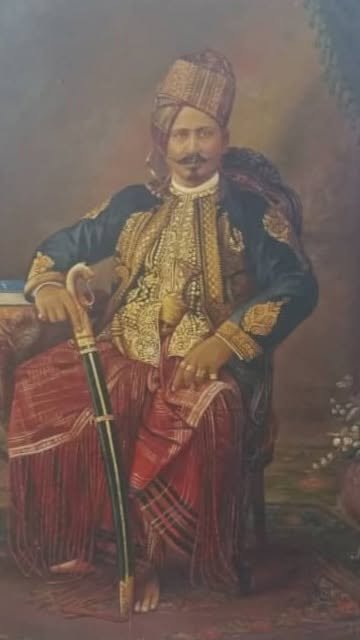
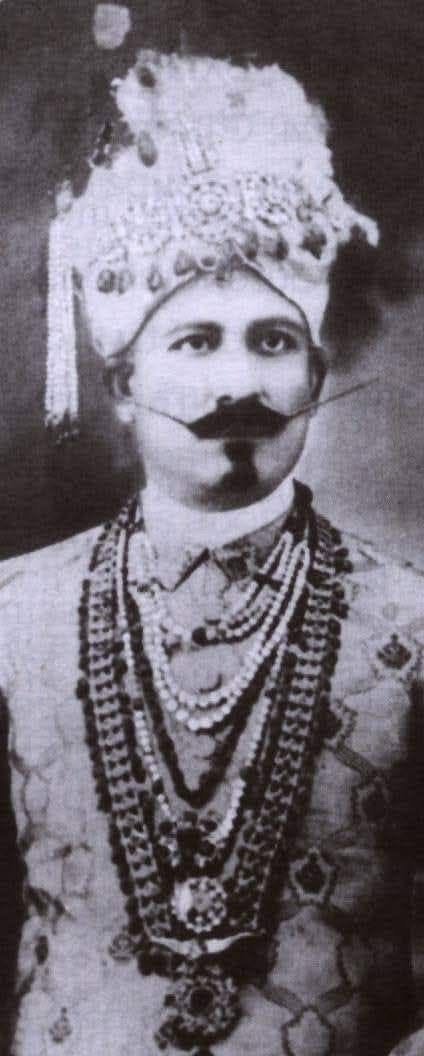
Sultan Omar bin Awad Al-Qu'aiti
Sultan Born: 1870 Died: 1936
Sultan Omar bin Awad Al-Qu'aiti, one of the rulers of the Qaiti State in Hadramout, was born in 1869 and ruled the sultanate from 1922 to 1936. His reign was associated with political, economic and urban developments. Hadramout saw projects and reform initiatives during his rule, alongside security challenges and tribal conflicts that affected the sultanate’s stability.
Biography
Birth and Early Life
Sultan Omar bin Awad bin Omar Al-Qu'aiti was born in 1287 AH, corresponding to approximately 1869–1870 AD. He belonged to the Qaiti family, which had Yafa'i roots and founded a sultanate whose influence extended across wide areas of the Hadramout coast and its valley.
He grew up in an environment connected with military and administrative work in Hyderabad, India, where the Qaiti family held a prominent position under the Nizam of Hyderabad. This environment contributed to his political and administrative experience.
Education and Political Formation
He received his education in India and gained experience in military and administrative affairs. He also became fluent in English and Urdu.
He served the Nizam of Hyderabad and held responsibilities related to commanding Hadrami forces assigned to guard the Nizam’s facilities and palaces.
His Accession to the Qaiti Sultanate
Sultan Omar assumed rule of the Qaiti State following the death of his brother, Sultan Ghalib bin Awad Al-Qu'aiti. His reign is generally dated from 1922 to 1936.
The sultanate included major centers on the Hadramout coast, including Mukalla and Al-Shihr, as well as areas in the valley.
Sultan Omar continued to reside in Hyderabad for long periods, while his deputies and sultanate officials managed local affairs in Hadramout.
Political and Administrative Conditions
His reign saw political and security challenges, including tribal disputes and disagreements among some local forces, as well as growing British interference in the sultanate’s affairs.
Historians’ assessments of his style of governance differ. Some studies point to his efforts in reform and tribal settlements, while other historical sources criticize the weakness of local administration and the growing influence of military officers and deputies.
Urban and Economic Activity
Sultan Omar’s name was associated with urban projects in Hadramout, including buildings, palaces and mosques, some features of which were influenced by Indian Islamic architecture.
Historical studies have also addressed his activity in economic and administrative fields, and the efforts made during his reign to develop some of the sultanate’s facilities.
Journeys and Foreign Relations
Sultan Omar visited a number of countries, including Egypt and European countries, and performed the Hajj pilgrimage.
His relations with Hyderabad and his foreign contacts helped shape some aspects of his political and administrative policies.
Death and Historical Legacy
Sultan Omar bin Awad Al-Qu'aiti died in Hyderabad, India, in 1354 AH, corresponding to 1936 AD. He was succeeded by Sultan Saleh bin Ghalib Al-Qu'aiti.
His reign is considered an important period in the history of the Qaiti Sultanate, given the political and urban developments it witnessed, alongside disputes over the administration of the state and its relations with local and British forces.
Works
1. Ruling the Qaiti State He led the sultanate from 1922 to 1936, a period that saw political and economic changes in Hadramout. 2. Carrying Out Urban Projects His reign was associated with the construction and development of a number of buildings and structures, including palaces and mosques influenced by Indian Islamic architecture. 3. Attention to Religious Buildings Historical studies mention a number of religious buildings associated with his reign, most notably Omar Mosque. 4. Participating in the Settlement of Disputes Historical studies have discussed his efforts to address some tribal disagreements and conflicts during his visits to Hadramout. 5. Developing Some Economic Activities During his reign, the sultanate saw attempts to organize economic and administrative activity, although their results varied between coastal and valley areas. 6. Inspection Visits to Hadramout He visited areas in the coast and the valley to learn about local conditions and follow up on the affairs of governance. 7. Strengthening Foreign Relations He maintained political and administrative ties with Hyderabad and traveled to Egypt and Europe. 8. Leaving an Urban and Historical Legacy Some structures associated with his reign remain subjects of historical and architectural studies addressing the history of the Qaiti State.
Photos