
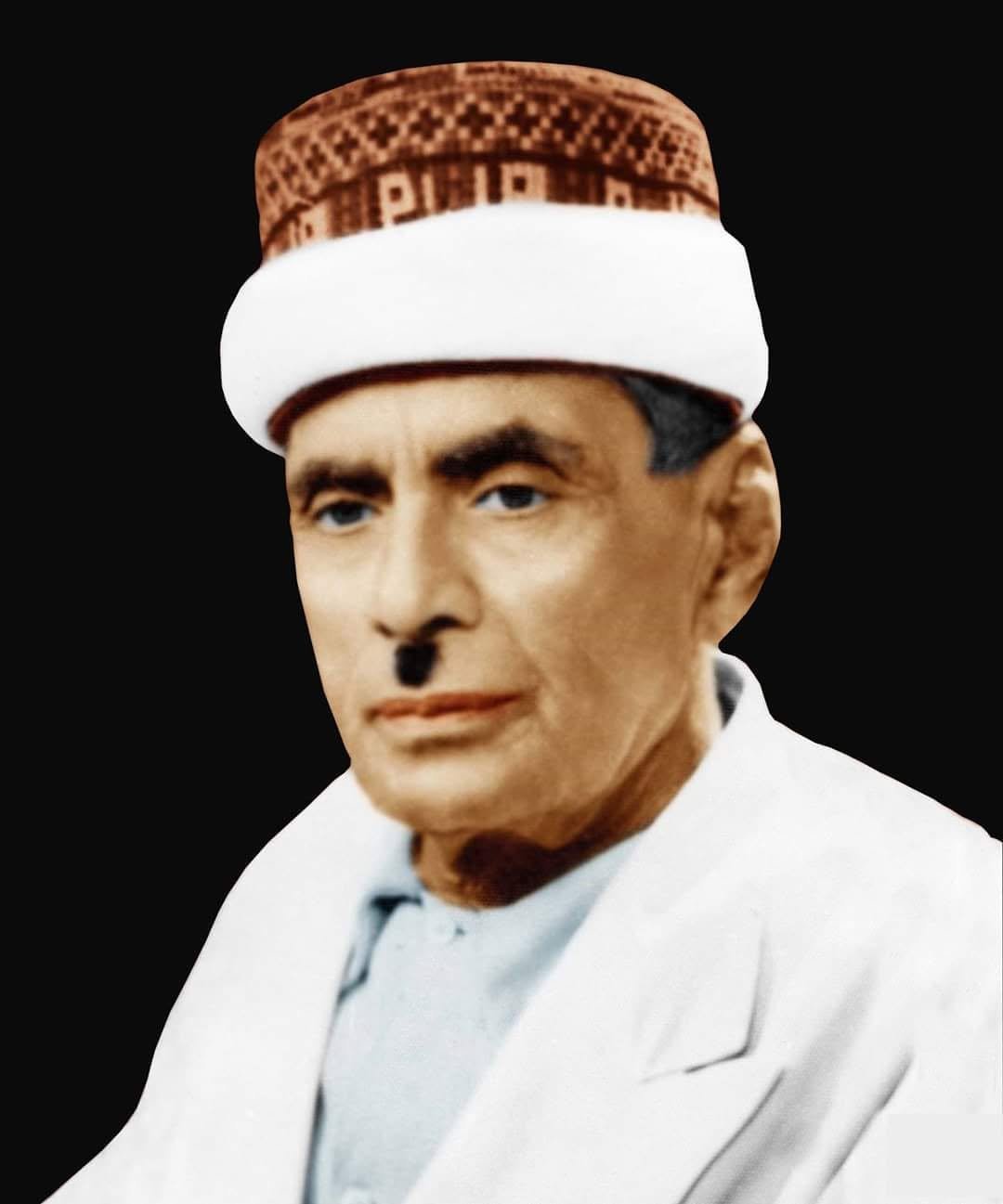
Sayyid Abu Bakr bin Sheikh bin Abdulrahman Al-Kaf
Businessman Born: 1888, Singapore Died: 1965
Sayyid Abu Bakr bin Sheikh bin Abdulrahman Al-Kaf, a businessman and Hadrami social notable, was born in Singapore in 1887. He was known for his role in supporting road and public-service projects and contributing to efforts to reconcile tribes during the first half of the 20th century. He combined commercial activity with charitable work, and his name was associated with initiatives that helped improve transportation and strengthen social stability in Hadramout, until his death in 1965.
Biography
Birth and early life
Sayyid Abu Bakr bin Sheikh bin Abdulrahman Al-Kaf was born in Singapore in the late 19th century to a Hadrami family whose roots trace back to the city of Tarim. Sources give 1888 as his birth year, while others cite 1887 and 1890.
He moved with his family to Hadramout during his childhood and grew up in the city of Tarim, where he received his early education in religious sciences and Arabic, while also gaining experience in commercial and social affairs.
Commercial activity
Al-Kaf inherited part of the commercial and real-estate wealth accumulated by his family in Southeast Asia, and worked to invest its resources in economic and service projects in Hadramout.
He became one of the most prominent Hadrami businessmen in the first half of the 20th century, distinguished by his extensive ties with merchants, notables and local authorities.
Construction of the Al-Kaf Road
The Al-Kaf Road project is considered one of the most prominent undertakings associated with his name. He financed the construction of a road linking areas of Wadi Hadramout with the coast, passing through mountainous and rugged areas.
The road helped facilitate the movement of cars, goods and travelers, and reduced reliance on traditional means of transport.
The project also helped strengthen commercial and social ties between the cities of the valley and the coast.
Role in peace efforts
Al-Kaf played a prominent role in mediation efforts between rival tribes and took part in initiatives that led to ceasefire agreements during the 1930s.
During that period, he worked with British adviser Harold Ingrams, the rulers of the Qu'aiti and Kathiri Sultanates, and a number of local notables.
He also helped fund some of the arrangements for reconciliation and compensation as part of the efforts historically known as the “Ingrams Peace.”
Educational and health projects
He contributed to supporting schools and health facilities in Tarim and Seiyun, in addition to the assistance provided by the Al-Kaf family to educational and religious institutions.
He also allocated financial resources to help poor families and support social and charitable activities.
Famine relief
During the waves of famine that struck Hadramout in the 1930s, he helped establish kitchens to feed those affected and provide food aid.
Political relations
He maintained ties with the rulers of the Qu'aiti and Kathiri Sultanates and British officials, and his social and economic standing was used to facilitate some negotiations.
He received British honors in recognition of his role in public services and peace efforts, including appointment as a Commander of the Order of the British Empire in 1938, followed by a knighthood in the Order of the British Empire, an honor associated with Queen Elizabeth II’s visit to Aden in 1954.
Death
Sayyid Abu Bakr bin Sheikh Al-Kaf died in 1965 in the city of Seiyun in Wadi Hadramout.
His name remained associated with the history of roads, charitable projects and social mediation, and he became one of the most prominent figures discussed in historical studies of 20th-century Hadramout.
Works
1. Construction of the Al-Kaf Road He financed an important project linking Wadi Hadramout with the coast, helping facilitate transportation and trade. 2. Contribution to tribal peace agreements He took part in efforts to ease tensions between tribes and was one of the prominent local figures supporting peace agreements during the 1930s. 3. Support for education He contributed to funding and operating educational institutions as part of initiatives carried out by the Al-Kaf family in Tarim and other areas. 4. Support for health services He helped provide funding for some medical facilities and treatment services, particularly in Tarim and Seiyun. 5. Assistance to families in need He provided regular financial assistance to poor families and supported the sick and those in need. 6. Addressing the effects of famine He helped establish kitchens to provide food to those affected during the famine that struck Hadramout in the 1930s. 7. Contribution to the development of services in the city of Seiyun His name was associated with initiatives to improve some of the city's facilities, markets and service buildings. 8. Mediation in political and social disputes He used his relationships with tribes and local authorities to mediate disputes and curb escalation. 9. Receiving international honors He received British honors in recognition of his public contributions, while retaining his standing as an independent Hadrami social figure.