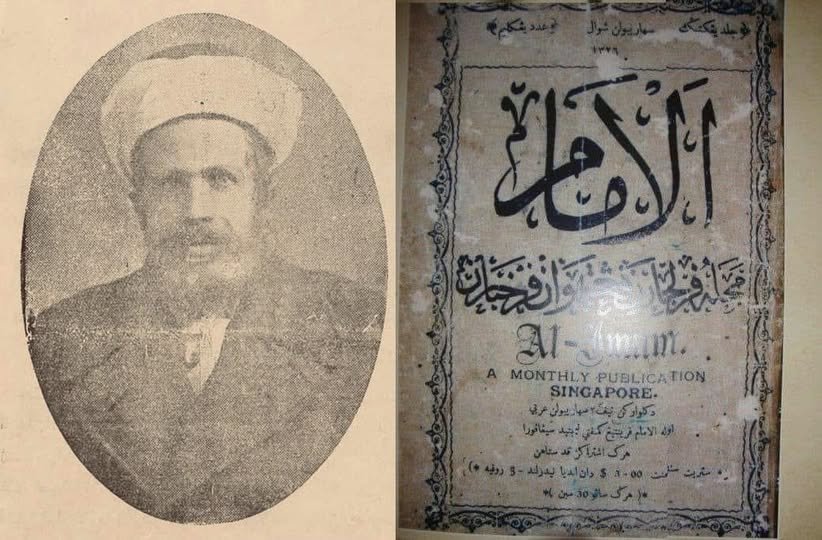
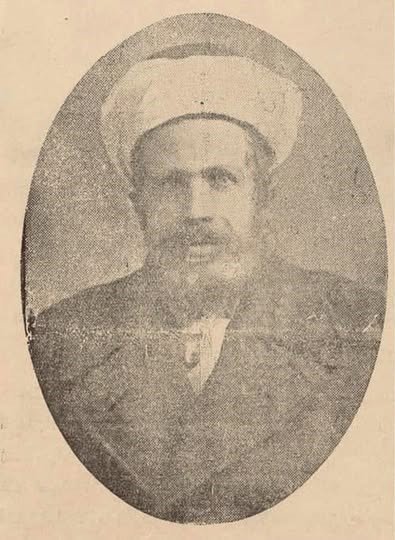
Sayyid Muhammad bin Aqil bin Yahya
Historian Born: 1863, Masilah Al Sheikh, near Tarim – Hadramout Died: 1931
Sayyid Muhammad bin Aqil bin Yahya was a scholar and historian of Hadrami descent, known for his interest in Islamic history, genealogy, and scholarly research. His name was associated with the cultural life of Hadramis in Southeast Asia, and he left works addressing historical, intellectual, and religious issues. The most notable was “Al-Nasa’ih al-Kafiyah liman Yatawalla Mu‘awiyah” (Sufficient Counsel for Those Who Support Muawiyah), which sparked wide scholarly debate in his time.
Biography
Birth and upbringing
Sayyid Muhammad bin Aqil bin Abdullah bin Umar bin Yahya al-Alawi was born in the town of Masilah Al Sheikh, near the city of Tarim in Hadramout, in late Sha’ban 1279 AH, corresponding to 1863 AD.
He grew up in a scholarly family from the Ba‘Alawi clan and received his early education from his father and a number of Hadrami scholars. He studied the Holy Quran, Arabic, grammar, and jurisprudence, and from a young age took an interest in reading, history, and biographical literature.
Education and scholarly formation
He drew on his family’s library, which contained a collection of books and manuscripts, and broadened his reading in history, religious sciences, and literature.
Among the most prominent scholars who influenced him was Sayyid Abu Bakr bin Abd al-Rahman bin Shihab al-Din, alongside a number of Hadrami scholars from whom he received instruction.
Migration to Singapore
He left Hadramout in his youth, at around seventeen years of age, and headed to Singapore and the islands of Southeast Asia.
He worked in trade and established an economic and social presence among Hadrami communities, while continuing his scholarly and educational activities alongside his commercial work.
Singapore became an important center for his intellectual and social activities for many years.
Educational and reform activity
He took an interest in developing Arabic and religious education among Muslims in Southeast Asia and participated in establishing educational, cultural, and press institutions.
He also served as president of an Islamic advisory council in Singapore, whose activities included discussing some social and legal affairs of Muslims.
He participated in reform-oriented journalism, including contributing to the management of Al-Imam magazine, which was published in Singapore at the beginning of the twentieth century.
Journeys and cultural connections
He visited a large number of countries, including India, China, Japan, Egypt, Iraq, the Levant, and several European countries.
His travels allowed him to observe different cultural and political settings and connect with scholars, thinkers, and writers, which was reflected in his research interests and writings.
Return to Yemen
He returned from Southeast Asia to the Hijaz, then moved to Hadramout during the 1920s.
He lived for a time in Mukalla, where he took part in discussions of public issues and social and political conditions, and called for reforms to some aspects of administration and education.
He later moved to Aden, then to Al Hudaydah, where he continued his scholarly and writing activities.
Works and intellectual positions
He authored books on Islamic history, Hadith, biographical literature, and sectarian issues. Among the most prominent were “Al-Nasa’ih al-Kafiyah liman Yatawalla Mu‘awiyah” (Sufficient Counsel for Those Who Support Muawiyah) and “Al-‘Atab al-Jamil ‘ala Ahl al-Jarh wa al-Ta‘dil” (A Gentle Reproach of the Scholars of Hadith Criticism and Validation).
Some of his works sparked scholarly and sectarian disagreements because of his critical positions on figures and events in Islamic history. As a result, his output has remained a subject of debate among researchers and people of different religious orientations.
Death
Sayyid Muhammad bin Aqil bin Yahya died in the city of Al Hudaydah on 13 Rabi‘ al-Awwal 1350 AH, corresponding to 1931 AD.
He left printed and manuscript works, as well as a legacy in the cultural, educational, and journalistic activities of Hadramis in Southeast Asia and Yemen.
Works
1. Contribution to Islamic education in Southeast Asia He participated in establishing Arabic and Islamic educational institutions in Singapore and contributed to the spread of religious education and the Arabic language. 2. Participation in reform-oriented journalism He was among the figures associated with Al-Imam magazine in Singapore and helped reorganize its management in 1908 AD. 3. Presidency of an Islamic advisory council He served as president of a council concerned with some Muslim affairs in Singapore, according to biographical sources. 4. Writing on Islamic history and thought He published works addressing Islamic history, historical accounts, issues of Hadith, and sectarian differences. 5. Authorship of “Al-Nasa’ih al-Kafiyah” This is considered one of his best-known works. In it, he assessed the figure of Muawiyah bin Abi Sufyan from a critical perspective that sparked sectarian controversy. 6. Authorship of “Al-‘Atab al-Jamil” In this work, he discussed the methodology of some scholars of Hadith criticism and validation and offered critical observations on historical judgments and accounts. 7. Scholarly and commercial travels He traveled across Asian, Arab, and European countries, combining commercial activity with an interest in scholarship and culture. 8. Participation in reform discussions in Hadramout During his stay in Mukalla, he called for addressing some administrative and social issues and took part in cultural and intellectual gatherings.
Photos