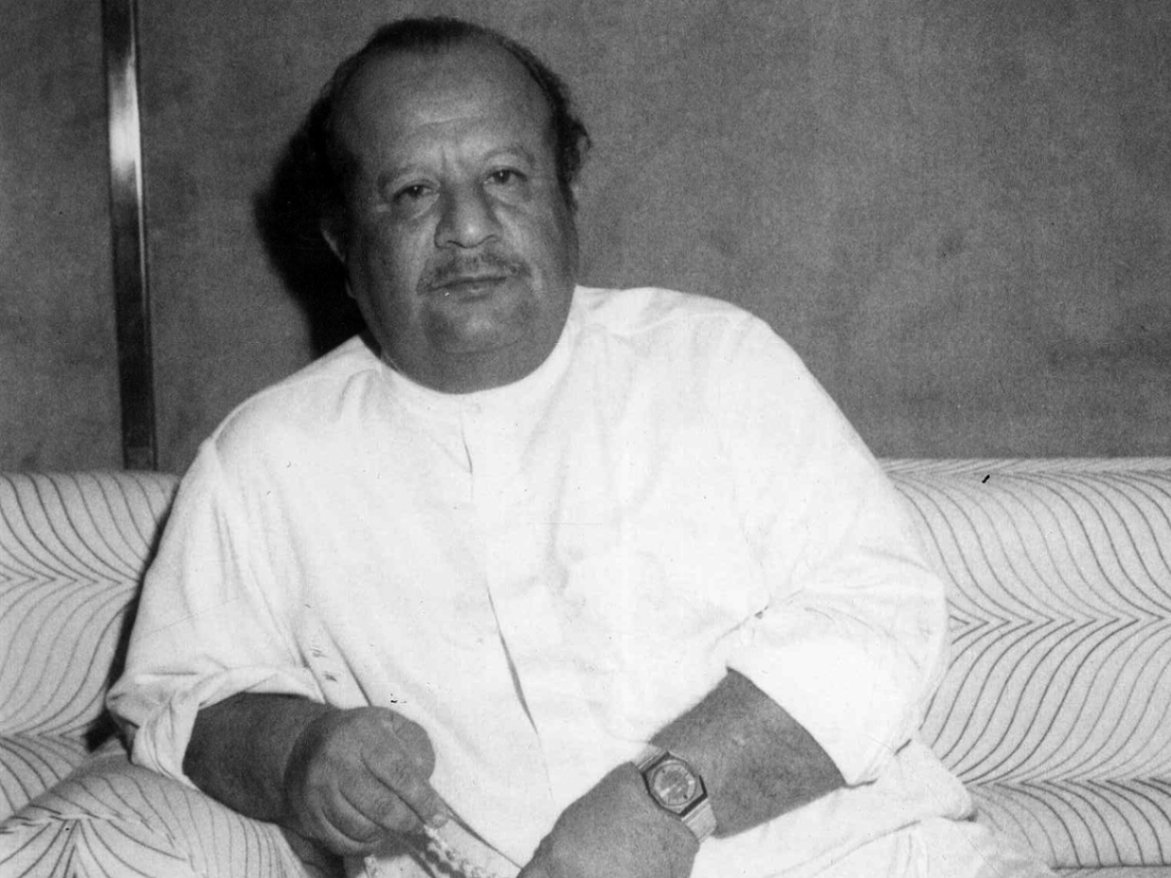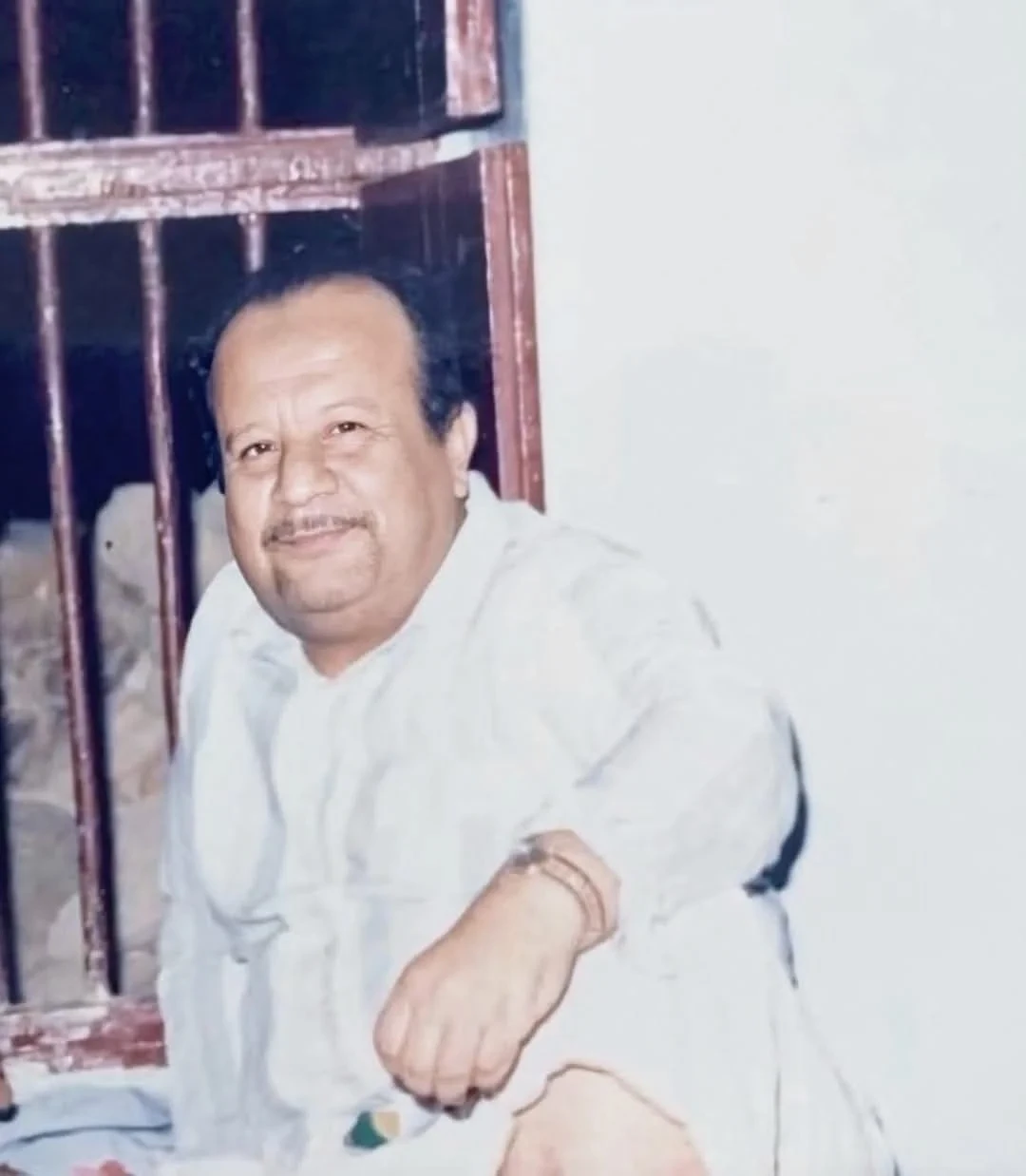
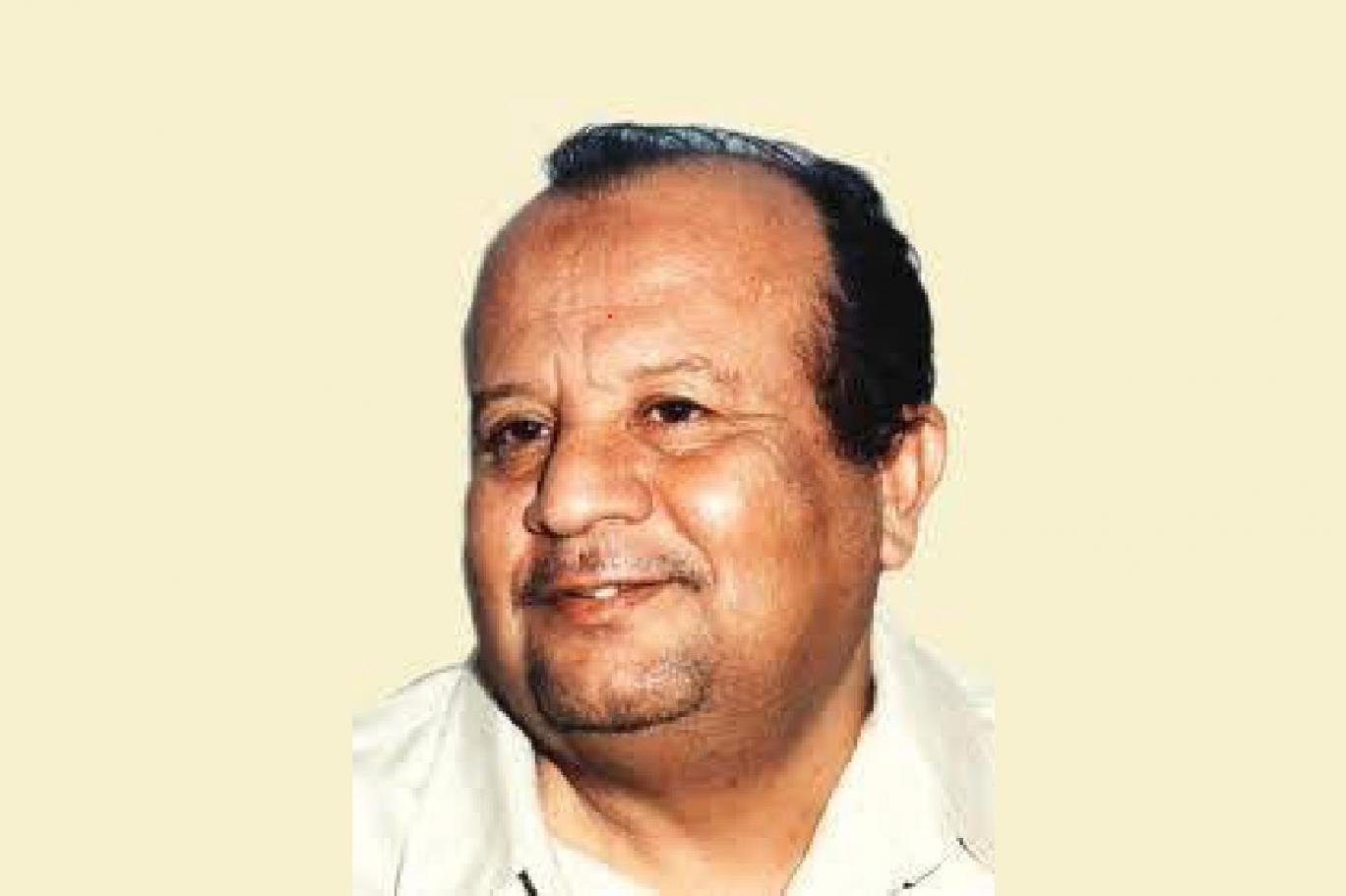
Hussein Abu Bakr Al-Mihdhar
Poet Born: 1930, Al-Shihr, Hadramout Died: 5 February 2000 Ash Shihr
Hussein Abu Bakr Al-Mihdhar, a Hadrami poet, composer and man of letters, was born in the city of Al-Shihr in Hadramout Governorate in 1930. He is considered one of the most prominent pioneers of Hadrami lyrical poetry in the 20th century and one of the figures who helped take Hadrami song beyond its local sphere to a wider Arab audience. His poetic style combined simple vocabulary with depth of meaning. He was able to draw on Hadrami heritage, particularly the dan tradition, to craft poems and melodies that became widely popular. Together with artist Abu Bakr Salem Balfaqih, he formed an artistic duo that helped introduce Hadrami song to Arab audiences. He died in the city of Al-Shihr on February 5, 2000, leaving a poetic and musical legacy that remains part of Hadramout’s cultural memory.
Biography
Birth and upbringing
Poet Hussein Abu Bakr Al-Mihdhar was born in 1930 in the coastal city of Al-Shihr in Hadramout Governorate. He grew up in a family with an interest in knowledge, literature and poetry, which had a clear influence on the development of his literary character.
His paternal grandfather, Hussein bin Hamed Al-Mihdhar, was known for popular poetry, while his maternal grandfather, Saleh bin Ahmed Khamour, was also a well-known poet. This gave him the opportunity to become familiar with poetry and its gatherings from childhood.
Education and cultural formation
Al-Mihdhar received his primary education at the Makarim Al-Akhlaq School in Al-Shihr before moving to the Al-Shihr Scientific Ribat, where he studied the Holy Quran and its sciences, jurisprudence, Islamic monotheism, and the Arabic language and its literature.
The scholarly and literary environment in which he grew up helped develop his poetic talent, as did his involvement in gatherings of Hadrami dan, which were among the city’s most prominent cultural and artistic traditions.
Early poetry
Al-Mihdhar’s poetic talent emerged at an early age. He began writing poetry in childhood and later took part in poetry and dan gatherings when he was around 14 years old.
By the time he was 16, his poems and melodies had begun circulating among artists and at musical gatherings, marking the start of an artistic career that lasted more than half a century.
His career in poetry and composition
Al-Mihdhar rose to prominence as a lyrical poet and composer. He was distinguished by his ability to combine poetic texts and melodies, composing the tunes for most of his poems himself, despite not relying on playing a traditional musical instrument.
He drew many of his poetic images from everyday life and the Hadrami environment. His poems addressed love, longing, exile, loyalty and separation, as well as social and human reflections.
His language, which was accessible to ordinary people, and his distinctive musical structure helped his works reach wide audiences in Yemen and abroad.
Collaboration with Abu Bakr Salem Balfaqih
His collaboration with artist Abu Bakr Salem Balfaqih was one of the most notable milestones in his artistic career. The two shared a creative partnership that lasted for many years.
Abu Bakr Salem performed a large number of Al-Mihdhar’s poems and melodies, and his performances helped them gain wide popularity across the Arab world, particularly in the Gulf countries and the Arabian Peninsula.
This partnership became one of the most prominent examples of collaboration between a poet, composer and singer in the history of modern Hadrami song.
Literary and cultural work
Al-Mihdhar’s work was not limited to romantic songs; it also encompassed social, national and emotional poetry, addressing people’s concerns and their relationship with society and the homeland.
His name was also associated with Yemen’s literary movement. He was one of the founding members of the Yemeni Writers and Authors Union, and his cultural presence helped introduce Hadrami popular poetry as one of the components of Yemeni literature.
Participation in public life
Alongside his poetic and artistic activities, Al-Mihdhar took part in public service. He was elected a member of the Supreme People’s Council in the early 1980s and later became a member of the council’s Presidium.
In 1990, he was elected to the first House of Representatives following Yemeni unity, combining his cultural activities with participation in legislative institutions.
Honors and recognition
Al-Mihdhar’s work attracted the attention of cultural and artistic institutions. In 1998, he received the Order of Merit, First Class, in Arts and Literature, in recognition of his contributions to poetry and composition.
Interest in his legacy continued after his death through studies, seminars and cultural events examining his work. These included the Yemeni House of Poetry dedicating a cultural session to him in 2008.
Death and cultural legacy
Poet Hussein Abu Bakr Al-Mihdhar died on Saturday, February 5, 2000, in the city of Al-Shihr in Hadramout Governorate, the city where he was born and began his poetic career.
He left behind four published poetry collections, as well as a vast body of poems and melodies that artists and listeners have shared across successive generations.
His works remain an important part of Hadramout’s artistic memory and a testament to a period that helped spread Hadrami song in Yemen, the Gulf and the Arab world.
Works
1. Developing Hadrami song He helped develop the Hadrami lyrical poem by combining vocabulary drawn from the local environment with poetic structure and melodies rooted in heritage, helping it spread beyond Hadramout. 2. Artistic partnership with Abu Bakr Salem Balfaqih Together with artist Abu Bakr Salem Balfaqih, he formed an artistic duo that produced widely popular songs and helped bring Hadrami song into the Arab music scene. 3. Writing poetry and composing songs He wrote and composed a large number of lyrical poems addressing love, longing, exile and social life. His works became part of Yemen’s and the Gulf’s musical heritage. 4. Publishing four poetry collections He published four collections documenting aspects of his poetic work: “Tears of Lovers” in 1966, “Smiles of Lovers” in 1978, “Sorrows of Lovers” in 1999, and “Longing of Lovers” in 1999. 5. Contributing to the preservation of Hadrami dan He drew on Hadrami dan in composing his poems and melodies, helping it endure and spread among generations while introducing renewed poetic and musical styles. 6. Participating in the founding of the Yemeni Writers and Authors Union He was one of the union’s founding members, and his activities were associated with Yemen’s literary and cultural movement. 7. Membership in the Supreme People’s Council He was elected to the Supreme People’s Council in the early 1980s and later became a member of its Presidium. 8. Membership in the Yemeni House of Representatives He was elected to the first House of Representatives after Yemeni unity in 1990, as part of his participation in public life. 9. Receiving the Order of Merit He received the Order of Merit, First Class, in Arts and Literature in 1998, in recognition of his literary and artistic contributions. 10. A presence in cultural memory His work continued to be celebrated after his death through cultural events, seminars and literary studies examining his impact on Hadrami lyrical poetry and the development of Yemeni song.
Photos