
Abdulrahman bin Mohammed bin Hussein bin Omar Al-Mashhur
Jurist Born: 1834, Tarim District Died: 1902 Tarim
Abdulrahman bin Mohammed Al-Mashhur was a Hadrami scholar, jurist and genealogist. He was born in the city of Tarim in 1834. He served as a mufti in Hadramout and contributed to the development of religious education through his teaching and academic administration of the Tarim Ribat when it opened in 1305 AH. He was renowned for authoring “Bughyat al-Mustarshidin,” a well-known reference in Shafi‘i jurisprudence, as well as works on genealogy and history. He died in the city of Tarim in 1902, leaving a scholarly legacy whose influence extended beyond Hadramout.
Biography
Birth and Early Life
Abdulrahman bin Mohammed bin Hussein Al-Mashhur was born in the city of Tarim in Wadi Hadramout on 29 Sha‘ban 1250 AH, corresponding to 1834.
He belonged to the Al-Mashhur family of the Al-Ba Alawi sayyids, one of the Hadrami families known for its interest in religious sciences and genealogy.
His mother was Shaikha bint Abdulrahman bin Ali Al-Haddad. He grew up in a scholarly environment that helped foster his interest in the Holy Quran, jurisprudence and the Arabic language from childhood.
Biographical books report that he memorized the Holy Quran at the age of twelve and began copying books in his youth. This activity gave him early access to scholarly works and familiarized him with the methods scholars used in writing and compiling.
Education and Scholarly Formation
Abdulrahman Al-Mashhur received his education in the city of Tarim, which had a number of study circles, mosques and scholarly gatherings.
He studied Shafi‘i jurisprudence, hadith, Quranic exegesis, grammar and Arabic sciences, as well as genealogy, arithmetic and astronomy.
He showed particular interest in studying jurisprudential issues and comparing the views of scholars, a focus later reflected in his works, which compiled fatwas and religious rulings.
Biographical accounts indicate that he attained a scholarly standing that qualified him to teach at the age of twenty-one. He began delivering lessons and receiving students of knowledge at several gatherings in Tarim.
Early Teaching
Abdulrahman Al-Mashhur began his educational activities in mosque study circles, including the zawiya of Sheikh Ali bin Abi Bakr Al-Sakran Mosque in the city of Tarim.
His lessons covered jurisprudence, hadith, the Prophet’s biography and Arabic sciences, attracting students from the city and other areas of Hadramout.
As his scholarly reputation grew, he became one of the scholars whom students consulted in their study of jurisprudential issues. He also began receiving questions and requests for fatwas on matters relating to worship, transactions and personal status.
This period helped build his practical experience in issuing fatwas, which became clearly evident in his later works.
Appointment as Mufti in Hadramout
Abdulrahman Al-Mashhur became known as the Mufti of the Hadrami lands and was one of the leading jurisprudential authorities of his time.
His fatwas addressed matters of worship, financial transactions, marriage, divorce, inheritance, endowments and other issues brought before scholars.
In addressing these issues, he relied on the Shafi‘i jurisprudential tradition, while taking care to transmit the views of later scholars, organize them and make them easier to consult.
This standing earned him broad recognition among students of knowledge and jurists, and his name became associated with jurisprudential works that circulated in Hadramout and beyond.
Authoring “Bughyat al-Mustarshidin”
“Bughyat al-Mustarshidin fi Talkhis Fatawa Ba‘d al-A’immah min al-‘Ulama’ al-Muta’akhkhirin” is regarded as Abdulrahman Al-Mashhur’s most famous work.
In it, he compiled fatwas and opinions from a number of Shafi‘i jurists and arranged them under jurisprudential topics to make them easier to use.
The book was not merely a record of his personal fatwas; it was a scholarly work that brought together selections and jurisprudential citations from the works of other scholars, along with additions and insights related to the issues addressed.
The book has received attention from researchers and publishers, and multiple editions have been published, including an edited edition by Dar al-Minhaj in 2015.
Its continued publication and study more than a century after its author’s death attest to its standing in the Shafi‘i jurisprudential heritage.
Contributions to Genealogy
Alongside jurisprudence, Abdulrahman Al-Mashhur was interested in genealogy and documenting the history of the Alawi families in Hadramout.
One of his most prominent works in this field is “Shams al-Zahirah fi Ansab al-Sadah al-‘Alawiyyah,” in which he compiled information on lineages, family succession and branches.
He also produced other works and abridgments related to family history and genealogy, including “Al-Shajarah al-‘Alawiyyah al-Kubra.”
These works are historically significant as sources for studying genealogy, family relationships and migrations, although the accounts they contain should be examined and compared with other sources.
Academic Administration of the Tarim Ribat
Abdulrahman Al-Mashhur was among the figures associated with establishing the educational activities of the Tarim Ribat.
The ribat opened on 14 Muharram 1305 AH, following efforts involving a number of the city’s scholars, notables and benefactors.
Abdulrahman Al-Mashhur assumed its academic administration upon its opening and oversaw the organization of lessons and the guidance of students and teachers.
He continued to administer the ribat until 1314 AH, when the scholar Abdullah bin Omar Al-Shatiri took over after returning from Mecca.
It is important to distinguish his role in the ribat’s academic administration from its establishment, as the institution was created through the collective efforts of a number of Tarim’s scholars and notables.
Interest in Astronomy and Timekeeping
Abdulrahman Al-Mashhur was interested in astronomy and arithmetic, sciences that scholars used to determine prayer times and understand seasonal changes.
Lists of his works state that he prepared a table related to determining times, the increase and decrease of night and day, stars and constellations.
This interest demonstrates the range of his knowledge and that his scholarly activity was not limited to jurisprudence and fatwas.
Influence on the Scholarly Movement
Abdulrahman Al-Mashhur helped strengthen Tarim’s standing as a center for religious education through his teaching, fatwas and works.
Among his most prominent students was Abdullah bin Omar Al-Shatiri, who continued to administer the Tarim Ribat after him and, in turn, contributed to the development of education in the city.
Al-Mashhur’s works also circulated beyond Hadramout, particularly among students and those interested in Shafi‘i jurisprudence.
“Bughyat al-Mustarshidin” has remained present in scholarly libraries and has become one of the most prominent works associated with its author.
Death and Scholarly Legacy
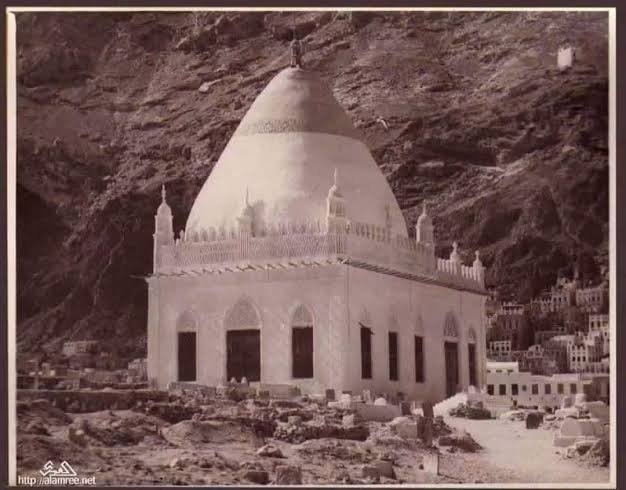
Abdulrahman bin Mohammed Al-Mashhur died in the city of Tarim on 15 Safar 1320 AH, corresponding to 1902, and was buried in the historic Zanbal Cemetery.
He left a collection of works on jurisprudence, genealogy and history, as well as a legacy in education, issuing fatwas and administering the Tarim Ribat.
His works have continued to draw the attention of publishers and researchers, particularly “Bughyat al-Mustarshidin,” which continued to be published and edited in the twenty-first century.
Works
1. Issuing fatwas in Hadramout: He was known as the Mufti of the Hadrami lands and was prominent in addressing religious issues according to the Shafi‘i school. 2. Authoring “Bughyat al-Mustarshidin”: He compiled fatwas by a number of later scholars and arranged them under jurisprudential topics. It became one of his most widely circulated works. 3. Academic administration of the Tarim Ribat: He administered the ribat from its opening in 1305 AH until 1314 AH. 4. Writing on genealogy: He produced works addressing the lineages and history of Alawi families in Hadramout. 5. Teaching religious sciences: He supervised scholarly study circles in Tarim and helped prepare a number of jurists and teachers. 6. Interest in astronomy and timekeeping: He prepared tables relating to the calculation of times and of night and day. 7. Preserving the jurisprudential heritage: He compiled issues and fatwas from multiple sources and helped make them easier for students and researchers to consult.