
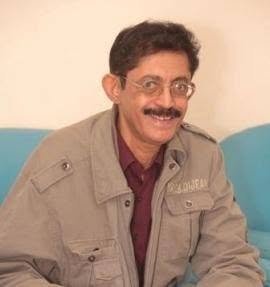
Abdulqader Mohammed Abdulqader Al-Kaf
Poet Born: 26 December 1952, Tarim District Died: 5 December 2011 Tarim
Abdulqader Mohammed Al-Kaf, a Hadrami poet and composer, was born in the city of Tarim in 1952. He is considered one of the most prominent creative figures who contributed to the development of Hadrami song during the second half of the twentieth century. He combined songwriting, composition and playing music, and a number of Yemeni and Gulf artists performed his works. He published the collection “Rabee Al-Hawa” and remained part of the artistic scene until his death in the city of Tarim in 2011.
Biography
Birth and Early Life
Poet Abdulqader Mohammed Al-Kaf was born on December 26, 1952, in the city of Tarim in Wadi Hadramout. He grew up in a family known for its interest in knowledge, literature and poetry.
His maternal grandfather was the poet and composer Haddad bin Hassan Al-Kaf, one of the most prominent figures in Hadrami dan. This brought him close from childhood to the poetic and musical environment for which Tarim was renowned.
Abdulqader Al-Kaf was influenced by this artistic heritage. He became interested in poetry and melodies at an early age, before his talent developed into an independent creative experience.
Education and Cultural Formation
He received his primary and preparatory education in the city of Tarim, then moved to the city of Seiyun to complete his secondary education.
After that, he enrolled at the College of Education in Aden, where he broadened his literary and cultural knowledge.
His education was not limited to formal studies; he was also interested in music, learned to play the oud and violin, and studied the basics of musical notation and maqams. This helped him combine writing poetic texts with composing melodies for them.
Beginning of His Career
Abdulqader Al-Kaf began his working life in education and worked as a teacher for approximately three years.
He then moved to work in government cultural institutions, holding positions in the offices of the Ministry of Culture. His professional activities were connected to the artistic and literary life of Hadramout and Aden.
His work in the cultural field enabled him to connect with poets, musicians and artists, and to take part in activities that helped invigorate the artistic movement.
His Breakthrough in Songwriting
His name emerged in the singing scene in the 1970s, when his poems and melodies began to attract the attention of artists and audiences.
His work was distinguished by its combination of words and expressions from the Hadrami environment with emotional poetic language, alongside his attention to rhythm and melody and to making the lyrics accessible to listeners.
He succeeded in developing his style without departing from the roots of Hadrami song, combining the influence of traditional dan with the musical innovation that marked Yemeni and Gulf song.
Composition and Musical Performance
Al-Kaf was not merely a poet who wrote song lyrics; he also composed and played music, setting melodies to most of his poems.
His knowledge of musical maqams helped him create melodies suited to the poetic structure of his words.
This combination of poetry and melody gave his works an artistic distinctiveness and made his experience a renewed continuation of the Hadrami singing tradition.
Collaborations with Artists
Abdulqader Al-Kaf collaborated with a number of Yemeni and Gulf artists, including the artist Karama Mersal, the artist Abdulrab Idris, the artist Abdulmajid Abdullah, as well as Kuwaiti artists Mohammed Al-Baloushi and Khaled Al-Mulla.
These collaborations helped his poems and melodies reach a wider audience beyond Hadramout, particularly in the Arab Gulf states.
Among the works associated with his name is the song “Al-Hob Al-Jadeed,” performed by the artist Abdulmajid Abdullah.
Poetic and Literary Output
In 2004, he published his song-poetry collection “Rabee Al-Hawa,” which included around one hundred songs from his poetic output.
The collection brought together an important part of his work and documented lyrics performed by artists in Yemen and the Gulf states.
He also had a project for another collection titled “Al-Hob Al-Jadeed.” Press sources during his lifetime described it as ready for printing, but I have no verified information confirming that it was published as a separate edition.
He also left a number of poems and melodies that were not all collected in published volumes.
His Place in Hadrami Song
Abdulqader Al-Kaf is considered one of the poets who helped sustain and renew Hadrami song during the final decades of the twentieth century.
Through his lyrics and melodies, he was able to produce works that combined a local character with Arab-wide reach, drawing on the artistic ties linking Hadramout with the Gulf singing scene.
He was a member of the Yemeni Writers and Authors Union and was recognized by cultural and media institutions, including Seiyun Radio, which dedicated a program to honoring him on the anniversary of his birth on December 26, 2005.
Final Years and Death
Abdulqader Al-Kaf continued his poetic and artistic activities despite suffering from illness in his final years.
He died on the evening of Monday, December 5, 2011, in his birthplace, the city of Tarim, at the age of 58, three weeks before his fifty-ninth birthday.
His funeral procession took place on Tuesday, December 6, 2011, and he was buried in the historic Zanbal Cemetery in the city of Tarim.
He left a legacy of poems and melodies that remain connected to the history of Hadrami song and its spread in Yemen and the Gulf.
Works
First: Publications and Collections Title Details Rabee Al-Hawa A song-poetry collection published in 2004, containing around 100 songs Al-Hob Al-Jadeed A collection project that published sources said was being prepared for printing; I have not verified that it was published Second: Major Works and Artistic Achievements 1. Writing and composing a wide range of Hadrami songs that spread within Yemen and abroad. 2. Contributing to the development of Hadrami song while preserving its poetic and rhythmic characteristics. 3. Collaborating with Yemeni and Gulf artists, which helped his works spread. 4. Writing and composing most of his poems, drawing on his proficiency in playing the oud and violin. 5. Publishing the collection “Rabee Al-Hawa” to document part of his poetic output. 6. Participating in the cultural and artistic movement through his work in cultural institutions and his membership in the Yemeni Writers and Authors Union. 7. Receiving a special radio tribute from Seiyun Radio in 2005 in recognition of his creative career.