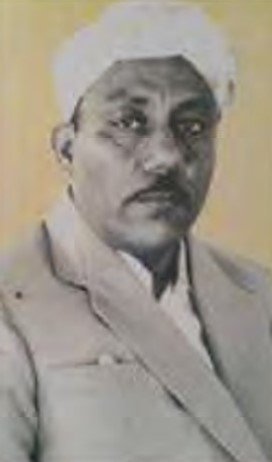
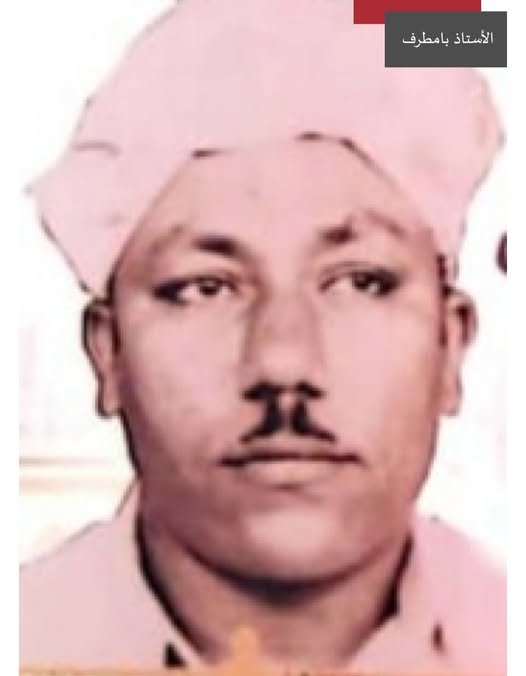
Mohammed Abdulqader Bamatrif
Historian Born: 25 June 1915, Al-Shihr – Hadramout Died: 1 July 1988 Ash Shihr
Mohammed Abdulqader Bamatrif, a Yemeni historian, literary figure, and researcher from the city of Al-Shihr in Hadramout Governorate, was born in 1915. He is considered one of the prominent figures in Hadrami historical and literary studies during the 20th century. He devoted a significant part of his life to researching and writing about Hadramout’s history, geography, and folk heritage. He was interested in documenting cities, tribes, historical events, and biographies, alongside his contributions to literature, translation, and cultural work. He died in 1988 after a prolific career in writing and research, leaving behind a scholarly and literary legacy that remains relevant to studies of Hadramout’s history and culture.
Biography
Birth and Early Life
Mohammed Abdulqader Bamatrif was born on June 25, 1915, in the city of Al-Shihr on the coast of Hadramout. He grew up in an environment connected to trade, navigation, and the cultural and social activities for which the city was known.
During his upbringing, he was influenced by Al-Shihr’s history and standing as one of Hadramout’s old ports, which later informed his interest in documenting the city’s history, events, and notable figures.
Education and Academic Formation
He received his primary education at Makarim Al-Akhlaq School in Al-Shihr between 1921 and 1924, then continued his studies in the city of Aden.
In 1935, he obtained a commercial studies certificate from the London Chamber of Commerce. He also attended specialized courses in shorthand, printing, and translation at the University of Cambridge, and a public administration course at the University of Khartoum.
This education helped develop his linguistic, research, and administrative skills, which he drew on in his professional work and later publications.
Early Career
Bamatrif worked for commercial companies during the 1930s, including a company in the city of Hodeidah in 1937.
He also worked in translation and was associated for a time with Prince Hussein bin Yahya Hamid al-Din, before moving into administrative work in Hadramout.
Administrative Work in Hadramout
He worked as an employee in the British Advisory Administration in Coastal Hadramout from 1939 to 1949.
He then moved to work for the Qu'aiti Sultanate between 1950 and 1963, where he held administrative roles connected with the governing institutions of the time.
This experience gave him insight into aspects of political and administrative life in Hadramout, subjects he later addressed in a number of his historical writings.
Devoting Himself to Research and Writing
From 1963 onward, Bamatrif turned increasingly to research and writing, focusing on the history of Hadramout and Yemen and documenting figures, events, and social and political changes.
His work covered a wide range of subjects, including history, geography, biographies, folk proverbs, and Yemeni migration, as well as literary criticism, theater, and short stories.
Historical Writing
Bamatrif was interested in re-examining Hadramout’s history, drawing on written sources, historical accounts, and notes he had collected during his work and life.
Among his most prominent works are “Al-Jami,” which addressed notable Yemeni migrants and their tribes; “Notes on What al-Hamdani Mentioned about the Geography of Hadramout”; and “The Feudalists Were Here.”
He also addressed the history of the city of Al-Shihr, including historical confrontations with the Portuguese invasion, in his book “The Seven Martyrs.”
Literature, Theater, and Short Stories
Alongside his historical writing, Bamatrif wrote plays and short stories and engaged in literary criticism.
His plays include “The Microphone,” “The Old Sheikh,” and “The Wall of Al-Shihr.” He also wrote short stories that were published in the local press.
This range of work made him a presence across several fields of the Hadrami and Yemeni cultural movement.
Participation in Cultural Work
Bamatrif participated in a number of cultural committees, including the History and Folk Heritage Committee, and contributed to cataloging the Popular Library when it was established.
He also participated in founding the Yemeni Writers and Authors Union and attended literary events and conferences, in addition to taking part in public life.
Death and Cultural Legacy
Mohammed Abdulqader Bamatrif died on July 1, 1988, in the city of Mukalla and was buried in Yaqub Cemetery.
He left behind a collection of historical and literary works and studies that became reference materials used in studying Hadramout’s history and folk heritage.
Interest in his work continued after his death, with some of his works being reprinted and cultural events and research seminars organized to examine his experience and contributions.
Works
1. Documenting Hadramout’s History He wrote studies and books addressing the history of Hadramout, its cities, and its political and social events, helping preserve information about multiple historical periods. 2. Writing “Al-Jami” He wrote an encyclopedic work titled “Al-Jami: A Compendium of Notable Migrants Connected to Yemen and Their Tribes,” addressing notable figures, migration, and genealogies. It has been published in multiple editions. 3. Documenting the History of the City of Al-Shihr He focused on the history of his birthplace. Among his most notable works is “The Seven Martyrs,” which addresses the resistance of the people of Al-Shihr to the Portuguese invasion. 4. Researching Historical Geography He wrote “Notes on What al-Hamdani Mentioned about the Geography of Hadramout,” addressing geographical and historical information found in al-Hamdani’s works. 5. Studying Political and Social History In his works, he addressed the nature of political and social relations in Hadramout, including in his book “The Feudalists Were Here.” 6. Contributing to the Preservation of Folk Heritage He was interested in folk proverbs, traditions, and oral heritage, and took part in work related to collecting and documenting heritage. 7. Writing Plays and Short Stories He wrote plays and short stories addressing social and cultural subjects, contributing to the enrichment of the local literary movement. 8. Participating in the Founding of the Yemeni Writers and Authors Union He participated in founding the union and in its cultural activities, and attended literary conferences and events. 9. Contributing to the Cataloging of the Popular Library He participated in organizing and cataloging the Popular Library when it was established, as part of his interest in serving books and knowledge. 10. Receiving the Arab Historian Medal He received the Arab Historian Medal from the Union of Arab Historians in 1977, according to local biographical accounts of his life.
Photos