
Qaiti Sultan's Palace
Qaiti Sultan's Palace in Mukalla, Hadramout Governorate, is one of the most prominent historical landmarks on the Hadrami coast. It was built during the Qaiti Sultanate in the first half of the 20th century and is distinguished by its location close to the sea and its architectural design, which blends Hadrami character with outside artistic influences. The palace was associated with the sultanate's political and administrative life before later becoming the home of the National Museum in Mukalla, which houses archaeological and historical artifacts reflecting aspects of Hadramout's civilization and heritage. Today, the palace stands as a testament to the city's history and its urban and political development.
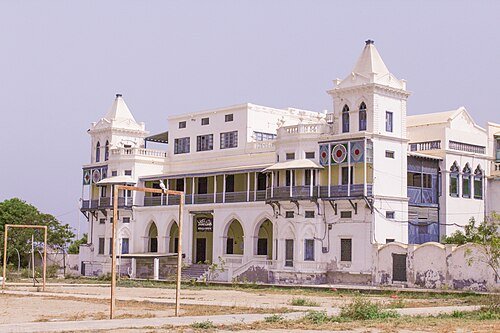
Qaiti Sultan's Palace: A Record of Rulership on Mukalla's Coast
On the waterfront of Mukalla, Qaiti Sultan's Palace stands as one of the most prominent witnesses to Hadramout's political and urban history during the 20th century, and an example of the architectural influences that reached the Hadrami coast through trade and cultural relations with India and the regions of the Indian Ocean.
The palace was not merely a residence for the ruling family. It hosted councils of government, received delegations, and held official meetings before part of it was converted into a museum preserving Hadramout's antiquities and artifacts from the era of the Qaiti Sultanate.
Geographical Location
The palace stands on a coastal promontory in the western part of old Mukalla, in an area historically known as “Bar' al-Siddah” or “Bid' al-Siddah,” within what is now the Al-Salam neighborhood.
The building overlooks the Arabian Sea and is surrounded by a wall and spacious courtyards, giving it a distinctive location that combines a commanding view of the waterfront with proximity to the city's urban and administrative center.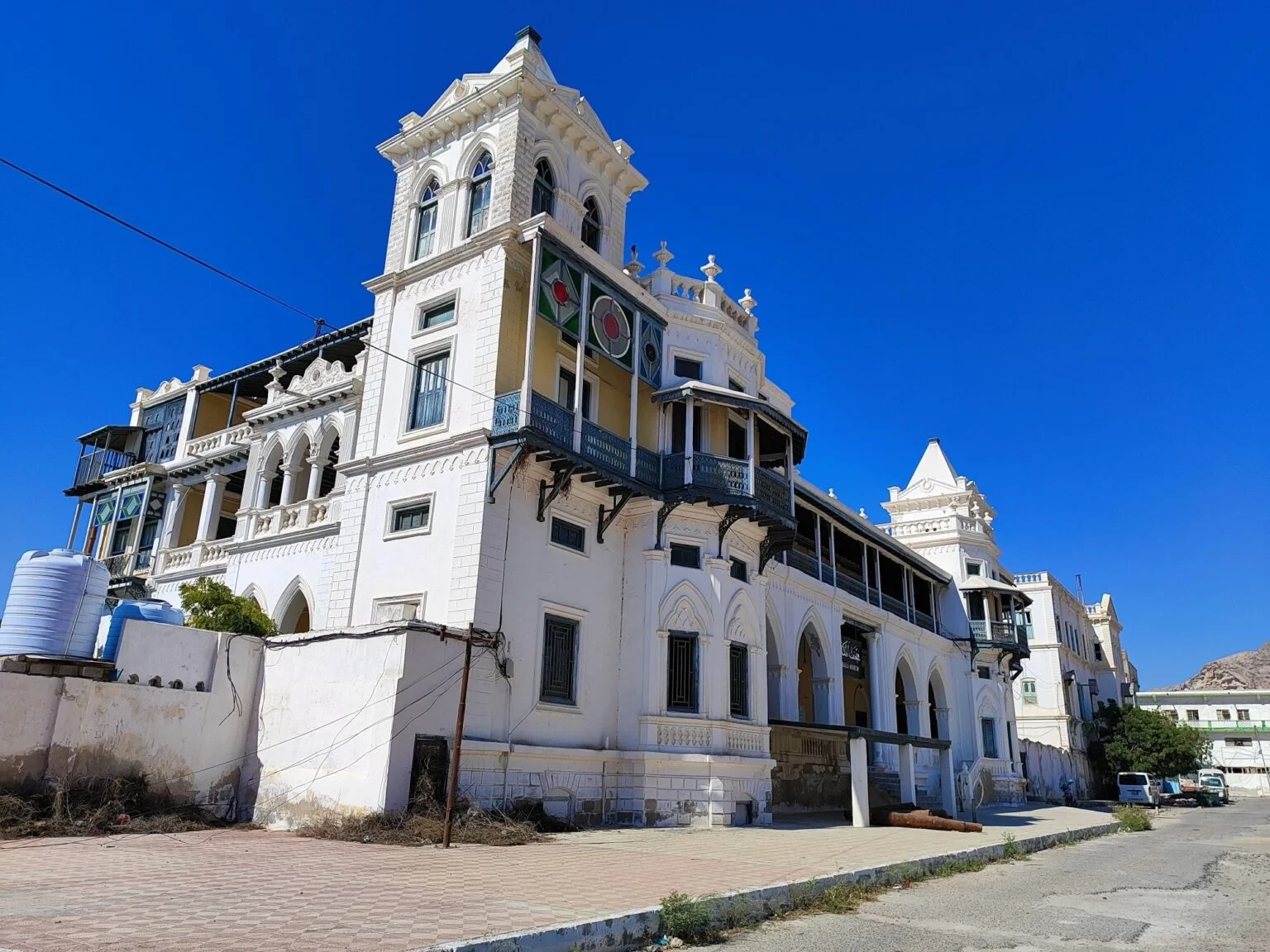
Origins and Construction History
Tourism and historical references indicate that the palace was built in 1925, during the Qaiti Sultanate, which made Mukalla an important center of its rule.
Sources differ over the sultan associated with the palace's construction. While some references attribute the building to Sultan Ghalib bin Awad al-Qu'aiti, other local sources attribute it to Sultan Umar bin Awad al-Qu'aiti.
Thus, 1925 remains the date most commonly cited for the palace's construction, while the original sultanic documents would need to be consulted to resolve the difference over who ordered it built.
The Palace as a Center of Government and Administration
The palace served as an important seat of Qaiti authority and housed a number of facilities connected with the administration of the state and the reception of official figures and delegations.
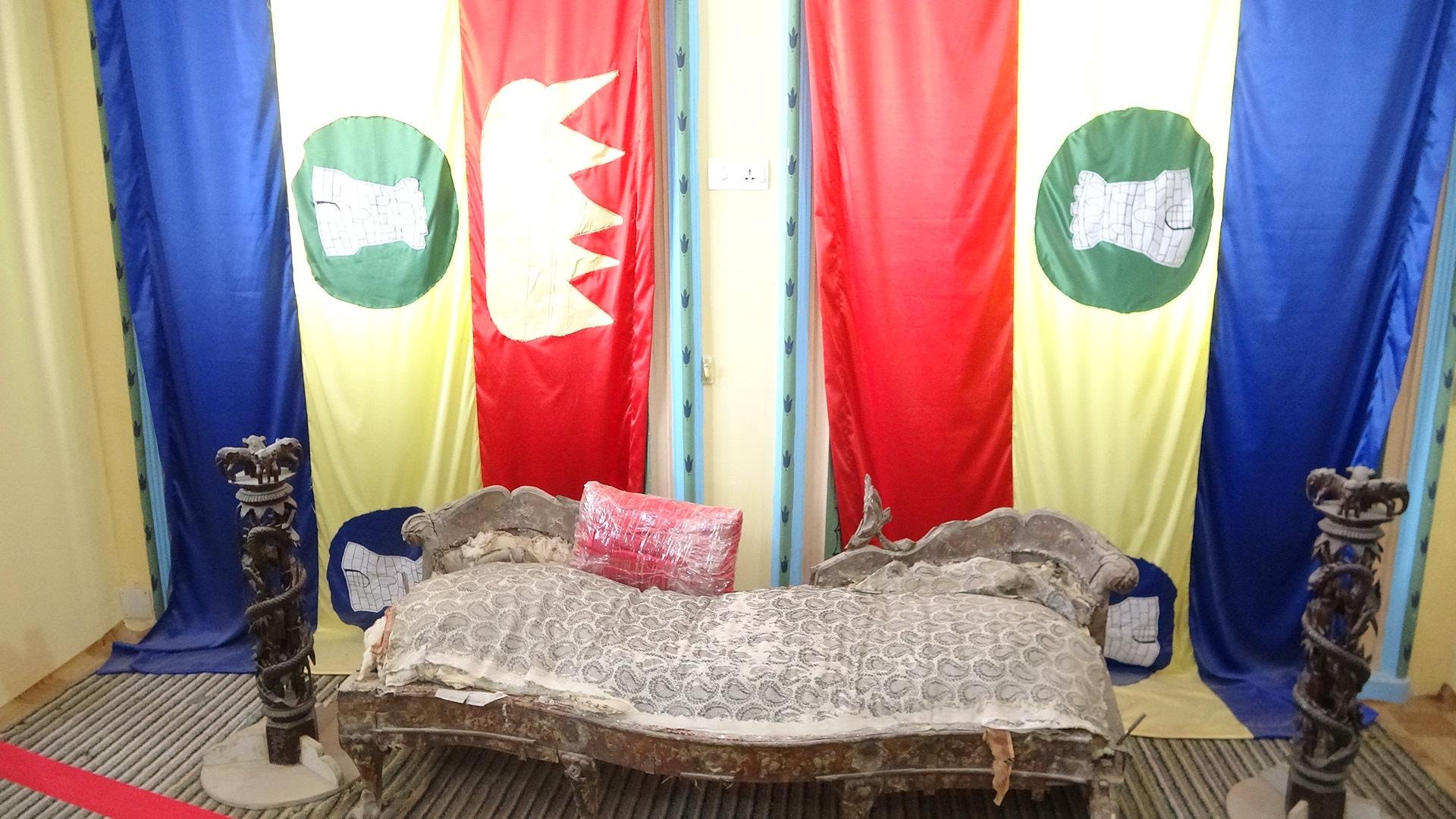
Its historic facilities include the Throne Hall, associated with official occasions and the reception of delegations, as well as the Meeting Hall and the Red Hall, known for its distinctive furnishings.
These facilities reveal the political and administrative role played by the palace as a place where government was conducted and public affairs managed during the final decades of the sultanate.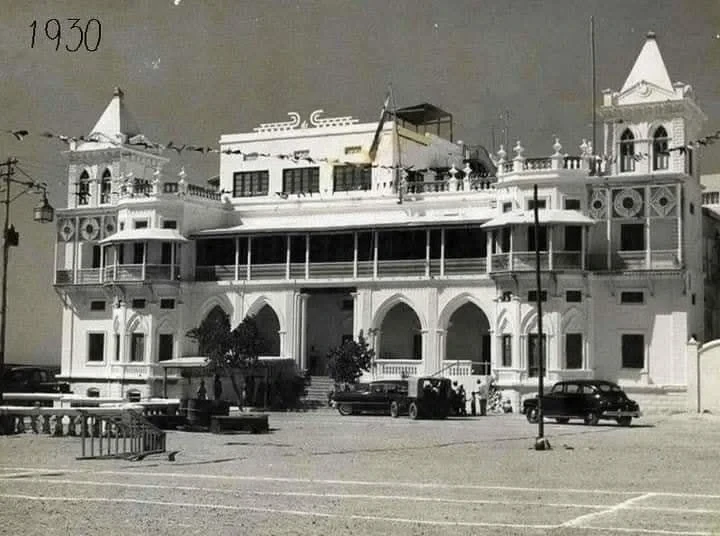
Architectural Design
The palace consists of three floors and is distinguished by its broad facades, balconies, columns, and architectural arches, which reflect the influence of the Indian style that spread in some cities of the southern Arabian Peninsula during the 20th century.
Its design also displays features of Hadrami coastal architecture, with structural and decorative elements suited to the nature of large official buildings.
A wall and open courtyards surround the palace, while rooms and halls are distributed across its three floors according to administrative, residential, and reception functions.
Indian Influences on the Palace's Architecture
Mukalla has historically been connected to maritime traffic and trade across the Indian Ocean, and Hadramout had extensive economic and social ties with the Indian subcontinent.
These relations were reflected in the city's building styles, including Qaiti Sultan's Palace, whose facades, balconies, and arches show clear influences from Indian architecture.
This influence represents one aspect of the cultural exchange that helped shape Hadrami coastal architecture without displacing the area's local characteristics.
The Red Hall and the Throne Hall
The Red Hall is one of the palace's best-known facilities. It acquired its name from the red color of its historic furnishings.
The hall was used for meetings and occasions related to the affairs of government, while the Throne Hall was designated for receiving delegations and hosting official occasions.
These halls contain artifacts, photographs, and antiques connected with the history of the Qaiti family, allowing visitors to learn about aspects of political and social life during that period.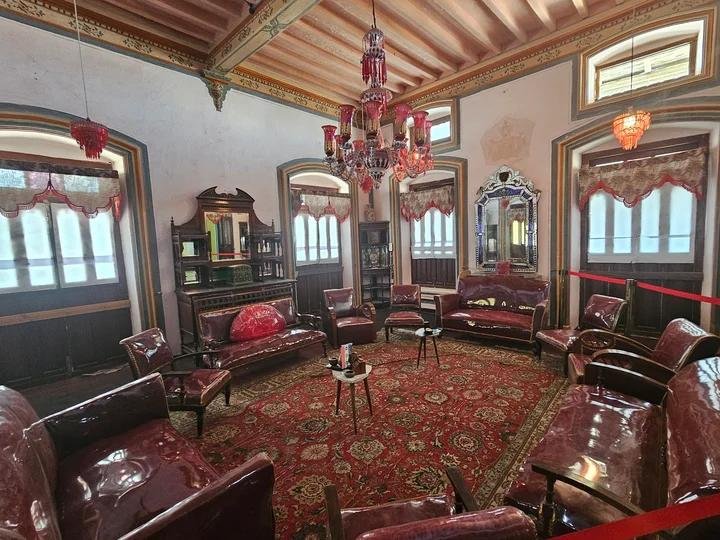
The End of the Sultanate and Later Changes
The palace remained associated with Qaiti rule until the sultanate ended in 1967, amid the political changes that took place in southern Yemen.
With the transfer of power, the functions of a number of sultanic buildings changed, and preserving their artifacts and documents became part of efforts to document the region's history.
The palace later became the home of the National Museum in Mukalla, which houses archaeological and historical collections from different periods in Hadramout's history.
The Establishment of the Mukalla Museum
The idea of establishing a museum of antiquities and folk arts in Mukalla dates back to the final years of the Qaiti Sultanate.
In 1964, a project to establish the museum was approved at the initiative of archaeologist and historian Mohammed Abdulqader Ba Faqih. It was officially opened in 1966 in a building near the palace.
In 1971, the museum was moved to the eastern wing of Qaiti Sultan's Palace, where the historic halls became part of an exhibition experience combining archaeological artifacts with the heritage of sultanic rule.
Collections of the National Museum
The National Museum in Mukalla houses diverse collections of archaeological and historical objects, including inscriptions, coins, vessels, and artifacts dating to ancient periods in Hadramout's history.
The exhibits include antiquities from ancient Hadrami sites, as well as items related to local social life, customs, and traditions.
The sultanic wing also contains photographs, documents, antiques, and historic furnishings, including items from the Throne Hall and the Red Hall, offering insight into aspects of official life during the Qaiti Sultanate.
Archaeological and Cultural Significance
The palace's importance stems from its combination of two historical values: the first is linked to its role as a seat of government during the Qaiti Sultanate, and the second comes from its housing a museum documenting Hadramout's more ancient history.
This combination provides a continuous account of the region's history, from ancient kingdoms and civilizations to political and social changes in the modern era.
The palace is also a prominent example of official architecture on the Hadrami coast and reflects the impact of trade and cultural relations with the outside world.
Restoration and Preservation of the Landmark
In earlier periods, the palace faced challenges related to the deterioration of parts of the building and the need for maintenance and restoration, as well as challenges affecting the museum and its collections.
Some parts of the palace and museum have undergone rehabilitation and improvement work, including sections of the facades, halls, and surrounding areas, helping to reopen them to visitors at various times.
The importance of continuing preventive maintenance, protecting archaeological artifacts, and developing display and documentation methods is clear, in order to preserve the historical value of the building and its contents.
Qaiti Sultan's Palace: Hadramout's Open Record
Qaiti Sultan's Palace remains one of the most important historical landmarks in Mukalla, bearing witness to political and administrative life during the 20th century and housing antiquities and artifacts that reflect the depth of Hadrami civilization.
Overlooking the Arabian Sea, the palace embodies an important period in the city's history and its commercial and cultural relations, and underscores the importance of preserving historic buildings as part of Hadramout's collective memory and cultural identity.