
Trump attacks him and accuses him of extremism... What is the story of the Muslim seeking to enter the US Senate for the first time?
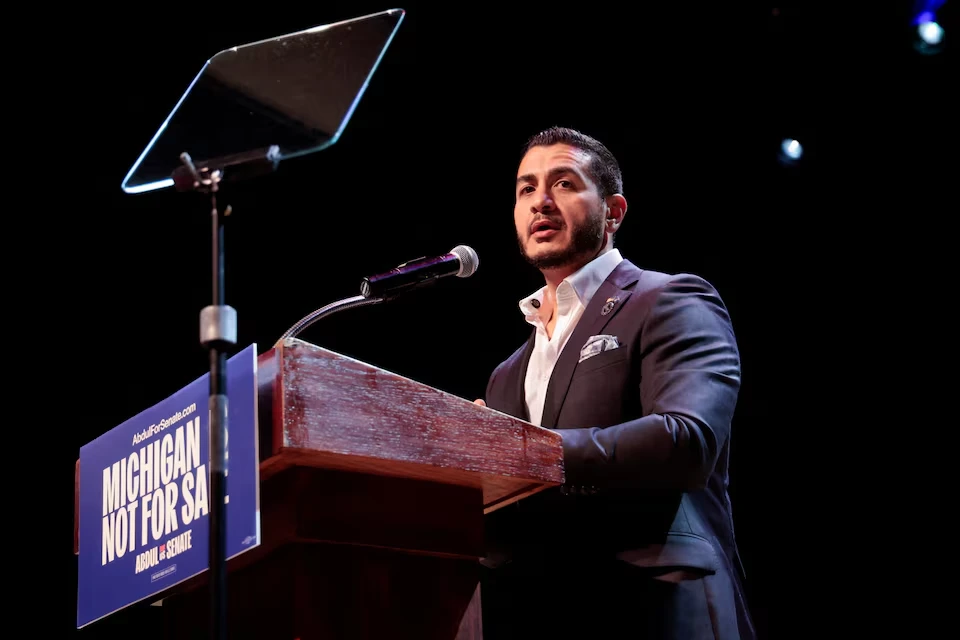
In one of the most controversial election battles in the United States, an Egyptian-American politician found himself in direct confrontation with President Donald Trump after coming close to making history as the first Muslim to hold a seat in the US Senate.
He is Abdulrahman Mohamed El-Sayed, known as “Abdul El-Sayed,” who went from being a public health specialist to a Democratic Party candidate for Michigan, before becoming the target of sharp political attacks over his religion and loyalty to the United States.
The confrontation took a sharper turn on October 25, 2026, when Trump appeared before his supporters in Port Huron, Michigan, and attacked El-Sayed, calling him a “jihadist” and accusing him of ties to the Muslim Brotherhood. He even invoked the September 11 attacks while speaking about him, without presenting evidence of his involvement in any terrorist activity.
But how did this Muslim American reach the heart of the political battle? And why has his candidacy become an issue extending beyond the borders of Michigan?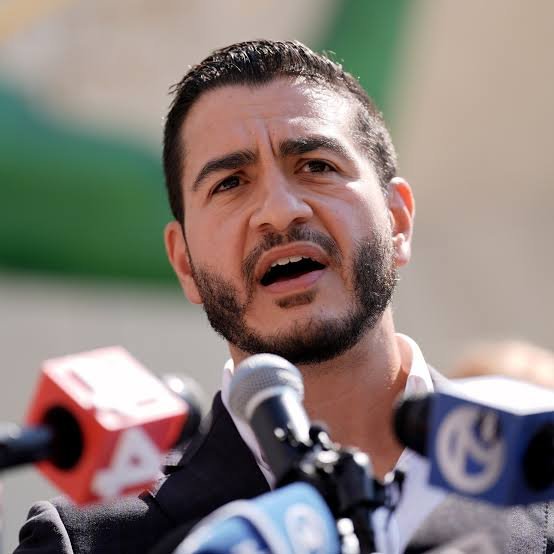
From an Egyptian family to American politics
Abdul El-Sayed’s story began on October 31, 1984, when he was born in Rochester Hills, Michigan, to parents who had immigrated from Egypt. He grew up in the United States and attended its schools before enrolling at the University of Michigan to study biology and political science.
His first path was not toward politics, but medicine. He received the prestigious Rhodes Scholarship to study at the University of Oxford in Britain, earned a doctorate in public health, and then completed his medical studies at Columbia University in the United States in 2014.
After his academic work, he became director of public health for the city of Detroit in 2015, then later held a leadership position in health services in Wayne County, before leaving administrative work to return to electoral politics.
A failed bid that brought him back into the spotlight
El-Sayed’s Senate candidacy was not his first electoral experience. In 2018, he ran in the Democratic Party primary for governor of Michigan, but lost to Gretchen Whitmer.
Despite that defeat, he continued his work on public health and social policy issues, emerging as part of the progressive movement that calls for expanding healthcare services and easing the economic burden on citizens.
In April 2025, he announced that he was entering the Senate race, taking advantage of Democratic Senator Gary Peters’ decision not to seek another term.
The surprise came in August 2026, when El-Sayed won the Democratic Party nomination, defeating Representative Haley Stevens, who had the backing of prominent figures in the party establishment, to become the official candidate facing Republican Mike Rogers.
Why did Trump join the confrontation?
The importance of this battle lies in the fact that Michigan is considered a swing state that American parties fiercely contest, and the seat El-Sayed is seeking could influence which party controls the Senate.
His Republican opponent, Mike Rogers, has Trump’s support, and Trump intensified his attacks on El-Sayed in the final weeks of the election campaign.
The US president’s criticism was not limited to economic platforms or political positions, but extended to El-Sayed’s religious identity. He accused him of extremism and questioned his loyalty to the country, remarks that drew objections even within some Arab American circles that had previously supported Trump in the 2024 election.
Among the most prominent critics was Bishara Bahbah, one of the founders of “Arab Americans for Trump,” who described the president’s remarks as racist and unacceptable.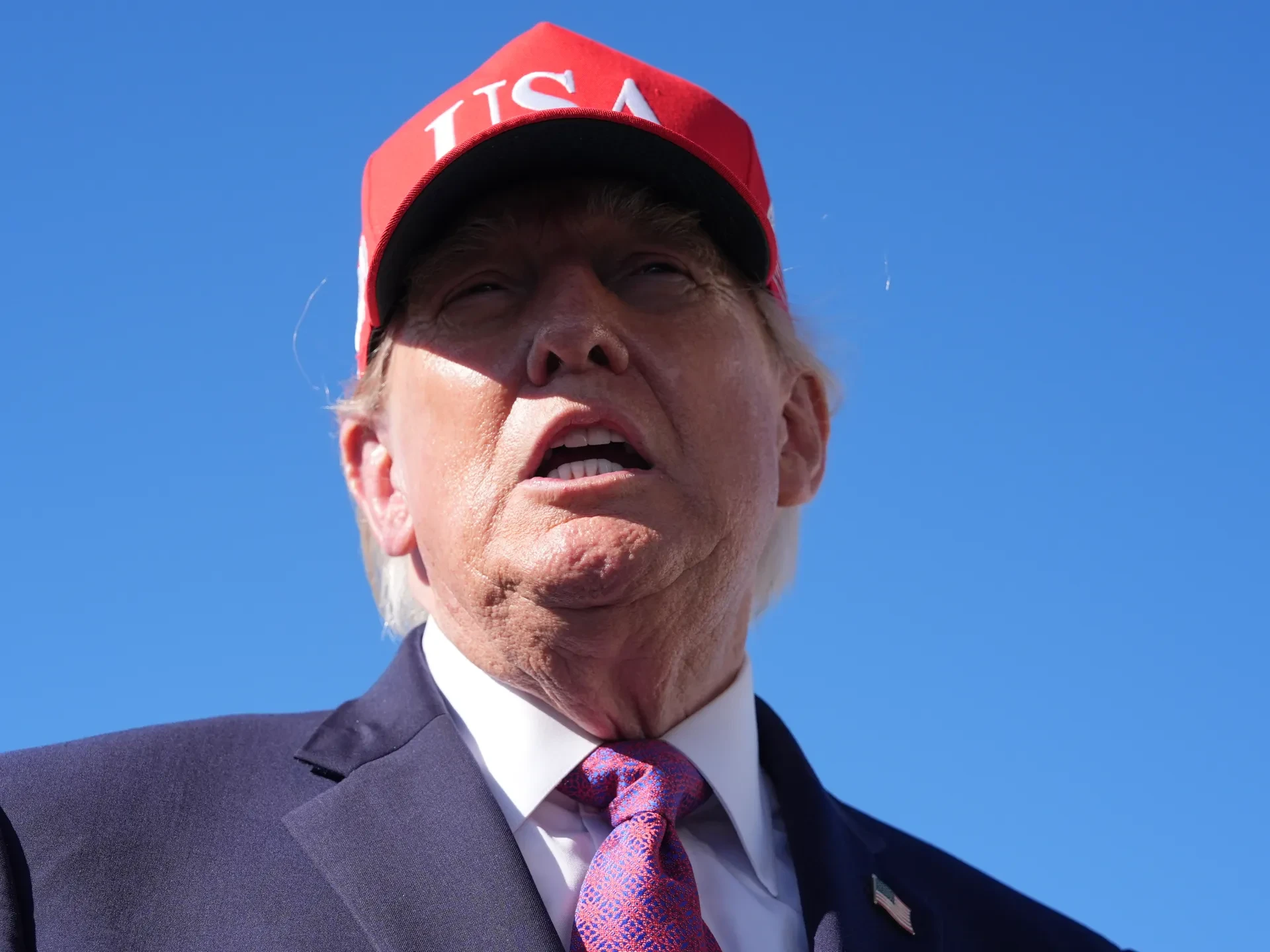
Muslim Brotherhood allegations... What does El-Sayed say?
El-Sayed’s alleged relationship with the Muslim Brotherhood has become one of the issues raised during the election campaign, after some Republicans focused on family backgrounds and past remarks by members of his family.
But El-Sayed has repeatedly denied belonging to the group or having any organizational ties to it, and no evidence of his membership has emerged.
During an election event in October, an attendee confronted him with a question about his position on the Muslim Brotherhood. He declared his opposition to the group, then asked why this kind of question was being directed at him because of his religion.
El-Sayed invoked the experience of former US President John F. Kennedy, who faced similar questions about his Catholic affiliation, emphasizing that he was not running to be a Muslim member of the Senate, but to represent citizens—and he happened to be Muslim.
Obama and Sanders enter the scene
El-Sayed, meanwhile, received support from prominent Democratic figures, including former US President Barack Obama and Senator Bernie Sanders.
Obama took part in campaign events in Michigan, criticizing attempts to portray El-Sayed as less American because of his religious background, while Sanders accused Republicans of using anti-Muslim rhetoric to distract from issues of the cost of living, healthcare and housing.
El-Sayed responded to Trump’s attacks at an election rally in Grand Rapids, making fun of the president’s repeated mispronunciation of his name and saying Trump could call him “Senator” after the November election.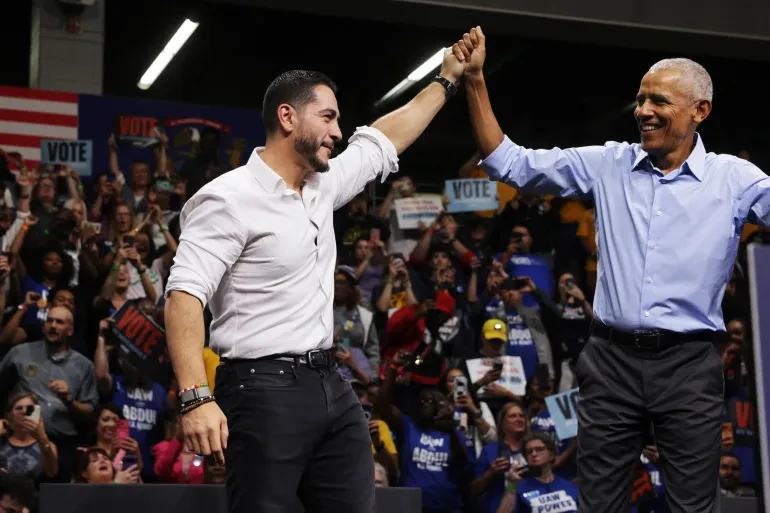
Will he become the first Muslim in the US Senate?
Although Muslims have previously served in the US House of Representatives, no Muslim has yet been elected to the Senate, giving Abdul El-Sayed’s candidacy a historical dimension that goes beyond the traditional competition between the two parties.
However, the path ahead remains undecided: he faces Republican Mike Rogers in the election scheduled for November 3, 2026, amid political division over the economy, healthcare, foreign policy and religious identity.
Thus, Abdul El-Sayed’s story is no longer simply an attempt to win a seat in Congress. It has become part of a broader American debate over religion, identity and the limits of political rhetoric, as attention turns to the ballot boxes to see whether Americans will witness the first Muslim enter the Senate in their country’s history.