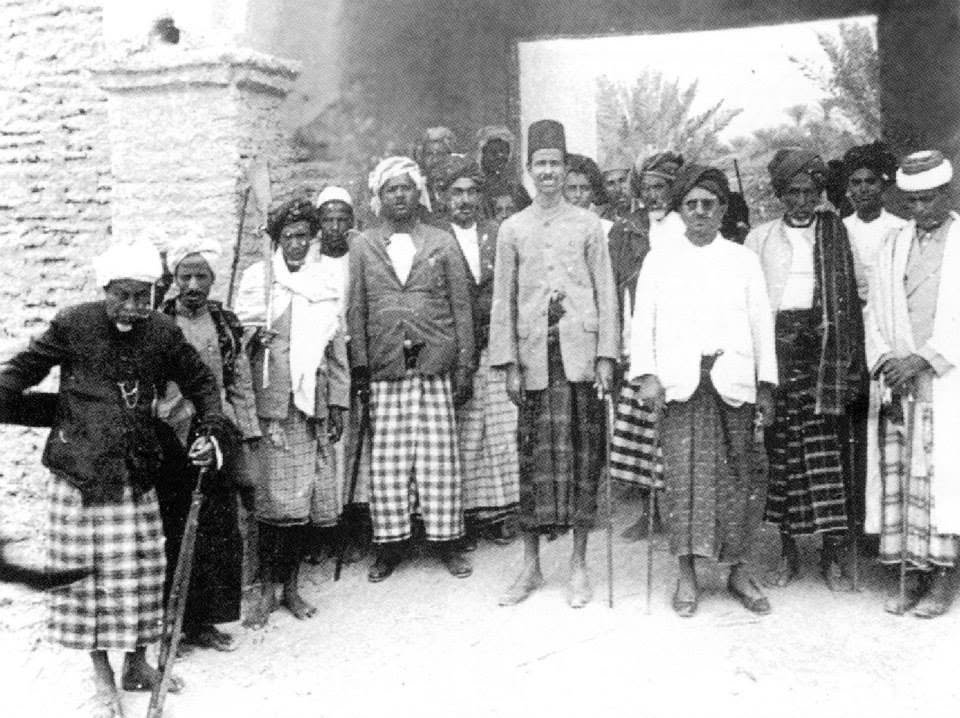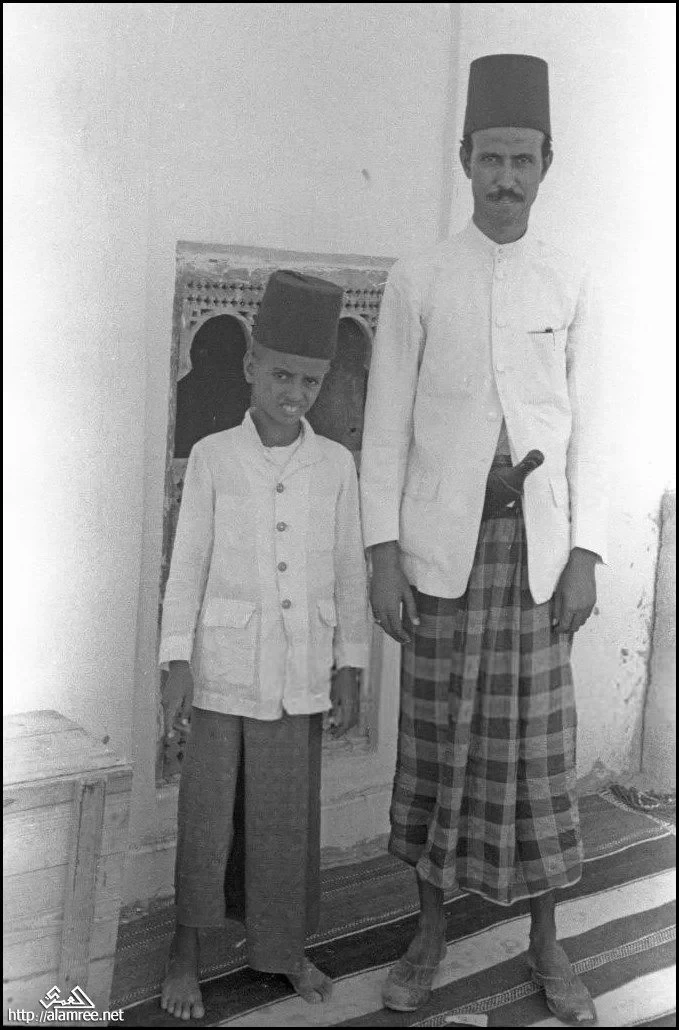
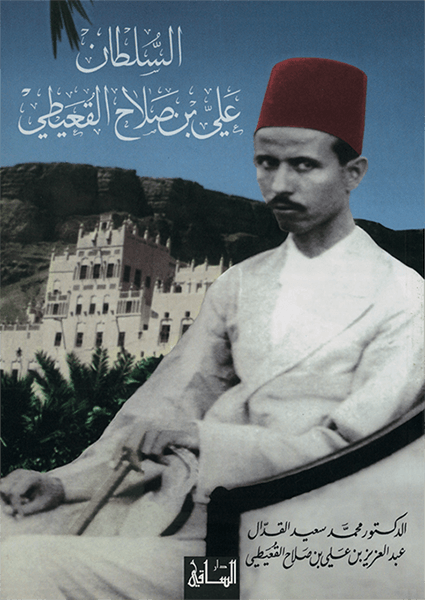
Sultan Ali bin Salah Al-Qaiti
Sultan Born: 1898, The village of Khuraykhr near Al-Hajjarayn – Hadramout Died: 1948 Al Qatn
Sultan Ali bin Salah Al-Qaiti was one of the political and military figures associated with the history of the Qu'aiti State in Hadramout during the 19th century. He belonged to the Qu'aiti family, which contributed to the establishment of the Sultanate and the expansion of its influence along the Hadrami coast. That period witnessed political and military conflicts that helped reshape the balance of power in the region.
Biography
Birth and Upbringing
Ali bin Salah bin Muhammad bin Omar bin Awadh Al-Qaiti was born in 1898 in the village of Khuraykhr, near the city of Al-Hajjarayn in Wadi Hadramout. He belonged to the Qu'aiti family that established the Qu'aiti Sultanate.
He was the grandson of Omar bin Awadh Al-Qaiti, founder of the Qu'aiti State, and grew up in a family that held political and administrative responsibilities in areas of Wadi Hadramout, particularly the city of Al-Qatn.
Education and Formation
He received his early education in the city of Al-Qatn at a traditional Quranic school under Sheikh Abdulrab Ba Fadl, where he studied religious sciences and Arabic.
From a young age, he was known for his interest in reading and learning, and his interests later expanded to include politics, history, agriculture, and community affairs.
Political and Administrative Work
Ali bin Salah's activities were associated with the city of Al-Qatn and areas of Wadi Hadramout, where he participated in managing local affairs within the Qu'aiti system of governance.
He lived through a period marked by multiple centers of influence and political and tribal conflicts, and played a role in relations between the local authorities and social forces in the valley.
Political Relations and Conflicts
His life involved disputes with a number of influential figures in Hadramout, foremost among them some Qu'aiti court officials and local powers.
He also lived through the activities of British adviser Harold Ingrams, Sayyid Abu Bakr Al-Kaf, and Sayyid Abu Bakr Al-Mihdhar, figures associated with efforts to ease tensions and reorganize political relations in Hadramout.
Historical studies indicate that his political ambition and independent positions were among the factors that contributed to his disputes with some centers of power.
Interest in Agriculture and Water Resources
Ali bin Salah's interests were not limited to politics; in his writings, he also addressed agriculture and water resources, and studied the relationship between agricultural land and water sources in Wadi Hadramout.
He authored the book “The Hidden Treasure in Water and Clay,” which addressed topics related to agriculture, water, and land, and is considered one of the works associated with the history of local agricultural knowledge.
The Qu'aiti Palace in Al-Qatn
His name was associated with the historic Qu'aiti Palace in the city of Al-Qatn, one of the prominent architectural landmarks in Wadi Hadramout.
The palace reflects aspects of Hadrami mud-brick architecture and the political and social functions associated with it during the first half of the 20th century.
Death and Historical Legacy
Ali bin Salah Al-Qaiti died in 1948 in the city of Al-Qatn in Wadi Hadramout, at the age of about fifty.
He left a mark on the political and social history of the region, and his biography became the subject of a historical book titled “Sultan Ali bin Salah Al-Qaiti: Half a Century of Political Conflict in Hadramout 1898–1948,” by Muhammad Saeed Al-Qaddal and Abdulaziz bin Ali bin Salah Al-Qaiti.
Works
1. Participation in the administration of areas of Wadi Hadramout He undertook political and administrative roles in the city of Al-Qatn and its surroundings within the Qu'aiti system of governance. 2. Presence in Hadrami political life He was involved in a number of political relations and disputes that took place in Hadramout during the first half of the 20th century. 3. Interest in agriculture and water He studied issues concerning agricultural land and water sources in Wadi Hadramout and took an interest in documenting related knowledge. 4. Authoring “The Hidden Treasure in Water and Clay” He left a work addressing agriculture, water, and land, which is valuable for studying the history of agricultural resources in Wadi Hadramout. 5. Association with the Qu'aiti Palace in Al-Qatn His tenure was associated with the historic palace in the city of Al-Qatn, which remains a testament to mud-brick architecture and local political heritage. 6. Participation in political and tribal interactions He was present during a period that saw efforts to settle disputes and reorganize relations among local forces in Hadramout. 7. Leaving historical material for researchers His biography, positions, and documents became the subject of historical studies addressing political and social transformations in Hadramout between 1898 and 1948.
Photos