
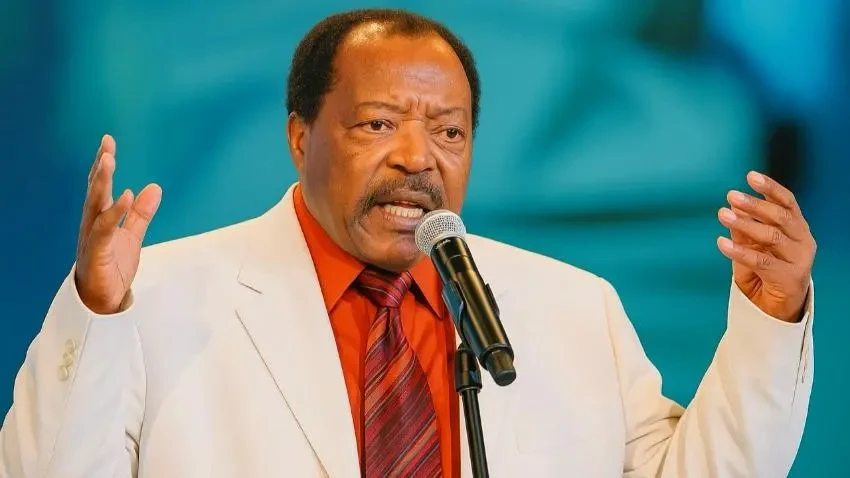
Karama Saeed Ali Mersal
Artist Born: 1 January 1946, Mukalla City Died: 3 August 2014 Al Mukalla City
Karama Saeed Ali Mersal, a Hadrami artist, singer and composer, was born in Mukalla in 1946. He is considered one of the leading pioneers of Hadrami and Yemeni song during the second half of the twentieth century. He began his artistic career in 1963 and became known for his plaintive voice and distinctive performances of dan and folk songs. He collaborated with leading poets, foremost among them Hussein Abu Bakr Al-Mihdhar. His fame spread to the Arab Gulf states, and he produced enduring songs, most notably “Muteim,” “God Is My Witness,” and “O Captain of the Ship.” He died in Mukalla on August 3, 2014, after an artistic career spanning more than fifty years.
Biography
Birth and upbringing in Mukalla
Karama Saeed Ali Mersal was born in Mukalla in 1946, during the Qu'aiti rule of Hadramout. Some sources give his birth date as January 1 of that year, while others mention only the year.
He grew up in the old neighborhoods of Mukalla in a well-off family with an interest in culture and folk singing. His father would sing traditional songs at home, sparking Karama’s interest in music from childhood. He regularly listened to folk melodies popular along the Hadramout coast.
He received his elementary education at schools in Mukalla and, from an early age, became involved in artistic gatherings and social occasions where Hadrami musical styles were performed.
A study published by Al-Ayyam newspaper, citing Al-Mukalla magazine issued by the Hadramout Culture Office, states that in the late 1960s he worked in wireless communications in Shibam, before later moving to work as a full-time artist at the Ministry of Culture.
The beginning of his artistic career in 1963
Karama Mersal began his singing career in 1963, when he was about 17 years old. That was the year the artist Mohammed Jumaa Khan, one of the leading pioneers of Hadrami singing, died.
In his early years, Mersal was influenced by Mohammed Jumaa Khan’s art and began performing some of his songs at wedding celebrations and social occasions in Mukalla, drawing on his knowledge of folk heritage and skill at playing the oud.
Over the years, he began to develop his own artistic identity and choose lyrics and melodies suited to his voice.
His regular participation in wedding celebrations and musical evenings helped him gain experience and become known in Mukalla, before his fame spread to other areas of the Hadramout coast and valley.
From folk song to fame
Karama Mersal did not limit himself to performing traditional songs; he also began presenting new works in collaboration with poets and composers.
One of his best-known early songs was “God Is My Witness,” which marked an important milestone in his career and introduced him to a wider audience.
Mersal was distinguished by a strong voice with a plaintive tone, as well as his ability to convey poetic meanings and vary his performance across romantic, patriotic and folk songs.
By the late 1960s and 1970s, he had become a prominent name in Hadramout’s artistic scene. His works began to circulate through recordings and records, as well as at folk concerts.
His collaboration with poet Hussein Abu Bakr Al-Mihdhar
The collaboration between Karama Mersal and poet and composer Hussein Abu Bakr Al-Mihdhar was one of the most prominent milestones in modern Hadrami song.
Mersal performed many of Al-Mihdhar’s poems and compositions, and his performances helped bring them to audiences inside and outside Hadramout.
Among the best-known works associated with this collaboration is the song “O Captain of the Ship,” which attracted wide interest because of its symbolic meanings and the possibility of interpreting it in the context of the political changes that southern Yemen experienced during the 1980s.
Mersal performed the song during celebrations held in Aden in 1987. Its political interpretations differed, while it remained one of the most prominent works associated with his name.
The collaboration between Mersal and Al-Mihdhar became an important model of the relationship between poet, composer and singer in the Hadrami musical tradition.
His collaboration with Hadrami poets
Mersal’s work was not limited to Al-Mihdhar’s compositions; he collaborated with a large number of Hadrami poets, including Haddad bin Hassan Al-Kaf, Abdulqader Mohammed Al-Kaf, Saleh Abdulrahman Al-Miflaahi, Omar Abu Bakr Al-Aidaroos, Ahmed Salem Al-Beidh, Jumaan Bamataraf and Mahfouz Bahashwan.
In the 1970s, he performed works with lyrics by Saleh Al-Miflaahi, including “Rafi'at Al-Shiyader,” “My Beloved Has Settled in My Heart” and “A Night in Ba'ibat.”
He also sang poems by Abdulqader Al-Kaf, including “At an Appointment, Time Is Treacherous,” and performed works with lyrics by Mahfouz Bahashwan, including “A Sip of Water.”
He took part in performing works written by Awad Ahmed Humaydan and composed by Salem Saeed Jabrān, a collaboration that yielded a collection of songs that became popular among Hadrami music audiences.
The spread of “Muteim” in the Gulf
The song “Muteim” marked one of the most important milestones in Karama Mersal’s rise to prominence outside Yemen, after it attracted wide attention among Gulf audiences.
A number of artists and musical groups performed their own versions of the song, including Rashid Al-Majid and Miami Band, helping it reach new generations of listeners.
Mersal’s name became associated with the song as one of its most prominent performers, and it became one of the works that introduced Gulf audiences to Hadrami art.
Mersal combined singing with composing and wrote melodies for other artists, further strengthening his presence in the music scene.
His artistic appearances outside Yemen
As his fame grew, Karama Mersal began taking part in concerts and artistic events outside Yemen, particularly in the Arab Gulf states.
He performed at concerts in Saudi Arabia, Kuwait, Oman, Qatar and the United Arab Emirates, in addition to participating in art festivals.
He recorded a number of his works in studios outside Yemen, including recordings made in Cairo, and produced works for television and radio in Aden.
His appearances abroad helped spread the Hadrami singing dialect and dan styles among Arab listeners.
At the same time, he remained connected to folk occasions in Hadramout, where his presence at weddings and concerts continued to be an important part of his artistic career.
His contributions to patriotic song
Alongside romantic and traditional songs, Karama Mersal presented a collection of patriotic songs about love for Yemen and belonging to it.
Among the most prominent of these works are “My Love for Her,” “At Your Service, My Homeland,” “At Your Service, O Crown of Yemen,” and “My Beloved Yemen.”
These songs became a feature of national occasions and cultural events, and demonstrated the range of his output, from folk and romantic songs to patriotic music.
His personality and relationship with audiences
Mersal became known for his spontaneous manner with audiences and his cheerful spirit, which was evident at his concerts and in media interviews.
He placed great importance on the poetic word and took care to enunciate it clearly and present it in a way that suited the melody and meaning.
In press interviews during his final years, he spoke about the need to protect artists’ rights and criticized the lack of attention to intellectual property rights in the music industry.
He also urged young artists to develop independent careers rather than simply imitate earlier works.
Honors and awards
Karama Mersal received honors at a number of cultural and artistic events inside and outside Yemen in recognition of his contributions to Yemeni song.
Among the most notable honors was the Order of Unity, which he received in 2013 from Yemeni President Abdrabbuh Mansur Hadi in recognition of his artistic career.
This honor is considered one of the notable milestones in the final years of his life.
Final years and death
Artist Karama Mersal suffered from health problems during his final years and received treatment in Yemen and abroad.
Despite his health circumstances, he remained interested in singing and recording. Saudi newspaper Al-Watan reported that one of his last works was the song “O Time of the Cave,” which he recorded in Sana’a about five months before his death.
He died early on Sunday, August 3, 2014, at Ibn Sina Hospital in Mukalla, after an illness, at the age of 68.
His funeral was held that same day in Mukalla. Prayers were said for him at Omar Mosque, before he was laid to rest in Yaqub Cemetery.
Officials, artists, writers, and a large number of Hadramout residents and admirers of his art took part in his funeral.
Mersal left behind a large body of work spanning more than half a century and became one of the prominent names in the history of Hadrami and Yemeni song.
Works
Key achievements 1. Contributed to the continuation of the Hadrami singing tradition after the death of artist Mohammed Jumaa Khan in 1963. 2. Produced hundreds of songs and recordings that helped preserve and circulate Hadrami heritage. 3. Collaborated with leading Hadrami poets and composers, foremost among them Hussein Abu Bakr Al-Mihdhar. 4. Spread Hadrami song in the Arab Gulf states through concerts and recordings. 5. Developed a singing style that combined Hadrami dan with contemporary musical performance. 6. Took part in recording artistic works for radio and television. 7. Performed patriotic songs that became part of Yemen’s musical heritage. 8. Received the Order of Unity in 2013 in recognition of his artistic career.