
Badrah Plant Generators Halt, Triggering New Electricity Crisis in Wadi Hadramout Amid Financial Disputes
The electricity crisis in Wadi Hadramout worsened after Al Amanah Company suspended operation of the 10-megawatt purchased-power generators at Badrah Plant, amid disputes over financial dues and government contracts. The shutdown increased the generation shortfall and widened power cuts, particularly in the western districts of the valley, before a preliminary agreement was reached to resume operations.
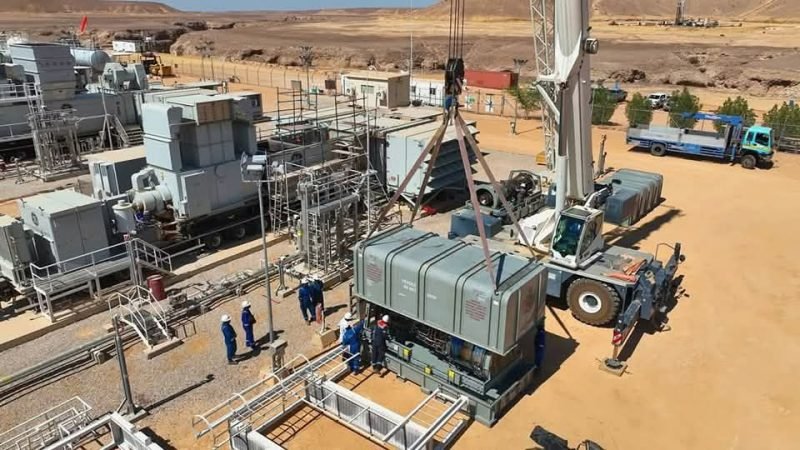
Wadi Hadramout’s electricity system suffered a new operational setback on Sunday evening, May 4, 2025, after Al Amanah Energy Solutions suspended operation of the diesel-powered purchased-energy generators at Badrah Plant, with a total capacity of 10 megawatts. The development worsened the electricity shortfall and increased outage hours in several districts of the valley and desert.
The shutdown came amid financial and contractual disputes between the company and the relevant government bodies, after the company announced that its overdue dues had not been settled and objected to plans concerning the cancellation of purchased-energy contracts. This prompted it to suspend operations and formally notify the local authority of its decision.
The General Electricity Corporation in the Wadi Hadramout region said in a statement issued on Tuesday, May 6, that it had received a copy of the company’s letter to the local authority regarding the suspension of the generators. It confirmed that the loss of the additional generation capacity had worsened outages, particularly in areas in the western valley.
In response, the corporation operated a number of its own generators at Badrah Plant, providing alternative capacity ranging from 2 to 4 megawatts in an attempt to cover part of the shortfall caused by the shutdown of Al Amanah Company’s generators. This measure, however, was unable to make up for all the lost capacity.
Operational reports issued by the Electricity Corporation revealed the extent of the pressure on the system. Total demand during the morning period on Monday, May 5, reached about 197.1 megawatts, compared with actual production of 82.7 megawatts, leaving a deficit of 114.4 megawatts.
During the evening period on the same day, demand rose to about 209.8 megawatts, while production did not exceed 81.9 megawatts, widening the deficit to 127.9 megawatts and indicating a growing gap between consumer needs and available power.
The corporation’s data showed that Badrah 2 Plant, operated by Al Amanah Company, produced no power during either the morning or evening periods, while the PetroMasila, Al Jazeera Gas, Qaryu and Al-Ghurf plants contributed varying amounts of power amid the system’s continuing major shortfall.
The Badrah Plant crisis coincided with the shutdown of other purchased-energy plants on the Hadramout coast. The Supervisory Committee for Fuel Supplies to Service Facilities, affiliated with the Hadramout Tribal Alliance, reported that plants supplying Mukalla City and its suburbs and Daw'an District had stopped operating on Monday morning, May 5, despite the continued supply of fuel, according to the committee.
The committee confirmed that the quantities of fuel transported daily to plants on the Hadramout coast amounted to about 365,000 liters of diesel and 450,000 liters of mazut. It called on the relevant authorities to explain the reasons for the plants’ shutdown, given what it described as the regularity of fuel supplies.
In Wadi Hadramout, the Electricity Corporation announced that it was continuing its efforts in coordination with the local authority, represented at the time by Hadramout Governor Mabhout Mubarak bin Madhi and the governor’s Undersecretary for Valley and Desert Affairs, Amer Saeed Al Amri, to follow up with the government and the Presidential Leadership Council, with the aim of resolving the disputes and returning the idle plants to service.
After several days of worsening crisis, Al Amanah Company announced that a preliminary agreement had been reached with the relevant authorities regarding its dues. The agreement included restarting the generators at the Badrah plants in Wadi Hadramout and Fuwwah on the governorate’s coast, with a total capacity of 20 megawatts, divided equally between the two plants.
According to the company’s announcement, operations resumed on Wednesday evening, May 7, 2025, after a suspension lasting several days. The company said the agreement was an initial measure to address the financial and contractual disputes, not a final settlement of all outstanding obligations.
The crisis revealed a significant aspect of the imbalances facing Hadramout’s electricity sector: part of its generation capacity is tied to energy-purchase contracts with private companies, and delays in payments or breakdowns in contractual agreements can lead to sudden production stoppages.
It also demonstrated the limited alternatives available to the Electricity Corporation for replacing the halted capacity, particularly as electricity demand and needs rise during the summer season. This amplified the impact of the 10-megawatt shutdown on areas already suffering from a major generation deficit.
The shutdown of Badrah Plant in May 2025 was one of the most prominent episodes in the history of the electricity crisis in Wadi Hadramout. Financial and contractual disputes turned into an operational crisis that directly affected residents and again highlighted the need for sustainable solutions to ensure stable production and the fulfillment of obligations between government bodies and energy companies.
This event is particularly significant in the timeline of Hadramout’s electricity crisis, as a clear example of how financial and administrative failures affect service continuity, and of the shared challenges facing the coastal and valley electricity systems in relation to purchased energy and operational funding.