Fall of First Military Region positions in Seiyun and shift in military control in Wadi Hadramout
Wadi Hadramout witnessed a sweeping military shift on December 2 and 3, 2025, as forces affiliated with the Southern Transitional Council advanced toward Seiyun as part of an operation they called “Promising Future.” The moves resulted in the takeover of headquarters and strategic positions, including the First Military Region Command, Seiyun Airport and government institutions, following limited clashes and the withdrawal of government forces from their positions.
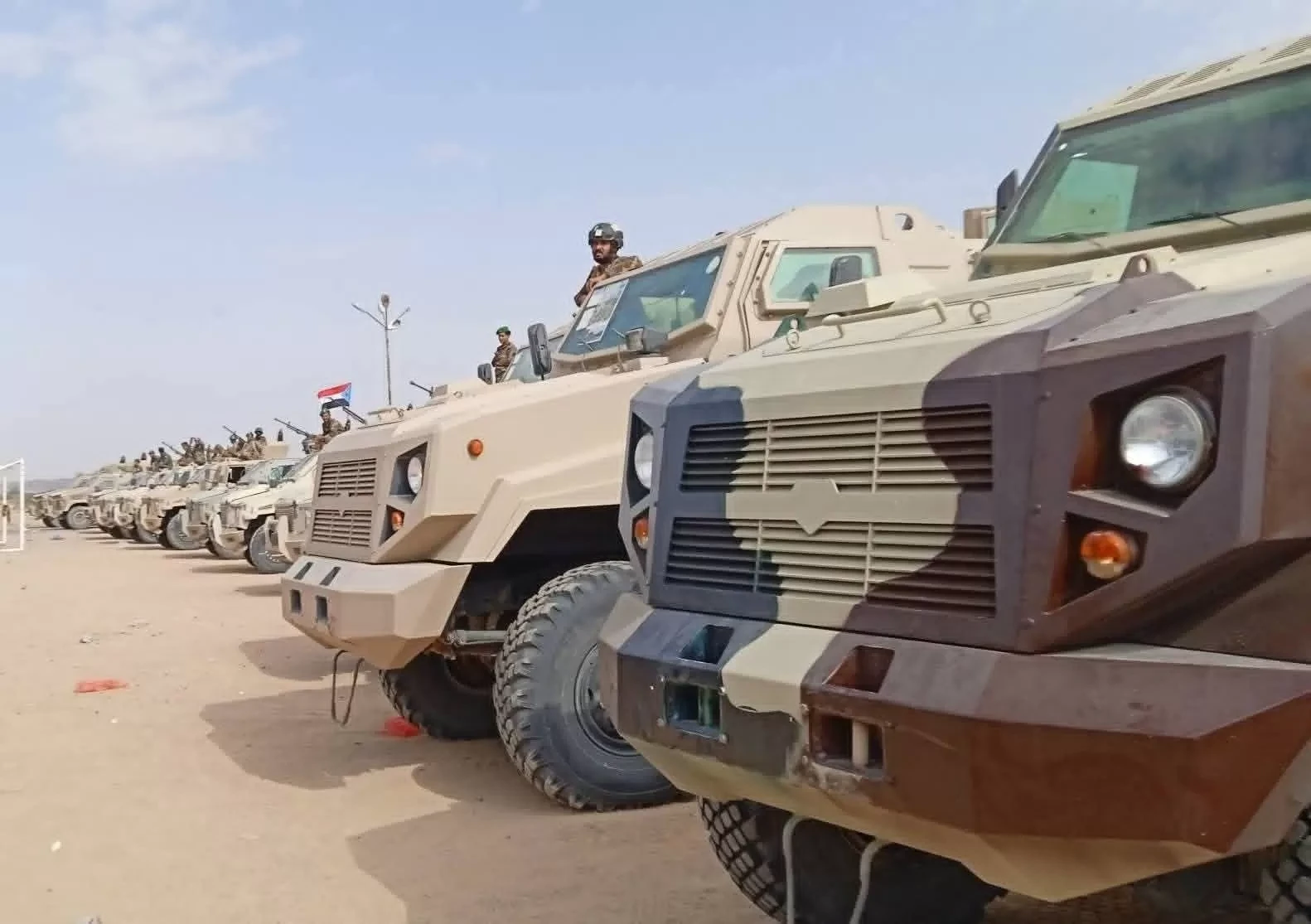
Seiyun, the administrative center of Wadi and Desert Hadramout, witnessed one of the most significant military shifts in the governorate’s modern history on December 2 and 3, 2025, after forces affiliated with the Southern Transitional Council advanced toward the city and took control of military and security positions and government institutions that had been under the control of the First Military Region forces affiliated with Yemen’s Ministry of Defense.
The developments came amid escalating military tensions in Hadramout, coinciding with movements by the Hadramout Tribes Alliance in the plateau and oil facility areas, and mounting disputes over the future of the military deployment in the valley and desert.
Military movements begin on December 2
Wide-ranging field movements began on Tuesday, December 2, when military units affiliated with the Southern Transitional Council advanced toward areas of Wadi Hadramout from multiple fronts.
The movements included areas in Sah District, as part of the advance toward positions held by the First Military Region in Seiyun.
According to field reports, the advancing forces included armored formations and various military units, while the First Military Region Command issued directives to its units to take security measures and prepare for potential developments.
Reports also spoke of members of one of the First Region’s military units joining the advancing forces, in an indication of the tension and division that preceded the confrontation.
Launch of the “Promising Future” operation
At dawn on Wednesday, December 3, forces affiliated with the Southern Transitional Council announced the start of a military operation named “Promising Future,” stating that its declared aim was to take control of areas of Wadi and Desert Hadramout and end the First Military Region’s deployment.
The Southern Transitional Council presented the operation as a step toward reorganizing the security and military situation and confronting security threats, while the government forces targeted viewed it as a military move against their positions and institutions.
Statements and coverage supporting the operation included accusations that the First Military Region Command was cooperating with armed groups. These were political and security-related accusations that were not substantiated by independent coverage of the fighting.
Clashes around Seiyun
The early hours of December 3 saw armed clashes between the advancing forces and First Military Region units at several positions and along routes leading to Seiyun.
Press reports said clashes took place near the Al Ghuraf area, alongside the deployment of Southern Transitional Council forces in the Jathmah area on the Seiyun plateau, and shelling directed at the First Military Region Command headquarters.
Local sources also spoke of attempts to advance along the Daw'an and Wadi Al Ayn fronts, while explosions and artillery fire were heard in parts of the valley.
Military resistance was not sustained uniformly across all positions: First Military Region units withdrew from some of their positions, while other sites saw clashes before control shifted to the advancing forces.
Taking control of strategic positions
Within hours, forces affiliated with the Southern Transitional Council managed to enter Seiyun and take control of several of the city’s most important military, security and administrative sites.
The sites mentioned in coverage included:
First Military Region Command headquarters.
Seiyun Airport.
The Republican Palace.
The Government Complex.
Security headquarters and strategic military checkpoints.
Field coverage showed members of the advancing forces entering the Republican Palace, while the Government Departments Complex was declared secured on the morning of December 3.
Control of these sites was particularly significant because it represented an actual transfer of military and security influence in the center of Wadi Hadramout, rather than merely an advance on the outskirts of the city.
Withdrawal of the First Military Region
As the advance of forces affiliated with the Southern Transitional Council widened, First Military Region units began withdrawing from their positions in Seiyun and other areas of the valley.
Later reports indicated that some of these forces withdrew in an organized manner toward Marib Governorate, following limited clashes at some positions.
The withdrawal helped speed up the transfer of control and shorten the duration of fighting in the city, despite casualties being recorded during the operations.
Sources gave differing casualty figures for those killed and wounded. The Sana’a Center for Strategic Studies, citing local sources, reported that at least 30 people were killed during the fighting, while other field coverage spoke of six members of the southern forces being killed, in addition to losses among the First Military Region forces.
These figures should not be added together or treated as a single final tally, given differences in the scope of documentation and the sources of information.
Shifts in control in Wadi Hadramout
The developments were not limited to Seiyun, but extended to other positions and areas in the valley and desert, where the following days saw a wide military deployment at strategic checkpoints and facilities.
This led to a major change in the map of military control, after the First Military Region lost key positions it had managed and protected in previous years.
The operation also coincided with other military developments in the oil-producing Al Masilah areas, meaning that Hadramout saw more than one escalation unfold at the same time.
Later analytical reports described what happened as a sweeping shift in the balance of power in eastern Yemen, with effects extending to Al Mahrah Governorate and neighboring areas.
Significance and implications of the event
The entry of forces affiliated with the Southern Transitional Council into Seiyun and their takeover of First Military Region positions marked a pivotal moment in Hadramout’s security and military landscape.
At that stage, it ended the First Military Region’s presence as the force controlling the most prominent military headquarters in the center of the valley, and opened the way for a reorganization of military deployment and security administration at vital institutions.
It also shifted political and military competition from statements and threats to a sweeping change on the ground, at a time when the governorate was seeing mediation efforts and attempts to contain tensions around its oil facilities.
The event is also significant because it paved the way for a new phase of developments, interventions and military decisions that Hadramout witnessed in late December 2025 and early January 2026.
Thus, December 3, 2025, is recorded as one of the most prominent milestones in the governorate’s security and military shifts, because of the direct changes it brought to positions of control and the deployment of forces within Wadi Hadramout.