
Clashes at PetroMasila End Truce and Change Control of Oil Facilities
The PetroMasila oil facilities on the Hadramout Plateau witnessed armed clashes on Thursday, December 4, 2025, between the Hadrami Elite Forces and forces affiliated with the Hadramout Tribes Alliance. The clashes ended with the Alliance forces withdrawing and control of the facilities’ protection sites passing to forces aligned with the Southern Transitional Council. The clashes came hours after a Saudi-sponsored truce agreement, amid mutual accusations over which side was responsible for its collapse.
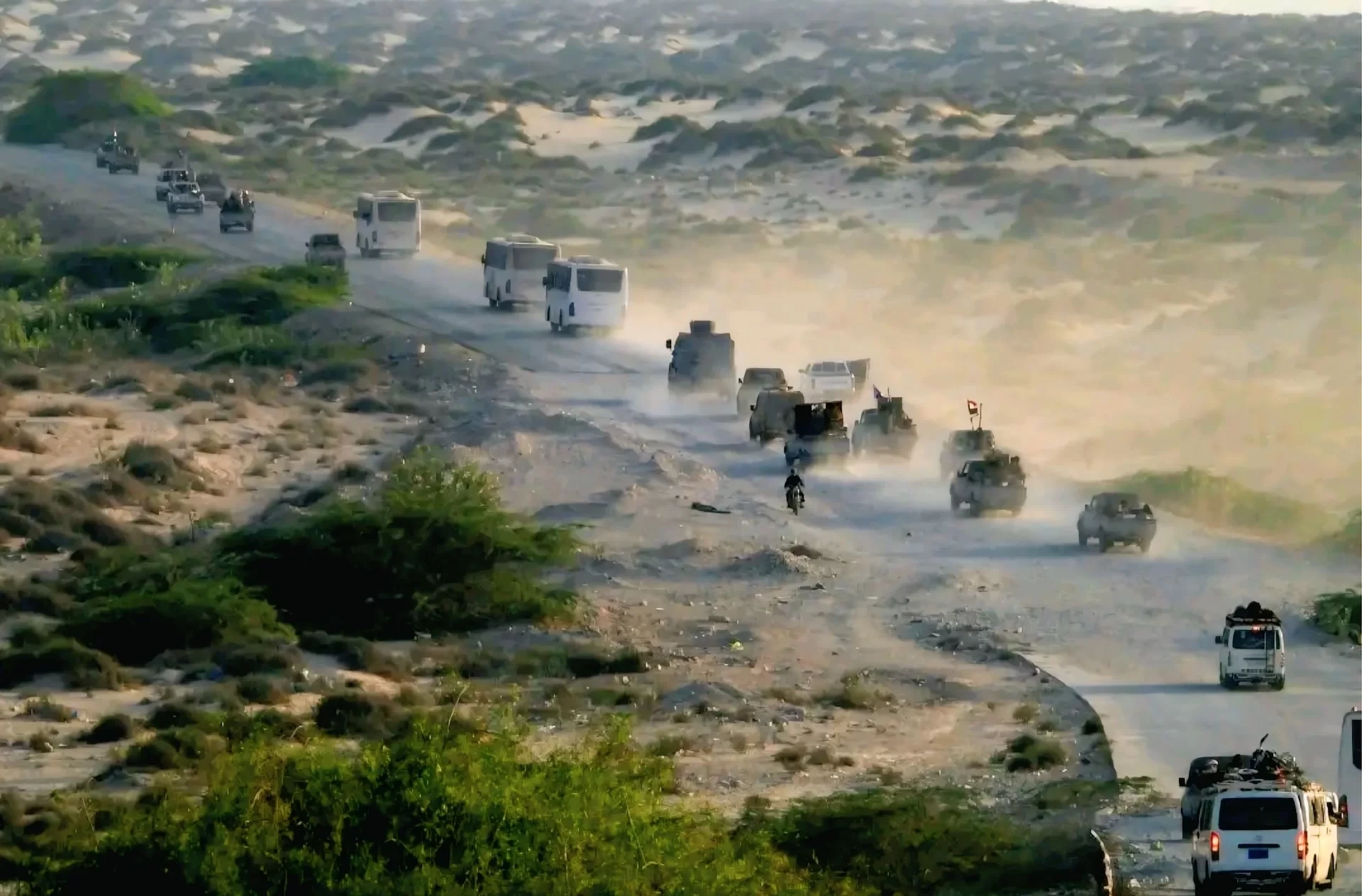
The Hadramout Plateau saw a new military escalation on the morning of Thursday, December 4, 2025, around the facilities of PetroMasila Oil Company, after clashes broke out between the Hadrami Elite Forces, affiliated with the Second Military Region, and the Hadramout Protection Forces affiliated with the Hadramout Tribes Alliance, led by Sheikh Amr bin Habrish.
The clashes came less than a day after a truce agreement was signed in Mukalla between the local authority and the Hadramout Tribes Alliance, under Saudi sponsorship and with local mediation. The agreement was supposed to begin implementation on Thursday morning with the redeployment of forces stationed around the oil facilities.
However, developments on the ground took a different course, as withdrawal arrangements turned into an armed confrontation that ended with control changing at the sites where the Hadramout Protection Forces had deployed since November 29.
The truce agreement preceding the clashes
On December 3, Hadramout Governor Salem Ahmed al-Khanbashi and Hadramout Tribes Alliance leader Amr bin Habrish reached a 13-point agreement aimed at ending military and security tensions around the PetroMasila facilities.
The agreement stipulated that the Hadramout Protection Forces would withdraw to a distance of at least one kilometer outside the company’s perimeter, while the supporting Elite Forces would withdraw to a distance of at least three kilometers from their current positions, and the company protection forces would return to their previous positions.
It also stipulated that new military reinforcements be barred, employees’ movement be ensured, operations resume, and arrangements be made to reorganize the force assigned to protect the facilities.
The scheduled time for the start of the withdrawals was 8:00 a.m. on Thursday, December 4, 2025.
Clashes break out around PetroMasila
As the day set for implementing the agreement began, reports emerged of armed clashes around the PetroMasila facilities between forces affiliated with the Alliance and forces aligned with the Southern Transitional Council.
Tribal sources cited by Yemen Monitor said that the Hadramout Protection Forces came under attack while withdrawing from the oil company sites in accordance with the truce agreement.
According to these sources, the attacking forces used heavy weapons and drones, leading to the withdrawal of the forces affiliated with the Alliance from their positions.
By contrast, the media center of the Second Military Region offered a different account, accusing forces led by Sheikh Amr bin Habrish of attacking Elite Force positions around the companies and saying its forces had moved to repel the attack.
These conflicting accounts reflect the extent of disagreement over responsibility for initiating the confrontation. The sources covering the event do not provide sufficient independent evidence to establish the accuracy of either account in all its details.
Control of the oil facilities changes
The clashes, described by press reports as relatively limited, ended with the Hadramout Protection Forces withdrawing from their positions inside and around the oil facilities, and control passing to the Hadrami Elite Forces and forces aligned with the Southern Transitional Council.
Media outlets supportive of the Southern Transitional Council announced that the events represented a redeployment of military forces around the oil companies and the securing of sites and strategic positions.
Faraj al-Bahsani, then a member of the Presidential Leadership Council and vice president of the Southern Transitional Council, also announced the end of what he described as the rebellion of forces affiliated with Sheikh Amr bin Habrish, saying that control of the sites had been established as part of restoring security.
In contrast, the Hadramout Tribes Alliance had previously announced that its forces’ presence in Al Masila was intended to protect national resources and secure the facilities, not to seize them outside the framework of the state.
The outcome on the ground, as reported by various coverage, indicates that control of the company protection sites changed hands, without necessarily implying a change in the civil administration or legal ownership of the oil facilities.
Mediation efforts falter
The December 4 clashes represented a clear setback for the truce agreement signed the previous day.
The agreement had aimed to separate the opposing forces and gradually reorganize the security deployment, but the clashes effectively ended the prospects of implementing its provisions according to the announced schedule.
Reports by the Sana’a Center for Strategic Studies indicated that emergency mediation efforts had collapsed and clashes had resumed between Elite Forces and tribal fighters in the oil-producing area.
The center also reported that Sheikh Amr bin Habrish later left for Saudi Arabia and called on his forces to dissolve their formations and return to their homes, in a development that reflected the Alliance forces’ declining position on the ground during that period.
Impact of the clashes on oil operations
The clashes coincided with disruption to PetroMasila’s operations. The company had announced in early December that it was temporarily halting production and refining operations due to deteriorating security conditions and concerns about the safety of workers and facilities.
On December 4, the company announced the gradual resumption of work in the Al Masila sectors, following an improvement in security conditions and the securing of the fields and facilities.
The company said priority would be given to tasks related to essential services, foremost among them operating power generation stations and supplying fuel.
It also noted that the earlier suspension of operations had been part of precautionary measures to protect workers and oil facilities.
This announcement shows how closely security stability in the Al Masila areas is linked to the continuity of energy production and public services, but it does not mean that all production and refining operations returned to full capacity on the day it was announced.
The military and political significance of the event
The PetroMasila clashes took on exceptional significance because they coincided with the broad military shifts in Wadi Hadramout, following the takeover of Seiyun and First Military Region positions by forces affiliated with the Southern Transitional Council.
Thus, within a few days, the governorate saw control change at key military, administrative and oil sites, in a development that reshaped the balance of power across the coast, the valley and the plateau.
The clashes also exposed the limited ability of truce agreements to hold up amid continued military mobilization and the absence of implementation arrangements trusted by all parties.
The event also had a clear economic dimension, given the importance of the Al Masila fields to the oil and energy sector, as well as the impact of disrupted operations at the facilities on fuel supplies and the running of power stations.
December 4, 2025, represents a pivotal point in the security and military shifts in Hadramout, as it saw the collapse of an early attempt to contain the escalation and the transfer of control over strategic facilities to another military party, amid a series of developments that paved the way for further tensions in the following weeks.