
Airstrikes Rock Wadi Nahb, Opening a Phase of Direct Military Escalation in Hadramout
Wadi Nahb in Ghayl bin Yamin District, Hadramout, witnessed airstrikes on the morning of Friday, December 26, 2025, attributed to the Saudi air force and targeting the vicinity of positions held by the Hadrami Elite Forces, affiliated with the Southern Transitional Council. The strikes came after clashes with tribal gunmen and rising tensions over control of the area, and a day after Riyadh called for the withdrawal of Transitional Council forces from Hadramout and Al Mahrah. No confirmed casualty toll from the airstrikes was recorded.
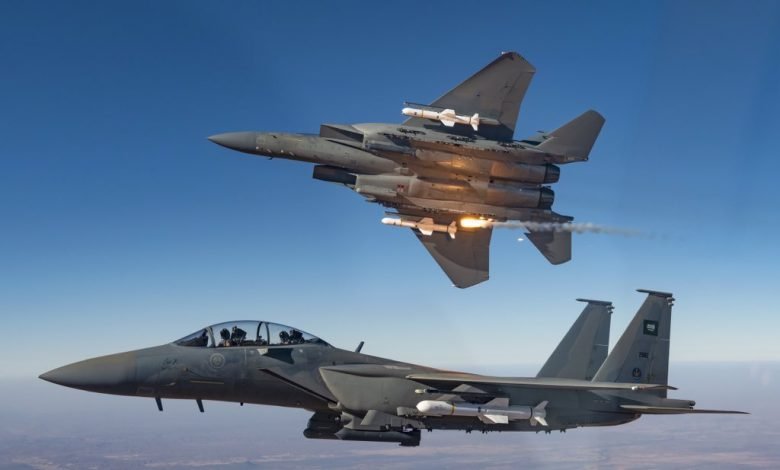
Ghayl bin Yamin District in Hadramout Governorate witnessed an unprecedented military development on the morning of Friday, December 26, 2025, in the course of the crisis that erupted at the beginning of the month, after positions in the Wadi Nahb area were hit by airstrikes that military sources and eyewitnesses attributed to the Saudi air force.
The strikes came at an extremely sensitive time, less than twenty-four hours after the Saudi Ministry of Foreign Affairs issued an official statement calling on the Southern Transitional Council to end its military movements in Hadramout and Al Mahrah and withdraw its forces urgently and in an orderly manner.
As the crisis shifted from diplomatic statements to airstrikes, military developments in Hadramout entered a more dangerous phase, amid fears that clashes could expand between forces affiliated with the Transitional Council and tribal and military formations opposed to it.
Airstrikes in Wadi Nahb
Military sources and eyewitnesses told the South24 Center that two warplanes carried out two strikes on Friday morning against a position held by the Hadrami Elite Forces in the Wadi Nahb area of Ghayl bin Yamin District.
The report said the strikes took place at around 9 a.m., with plumes of smoke rising near vehicles and personnel belonging to the Elite Forces.
In separate coverage, Yemen Monitor cited local sources as reporting airstrikes in the vicinity of Nahb Camp, following military movements by forces affiliated with the Transitional Council in the area.
Local sources reporting on the airstrikes recorded no casualties from the bombardment, while details about the extent of material damage remained unclear.
It should be noted that Saudi Arabia had not officially announced responsibility for the strikes when the initial reports were published. The airstrikes were therefore attributed to the Saudi air force on the basis of accounts from sources in the field and press coverage, rather than a direct Saudi acknowledgment at the time.
Clashes Before the Airstrikes
The airstrikes did not occur in isolation from earlier developments on the ground. Areas of Ghayl bin Yamin saw clashes on December 25 between forces affiliated with the Transitional Council and tribal gunmen linked to the Hadramout Tribal Alliance.
The Hadrami Elite Forces had moved toward tribal positions in the area as part of operations they said targeted armed groups and security suspects.
The clashes, meanwhile, were part of a broader dispute over control of positions on the Hadramout Plateau, particularly areas where tribal formations have an armed presence.
The Associated Press quoted Amr al-Baidh, the Transitional Council's representative for foreign affairs, as saying that clashes and ambushes preceded the strikes and left two of the council's fighters dead and twelve others wounded.
This toll relates to the clashes before the airstrikes and is not a confirmed casualty toll from the airstrikes themselves.
Southern Transitional Council's Response
Following the airstrikes, the Southern Transitional Council issued a statement saying its forces had come under air attack and expressing surprise at the strikes targeting positions held by the Hadrami Elite Forces.
The council said its forces' movements in Hadramout and Al Mahrah had come, according to its position, in response to local demands to confront security threats, combat armed groups, and cut smuggling routes.
At the same time, it declared that it remained committed to its partnership with the coalition countries and was ready to coordinate on arrangements that would serve shared security interests.
The statement reflected the council's attempt to defend its military movements while avoiding a political break with Saudi Arabia, despite accusing the Saudi air force of targeting its forces.
However, that day the council did not announce that it would comply with Saudi Arabia's demand for a complete withdrawal from the two governorates.
Presidential Move and Call for Military Measures
The crisis also saw a development at the level of Yemen's Presidential Leadership Council on the same day.
Council Chairman Rashad al-Alimi chaired an emergency meeting of the National Defense Council to discuss the situation in Hadramout and Al Mahrah in light of the Transitional Council's military movements.
The official Yemeni News Agency quoted an official source as saying that al-Alimi had asked coalition forces to take military measures to protect civilians in Hadramout and support the armed forces in enforcing de-escalation.
The request came amid an ongoing dispute over redeployment and the presence of Transitional Council-affiliated forces at positions they had taken control of in previous weeks.
This development was particularly significant because it showed the crisis moving to a higher level of military and political coordination between the Yemeni leadership and the coalition.
Different Accounts of the Nature of the Strikes
Local sources described the airstrikes as warning strikes intended to stop the advance of Transitional Council-affiliated forces toward tribal positions in Wadi Nahb.
The Associated Press also quoted a leader in the Hadramout Tribal Alliance as saying he believed the strikes carried a message calling on the Transitional Council to withdraw.
By contrast, the Transitional Council treated the strikes as an attack on its forces while they were carrying out security missions.
These accounts point to a clear difference in how the operation was interpreted: while one side saw it as an intervention to halt escalation, the other considered it a bombardment of forces participating in security operations.
As for the documentary record, accounts and video footage reviewed by international media support that explosions took place in the area, while the identity of the party that carried them out remained unconfirmed by an official Saudi announcement at the time of the incident.
Why Were the Wadi Nahb Airstrikes a Turning Point?
The December 26 airstrikes took on exceptional significance because they came after weeks of mediation and attempts to rearrange military deployments in Hadramout.
At the beginning of the month, control of positions belonging to the First Military Region in Seiyun changed hands, then clashes and changes in troop positions took place at the oil facilities in Al Masila.
In mid-December, military reinforcements increased along the Al Abr–Al Wadi'ah axis, before Saudi Arabia officially announced on December 25 that it opposed the Transitional Council's military expansion.
The Wadi Nahb airstrikes followed the next day, marking a direct escalation on the ground after the diplomatic warning.
According to a subsequent analysis published by the Sana'a Center for Strategic Studies, the limited strikes came in the context of an attempt by Saudi Arabia to pressure forces aligned with the Transitional Council and prevent their continued expansion.
However, this analytical interpretation does not change the need to distinguish between confirmed events on the ground and assessments of the operation's objectives.
Military and Political Implications
The Wadi Nahb airstrikes did not end the crisis, but they revealed a greater likelihood of military confrontation and diminishing prospects for containing it through understandings alone.
They also showed that the struggle over positions of influence in Hadramout was no longer limited to local forces, but had become directly linked to the military and political positions of regional powers.
The developments further increased the importance of tribal areas on the plateau, alongside the positions of forces deployed in Seiyun, Al Abr, and Al Wadi'ah.
In the following days, tensions continued over the future deployment of the Transitional Council in Hadramout and Al Mahrah, culminating in the events of December 30, 2025, at Mukalla Port.
December 26, 2025, is thus recorded as a pivotal moment in Hadramout's security and military developments, as it was associated with the first airstrikes attributed to Saudi Arabia in the confrontation with Transitional Council forces during that phase, following a series of warnings and political calls for withdrawal.