
Unidentified Drones Threaten Hadramout Governor’s Residence and Oil Facilities, Prompting Military Alert in Mukalla
Hadramout Governorate witnessed a security and military alert on Thursday, June 4, 2026, after three drones of unknown origin were spotted near the residence of Presidential Leadership Council member and Hadramout Governor Salem Ahmed Al-Khanbashi, and at strategic sites including PetroMasila Company facilities and Al-Dhabba oil port. Government sources spoke of an attempt to target the governor, with no injuries reported, while the Security Committee held an emergency meeting to strengthen readiness and protect vital facilities, amid a lack of confirmed information about the identity of those responsible.
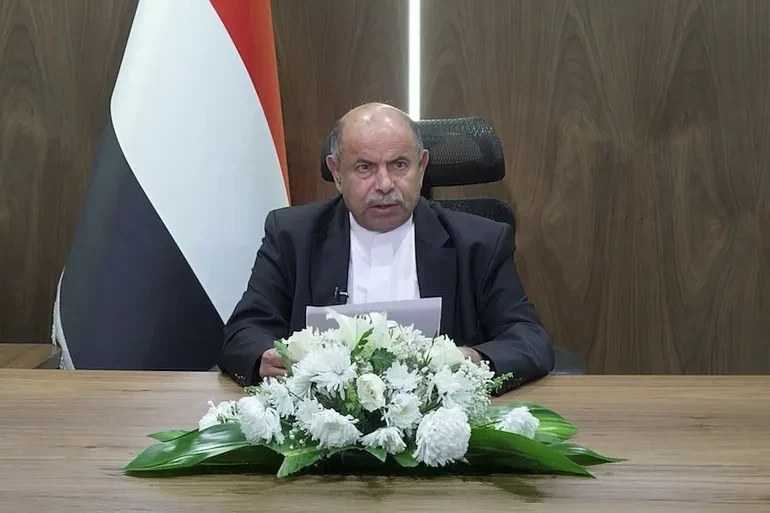
Unidentified Aerial Activity Triggers Alert in Hadramout
Security concerns returned to Mukalla, the capital of Hadramout Governorate, after local and government sources reported that unidentified drones were flying near sensitive civilian, military and economic sites.
The incident took place as the governorate was working to reorganize its security and military institutions, following the changes it had experienced since December 2025 and the subsequent restoration of government forces’ control over the main cities and military camps in early January 2026.
Media reports said that three drones were spotted near the residence of Governor Salem Al-Khanbashi, as well as sites linked to the oil sector and military facilities on the Hadramout coast.
The appearance of these aircraft raised fears that vital facilities could be targeted, particularly given the governorate’s economic and security importance.
Reports of an Attempt to Target the Governor
Yemeni Minister of Information’s adviser Mukhtar Al-Rahbi announced that the residence of Hadramout Governor Salem Al-Khanbashi had been targeted in an attempted attack involving three drones of unknown origin.
Al-Rahbi confirmed, according to Anadolu Agency, that the governor was unharmed.
No party claimed responsibility for the incident, and the local authority had not issued a detailed statement at the time confirming the nature of the attack or clarifying whether the drones had fired live munitions.
Accordingly, the available information confirms that reports were made of an attempted attack, but is insufficient to establish that a successful strike was carried out on the residence or to identify those behind it.
Oil Facilities and Ports Among Sites of Concern
Reports were not limited to the governor’s residence; local sources also spoke of aerial activity near important economic and military facilities, including PetroMasila Company, Al-Dhabba oil port, Mukalla Port and the Barshid Brigade camp.
These sites are especially important to Hadramout’s economic security system because they are linked to oil production, transport and export, as well as the role of ports in trade and supply movements.
In previous years, oil facilities in the governorate had been attacked, disrupting Yemeni oil exports and making any new aerial threat a source of economic and security concern.
However, no published evidence was available to confirm that the aforementioned facilities suffered material damage as a result of the June 4 incident.
Emergency Meeting of the Security Committee
Alongside these developments, Governor Salem Al-Khanbashi chaired an emergency meeting of Hadramout Governorate’s Security and Military Committee to review field conditions and the level of readiness.
The meeting discussed strengthening coordination between military units and security agencies, developing risk-monitoring and response procedures, and improving preventive intelligence work.
The governor stressed the need to maintain security vigilance, protect citizens and public and private property, and uphold the law while implementing security measures.
According to available coverage, the official statement on the meeting did not explicitly confirm details of the attempted assassination being reported in the media.
Air Defenses Fire Two Days Later
Security concerns were renewed at dawn on Saturday, June 6, 2026, when residents and media reports said they heard anti-aircraft fire near several strategic sites in Mukalla.
The sites mentioned in the reports included Al Rayyan International Airport, Al-Dhabba oil port and the headquarters of the Second Military Region Command.
Sources spoke of unidentified drones flying overhead before the firing began, while reports indicated that air defenses had attempted to intercept them.
However, the authorities did not then publish decisive technical details about how many aircraft had been shot down, their identities or the nature of their payloads.
The close timing of the two incidents makes the events of June 4 and 6 a linked security development that merits documentation as a single episode in the historical timeline.
Fears of Attacks on Economic Infrastructure
The drones flying over sensitive sites brought the issue of protecting Hadramout’s oil infrastructure back into focus, particularly amid efforts to restore economic activity and strengthen stability.
The governorate has production, transport and export facilities that account for an important share of Yemen’s economic resources, making their security relevant to financial and service-sector stability on a broader scale.
The incident also highlighted the importance of developing monitoring and early-warning systems and strengthening coordination among the forces responsible for protecting ports, airports and oil fields.
In the absence of an official announcement identifying those responsible, these activities cannot be attributed to any particular political or military party.
Security and Military Significance of the Event
June 4, 2026, marks an important point in Hadramout’s security and military developments. The appearance of unidentified drones brought aerial threats back to the forefront, after months in which attention had focused on ground confrontations and the reorganization of forces.
The event is significant in three main respects: reports of an attempt to target a prominent presidential figure, concerns about the security of oil facilities and ports, and heightened military alert, with air-defense activity resuming two days later.
The event is therefore recorded as an aerial threat of unknown origin that prompted stronger security and military measures in Hadramout, while the details of the attempted assassination and the identity of the drones remain in need of further evidence and official investigations.