
Houthi Missile and Drone Attacks Target Al Abr, Al Wadi'ah and Al Kana'is in Hadramout Desert
The desert and border areas of Hadramout Governorate witnessed a notable military escalation on Monday, August 24, 2026, after the Houthi group announced carrying out two attacks using ballistic missiles and drones against military sites and movements that it said belonged to Saudi forces in Al Abr, Al Wadi'ah and Al Kana'is. The group claimed to have destroyed more than ten trucks loaded with weapons and inflicted human and material losses, while local reports said the area around the Al Wadi'ah crossing had been targeted and vehicles had caught fire. No independent toll confirming all the losses announced by the group was available.
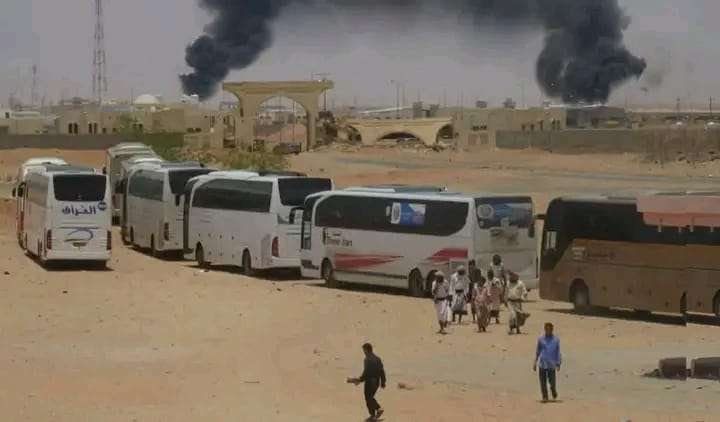
Military escalation reaches Hadramout desert
The desert areas of Hadramout Governorate entered a new phase of military tension following the Houthi group's announcement that it had carried out missile and aerial attacks targeting military sites and movements in areas near the Yemen-Saudi border.
The escalation came as Hadramout was witnessing a reorganization of the deployment of forces and security agencies following the military and political shifts it had experienced since December 2025.
The attacks took on particular significance because they occurred in an area that includes strategic routes linking Hadramout to Saudi Arabia, as well as military sites and border facilities that play a key role in the movement of transport and supplies.
Houthis announce two military operations
The Houthi group's military spokesperson, Yahya Saree, announced that two operations had been carried out using ballistic missiles and drones.
According to the group's statement, the first operation targeted a military convoy loaded with equipment and weapons in the areas of Al Abr and Al Wadi'ah, which it said had come from Saudi territory.
The group claimed that the attack had destroyed and burned more than ten trucks loaded with weapons.
As for the second operation, the group said it had targeted military gatherings and weapons depots in the Al Kana'is area, causing significant human and material losses.
These figures are claims made by the party that carried out the attack and have not been verified by published independent reports.
Reports of shelling near the Al Wadi'ah crossing
Local reports said that sites near the Al Wadi'ah land crossing had been hit by drone strikes and that fires had broken out in a number of vehicles and tanker trucks.
Al-Mashhad Al-Yemeni website quoted local sources as saying that the strikes had hit tractor-trailers and tankers that they said were owned by citizens, and noted that footage showing smoke rising from the targeted site was being circulated.
In contrast, the South24 Center reported information indicating that the attacks had targeted what is known as the “Coalition Camp” in the Al Wadi'ah area.
These accounts differ over the nature of the damaged targets, ranging from military sites to civilian vehicles. An independent field investigation is needed to determine the damage and responsibility accurately.
Strategic importance of Al Abr and Al Wadi'ah in the military equation
Al Abr District and the areas connected to the Al Wadi'ah crossing are among the most prominent strategic locations in Hadramout desert, given their position along transport routes between Yemen and Saudi Arabia.
The area has military importance because of its connection to the movement of forces and supplies, as well as economic and humanitarian significance as a corridor for the movement of travelers and goods.
Any military escalation around these routes could raise concerns about the safety of civilians and drivers and the continued movement of land transport.
The use of ballistic missiles and drones in these areas also broadens the scope of security risks compared with the conventional ground clashes the governorate had witnessed in previous months.
Attacks come amid broader regional escalation
The Houthis' announcements on August 24 were not limited to the desert areas of Hadramout.
On the same day, the group announced that it had targeted the Saudi oil tanker “Amzan” off the coast of Yanbu in the Red Sea.
The Saudi National Shipping Company confirmed that the vessel had been attacked, noting that its crew members were safe and that no injuries had been recorded.
The simultaneous announcements indicated that the operations targeting the areas of Al Abr, Al Wadi'ah and Al Kana'is were part of a broader wave of escalation involving land and sea targets linked to Saudi Arabia, according to published statements and coverage.
Unresolved losses and no independent toll
The Houthi group announced that it had destroyed trucks and weapons depots and that there had been deaths and injuries among the targeted forces.
However, available sources provided no independent documentation verifying the number of trucks destroyed, the scale of the human losses or the identity of all the sites that came under fire.
Nor was a final official toll available that could be relied upon to determine the number of civilian or military casualties.
For this reason, historical documentation should distinguish between the Houthis' announcement of the attacks and reports of shelling and damage near Al Wadi'ah, on the one hand, and the military outcomes the group claimed to have achieved, on the other.
Military and security significance of the event
August 24, 2026, marks an important point in Hadramout's military shifts, as missile and drone attacks extended to desert and border areas connected to the security of roads, supplies and land crossings.
The significance of the event lies in the expanded scope of aerial and missile threats and the emergence of new risks to border areas and transport, amid broader military escalation in Yemen and the Red Sea.
The event is thus recorded as an announced Houthi military escalation against sites and movements in Hadramout desert, amid conflicting accounts of the scale of the actual damage and losses.