
Teachers in Wadi Hadramout Insist on Continuing Strike and Call for Comprehensive Resolution of Salaries and Dues
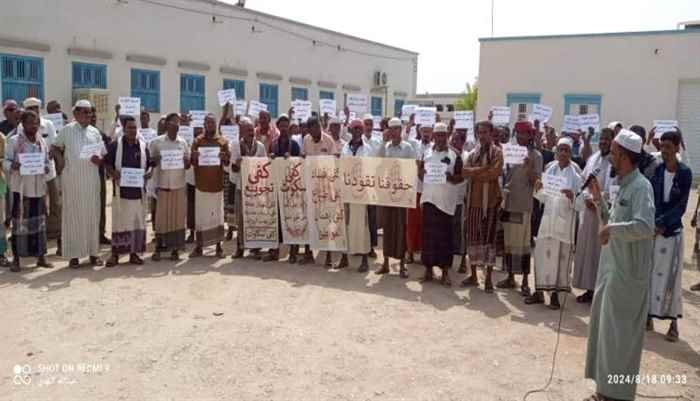
The education crisis in Wadi and Desert Hadramout escalated with a new union move during April 2024, as teachers’ representatives insisted on continuing the strike in protest against deteriorating living conditions and the failure to reach comprehensive solutions to their financial and employment demands. The continued dispute prolonged disruption to classes at schools participating in the strike, amid growing concerns about the future of the academic year.
1. Dispute over Suspending the Strike
On April 11, 2024, the heads of the branches of the Southern Teachers and Educators Syndicate in the districts of Wadi and Desert Hadramout issued a statement confirming that the strike would continue after the Eid al-Fitr holiday and rejecting any arrangements to end it without an adequate response to the financial and employment demands.
The statement came after the Educational Professions Syndicate announced in early April that it had reached understandings with the local authority that included disbursement of financial dues and a call for teachers to resume classes after the holiday.
However, not all union components approved those understandings; other parties considered that they did not address the roots of the crisis or ensure a sustainable improvement in teachers’ conditions.
2. Rejection of Partial Solutions and Insistence on Demands
In their statement, the branch heads affirmed that continuing the strike was tied to meeting demands broader than the disbursement of some overdue dues.
The demands reaffirmed in the statement included:
Payment of annual allowances and retroactive adjustments due since they were halted in 2013, in line with union demands.
Restructuring wages in line with rising living costs.
Providing health insurance for teachers and their family members.
Reaching comprehensive financial solutions instead of temporary measures.
The statement stressed that the decision to end the strike must be made by agreement among the union bodies participating in the call for it, rejecting individual statements calling for a return to work without a collective agreement.
3. Division in Union Positions
Developments in April revealed a clear divergence between the bodies that announced reaching understandings with the local authority and the committees that considered those understandings insufficient.
On April 9, the Hadramout Teachers Committee announced that the strike would continue, considering that the proposed measures were limited to some financial aspects and did not meet all teachers’ demands.
On April 15, the “I Am the Teacher” Committee in Wadi and Desert Hadramout affirmed that it would continue the strike until an acceptable agreement was reached, stressing that the agreed dues must be received before announcing the suspension of the strike.
4. Renewed Affirmation of the Strike on April 21
The escalation did not end with the April 11 statement; the Southern Teachers and Educators Syndicate in Wadi and Desert Hadramout held a meeting on April 21 to discuss union developments and efforts to address the crisis.
According to the published statement, the meeting concluded by insisting on continuing the strike, considering that previous efforts had not made sufficient progress in addressing teachers’ demands.
The syndicate also called on teachers to abide by the strike decision and urged the relevant authorities to intervene to reach solutions.
5. Impact of the Crisis on Education
The continued strike at participating schools prolonged disruption to the educational process and increased pressure on students and their families, while the dispute over salaries and incentives remained unresolved.
This period showed that the crisis was no longer merely a dispute over specific financial dues, but had become linked to the mechanisms for negotiation and union representation, and the extent to which the parties complied with implementing agreements.
No unified data are available to determine precisely the number of schools that remained closed or the total number of school days lost during this period.
Impact and Significance
The April 11, 2024 statement marked an important point in the education crisis in Wadi Hadramout, revealing the difficulty of ending the strike through partial agreements that do not have the consensus of teachers’ representatives.
It also underscored the need for a sustainable approach to teachers’ wages and dues, and for establishing a clear mechanism for negotiation and implementation of commitments, in a way that safeguards workers’ rights and limits disruption to classes.