Seiyun Inaugurates 4,000-Cubic-Meter Water Reservoir to Meet Rising Demand
The city of Seiyun in Wadi Hadramout witnessed the launch of trial pumping and the provisional handover of a new water reservoir with a capacity of 4,000 cubic meters on January 2, 2023, along with transmission lines connected to the Jathmah field. The project cost $681,725 and was funded from the oil sales allocation earmarked for the local authority in Wadi and Desert Hadramout. The project was intended to boost storage capacity and improve water distribution amid rising residents’ needs and urban expansion.
Rising demand for water drives expansion of Seiyun’s system
As urban activity expanded and demand for drinking water increased in the city of Seiyun, the need emerged to develop storage and transport capacity in the water system connected to the Jathmah field, which is one of the city’s primary supply sources.
The existing infrastructure was under pressure due to increased consumption, prompting the relevant authorities to implement a project for a new emergency reservoir and transmission lines to reorganize the flow of water from the wells and improve the capacity of the Local Water and Sanitation Corporation to meet needs.
Official procedures for the project began before 2023. On March 1, 2021, bids were opened for two tenders to build the reservoir and transmission lines, at an initial estimated cost of $943,797, as part of projects funded from the governorate’s share of oil revenues. The stated aim was to increase storage capacity to keep pace with urban expansion and the growing numbers of residents and displaced people in the city.
January 2, 2023: Trial pumping launched
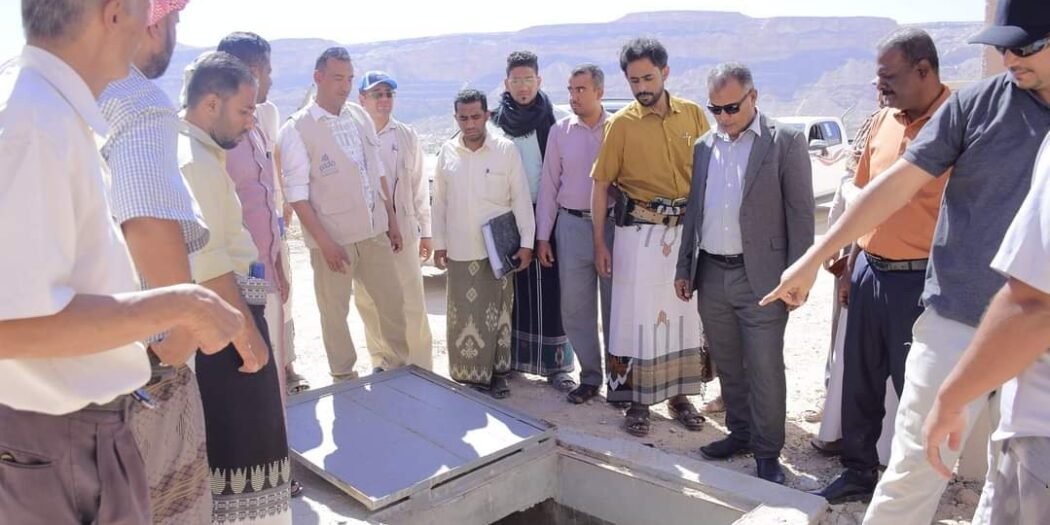
On Monday, January 2, 2023, trial pumping and the provisional handover of the new concrete reservoir project were launched in the presence of Hadramout Governorate Undersecretary for the districts of the valley and desert, Amer Saeed Al Amri, and representatives of the Local Water and Sanitation Corporation and the supervising technical authorities.
The launch covered the reservoir project, with a capacity of 4,000 cubic meters, and the transmission line from well No. (4) at the Jathmah field, as well as work on transmission lines from the field’s wells.
According to the Local Water Corporation, work on the two projects took about 18 months. It was carried out by Hajco Trading and Contracting Company, with the participation of specialized engineering teams responsible for supervision and follow-up.
Redistributing water through two groups of wells
The project was not limited to adding a new reservoir; it also included changing how water from the Jathmah field is supplied to the reservoirs.
According to the published technical information, the supply lines were divided into two groups:
Eastern line: Connected to nine wells supplying the old reservoir.
Western line: Connected to eight wells supplying the new reservoir.
This division aims to distribute supplies between the two reservoirs in a more organized manner, reduce pressure on the existing storage system, and enhance the flexibility of water network operations.
Accordingly, the project became connected to 17 wells distributed between two main lines, in accordance with the announced design.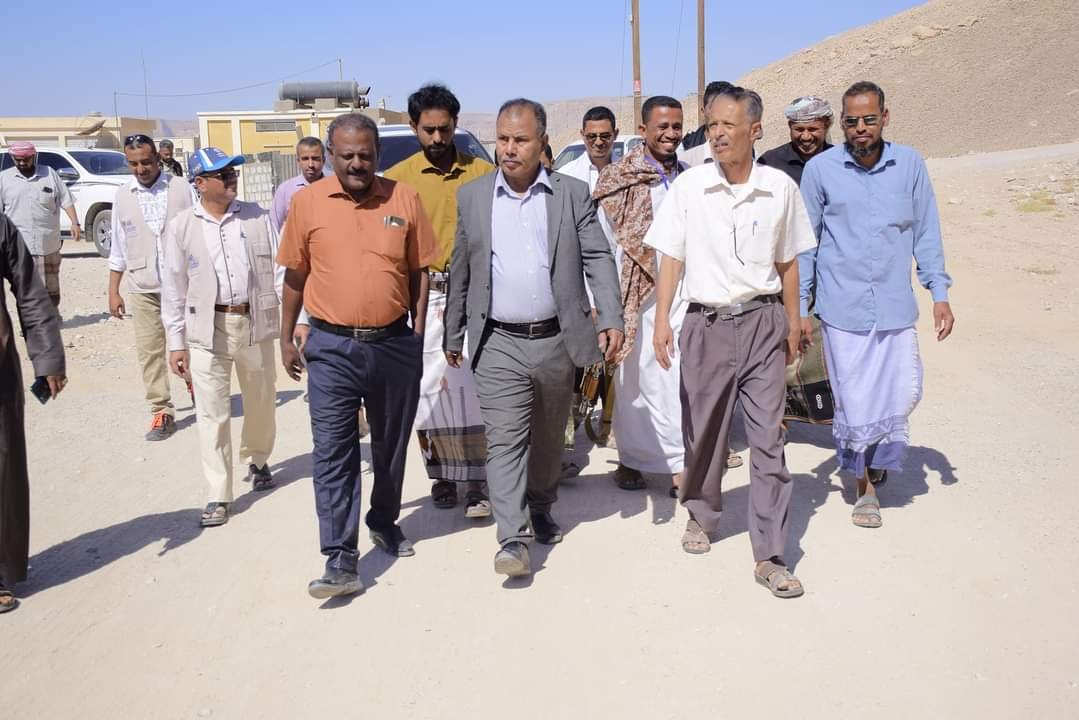
Project cost and source of funding
The announced cost of the two projects at the launch of trial pumping was $681,725, funded from the allocations of the local authority in Wadi and Desert Hadramout from its share of oil sales.
This amount differs from the estimated cost announced when bids were opened in March 2021, which was $943,797. The difference is because the first figure was an estimate for the tender, while the second was cited as the cost of the two projects in the launch announcement. The published data alone are insufficient to conclusively determine the reasons for the discrepancy.
Provisional handover does not mean service operations are complete
The launch was accompanied by the provisional handover of the project, with technical committees invited to record observations and verify that the work conformed to the approved specifications.
This procedure is an important stage in handing over infrastructure projects, but it is distinct from final handover or proof of regular operations over an extended period.
Therefore, the announcement of trial pumping alone is not enough to determine the actual improvement in the number of hours water reaches homes or the final number of people benefiting from the project.
The event’s significance amid the water crisis
The inauguration of the Seiyun reservoir represents one of the key milestones in developing water infrastructure in Wadi Hadramout, given the amount of added storage capacity and the reorganization of transmission lines from the Jathmah field.
It also reflects the nature of the challenges facing water services in the governorate: responding to rising demand requires investment in wells, reservoirs and transmission lines, as well as the provision of energy and maintenance and the protection of water sources.
Although the project aimed to improve the stability of supplies, assessing its actual results requires subsequent data on pumping volumes, service regularity and the number of subscribers who benefited.
The event thus marks an important starting point for documenting the development of water services in Seiyun and tracking subsequent breakdowns, projects and challenges related to the Jathmah field.