
Continuous Electricity Line Commissioned for Zaman Water Field in Mukalla to Strengthen Supplies to Western Neighborhoods
Mukalla, in Hadramout Governorate, witnessed the commissioning on Tuesday, August 8, 2023, of a continuous electricity line to power the wells of the Wadi Zaman water field, with the aim of reducing the impact of power outages on pumping operations and improving supplies to the Fuwa area and the city’s western neighborhoods. This coincided with continued work on a 12-kilometer water transmission line, with about one kilometer remaining for completion, as part of efforts to address inadequate water access for residents.
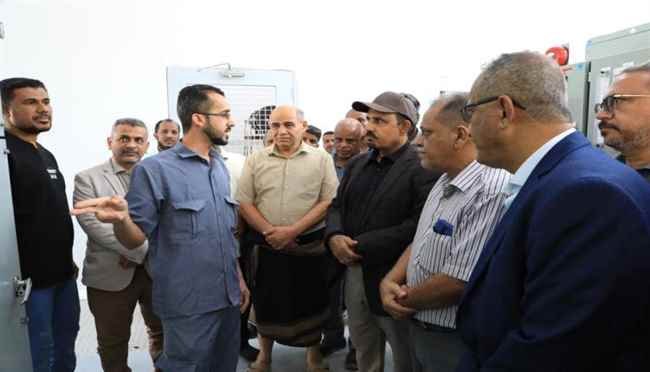
Power outages compound water challenges
In 2023, Mukalla’s drinking-water system faced challenges related to keeping wells operational and pumping water to residential neighborhoods, particularly western and elevated areas that require sufficient pressure to ensure supplies reach them.
Some water fields relied on electricity and diesel-powered generators, making the regularity of their operation dependent on stable energy supplies and the availability of fuel.
Under these circumstances, the need emerged to provide a continuous electricity supply to the main well fields as one of the key measures to limit pumping stoppages and improve service reliability.
On February 16, 2023, the Public Tenders Committee in Hadramout Governorate had approved the tendering of the continuous electricity line project for the wells in the Zaman–Ambikha area, as part of a package of projects aimed at addressing service problems and preparing for increased demand during the summer.
August 8: Electricity line for Zaman field put into operation
On August 8, 2023, the continuous electricity line dedicated to powering the wells of the Wadi Zaman water field was commissioned in Mukalla.
The project was implemented under the supervision and with funding from the local authority in Hadramout Governorate, in coordination with the relevant bodies in the electricity sector. Work to connect the field took about two weeks, according to published official information.
The line aims to provide a continuous electricity supply to the wells, reducing the impact of customary power outages on their operation and lessening reliance on generators that require a continuous supply of diesel fuel.
The project was commissioned by the governor of Hadramout at the time, Mabkhout Mubarak Bin Madhi, in the presence of a number of officials from the water and electricity sectors.
Zaman field: A main source of water for western Mukalla
Wadi Zaman field is one of the sources of drinking water supplying areas in western Mukalla. Its system includes a number of wells connected to transmission and distribution networks.
According to information published at the commissioning of the electricity line, the field had eight wells supplying areas and neighborhoods stretching from west of Al-Diyafah to Hilla.
The project’s importance stems from its connection to areas facing difficulties in accessing water, especially elevated neighborhoods that require efficient pump operation to maintain adequate pressure in the network.
The relevant authorities aimed to use more reliable operation of the field to improve water flow to the Fuwa area and the western neighborhoods, and to reduce outages caused by the failure of the pumping system.
12-kilometer transmission line project
Alongside the commissioning of the electricity line, work was continuing on a water transmission line project from Wadi Zaman field to areas in western Mukalla.
According to information announced on August 8, the new line was 12 kilometers long, with only about one kilometer remaining to complete it.
The project aimed to improve the network’s capacity to transport water from the wells to the beneficiary neighborhoods, thereby enhancing distribution efficiency and reducing bottlenecks that affect the delivery of supplies.
The importance of combining the two projects lies in the fact that a stable electricity supply alone is not enough to ensure water reaches homes unless transmission lines capable of carrying the quantities produced and distributing them efficiently are also available.
The commissioning announcement did not confirm that the transmission line had been completed by that date; rather, it indicated that work was continuing on the remaining section.
Addressing energy and operating-cost issues
Providing Zaman field with a continuous electricity line represented an attempt to reduce one of the main operational challenges facing water facilities in Hadramout: the dependence of water pumping on the availability of electricity and diesel.
Power outages at well stations cause pumps to stop or reduce the amount of water entering the network, which may affect the regularity of supplies, particularly in elevated areas and neighborhoods far from pumping sources.
Reducing the use of diesel-powered generators could also lower some operating and maintenance costs, allowing the local corporation to direct more of its resources toward improving networks and wells.
However, the announcement that the line had been put into operation did not include actual measurement data showing the extent of any reduction in diesel consumption or the increase achieved in the number of hours water reached homes.
Impact on the water crisis in Hadramout
The commissioning of the electricity line for Zaman field marks an important milestone in efforts to address the drinking-water crisis in Mukalla, because it addressed one of the recurring technical causes of service disruption: the stoppage of wells due to energy problems.
The project also linked the development of pumping sources with the completion of the infrastructure needed to transport water, in an effort to improve supplies to areas in the western part of the city.
Nevertheless, evaluating the project’s success depends not on its commissioning alone, but on monitoring the regular operation of the field, completing the transmission line, and measuring actual improvements in water volumes and distribution hours.
This event shows that addressing the water crisis is not limited to drilling new wells, but requires an integrated system encompassing energy, transportation, storage, distribution, and ongoing maintenance.