
Falk and Thullah Fields Go Out of Service, Worsening Mukalla’s Drinking Water Crisis After Thunderstorms
Mukalla, in Hadramout Governorate, experienced disruptions to its drinking water supply in late August 2023 after technical damage affected the Falk and Thullah fields as a result of storms and thunderstorms. Falk Field was shut down for more than 13 hours, while Thullah Field was temporarily taken out of service. The local authority approved emergency measures to operate the water fields using generators around the clock and provide additional quantities of diesel, in an effort to restore regular pumping to the affected neighborhoods.
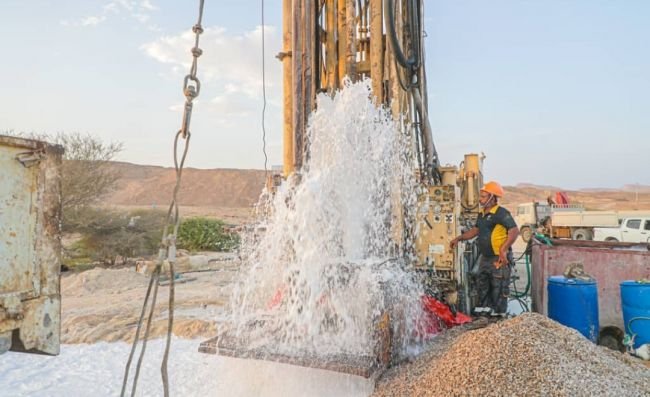
Water crisis expands across Mukalla neighborhoods
During the final days of August 2023, Mukalla saw growing complaints about the weak supply of drinking water to a number of residential neighborhoods, coinciding with rising temperatures and humidity and increased household consumption.
The crisis followed technical malfunctions at several water fields supplying the city, linked to storms and thunderstorms. These disrupted the operation of wells and reduced the volume of water reaching the distribution network.
These developments once again highlighted the vulnerability of the supply system to sudden failures, particularly given that wells rely on electricity and generators to ensure water pumping continues.
Falk Field shut down for more than 13 hours
According to a statement published by the local Water and Sanitation Corporation on August 29, 2023, storms and thunderstorms caused direct damage to Falk Field, one of the fields supplying drinking water to central Mukalla.
The damage halted the field’s operations for more than 13 hours, before technical teams were able to restart it.
However, the field’s return to operation did not resolve all the problems, as faults persisted in the internal electrical networks of some wells due to the effects of the storms, affecting the stability of operations and pumping.
The shutdown of a field of this size is a significant event, given its connection to water supplies for multiple residential neighborhoods. Any disruption to its operation therefore affects the volume of water available in the distribution network.
Thullah Field going out of service compounds the crisis
The damage was not limited to Falk Field; it also extended to the eastern and western sections of Thullah Field. The corporation reported that the field went completely out of service after its generator failed.
The simultaneous technical problems at the two fields increased pressure on the water system at a time when the city was facing high demand for the service.
This incident reveals the direct link between electricity stability and the regular supply of drinking water, as wells cannot produce and pump water when the energy sources needed to operate their pumps fail.
The crisis was thus linked to two concurrent factors: storm damage to technical equipment and the instability of the electricity supply needed to operate the fields.
August 27: Wells resume operation, but crisis persists
The corporation reported that technical teams continued repair work until they managed to restore stable well operations on the evening of Sunday, August 27, 2023.
Nevertheless, the water network did not fully regain stability, as other obstacles persisted, including increased consumption due to hot and humid weather, as well as scheduled electricity outages.
The corporation said that periods without electricity, including a two-hour blackout under the operating schedule, affected the continuity of water flow from the fields to city neighborhoods.
This indicates that repairing the technical faults was a necessary step, but was not enough on its own to restore regular distribution while energy problems and mounting pressure on the network continued.
August 29: Emergency measures announced to operate the fields
As residents’ complaints continued, the Governor of Hadramout at the time, Mabkhout Mubarak bin Madi, tasked Local Council Secretary-General Saleh Aboud al-Amqi with following up with the local Water and Sanitation Corporation and examining the causes of the supply disruptions.
The follow-up included meeting with corporation officials and a number of citizens and listening to the technical problems that had affected the service.
Based on the proposed remedies, the local authority announced the adoption of two main measures:
Operating the water fields using electric generators 24 hours a day, instead of relying on intermittent supply from the public grid.
Providing additional quantities of diesel fuel to operate the corporation’s generators at the water fields and ensure that water pumping continues.
The measures were intended to overcome the effects of power outages on the wells and strengthen the corporation’s ability to restore water supplies to affected neighborhoods.
Organizing water distribution in the city center and east
In a development related to the supply crisis, the local authority in Mukalla City District issued a circular on the drinking water distribution schedule in the city’s central and eastern neighborhoods, setting times for turning the water on and off.
According to coverage published on August 31, 2023, the local authority called on neighborhood heads to monitor compliance with the distribution schedule and report any irregularities, as well as to prevent anyone other than authorized workers from tampering with the network’s control valves.
This measure underscored the importance of organizing distribution amid disparities in water access across residential areas, particularly when pumping volumes fall short of actual needs.
However, the announcement of a distribution schedule does not necessarily establish that the supply crisis has ended or that water is reaching all homes regularly.
Crisis reveals water system’s limited emergency preparedness
The August 2023 crisis showed that Mukalla’s drinking water system was vulnerable to the simultaneous effects of weather, electricity and technical factors.
Damage to wells and their electrical equipment temporarily halted production, while power outages and increased consumption contributed to the slow restoration of service.
The emergency measures also revealed the need to strengthen backup energy sources and protect the fields’ electrical equipment, as well as to establish operating arrangements that ensure pumping continues when faults occur.
The published information did not include precise statistics on the number of affected homes or the total volume of water that could not be pumped during the crisis.
Impact on the course of the water crisis in Hadramout
This event represents a key milestone in the water crisis in the Hadramout coast, as it revealed that several major supply sources were affected within a short period, rather than a single, limited fault in one distribution line.
It also showed that providing water to citizens depends on institutions’ ability to operate wells continuously and secure electricity, fuel, maintenance work and a rapid response to emergencies.
Although the local authority announced urgent remedial measures, the available sources do not provide sufficient follow-up data to determine when service returned to normal levels in all neighborhoods or to measure the actual improvement resulting from operating generators around the clock.
Water supply stability therefore remained dependent on overcoming operational problems and developing infrastructure, rather than simply repairing temporary faults.