
Export of the First Shipment of Masila Oil in 1993 Marks the Start of Commercial Production in Hadramout
Hadramout witnessed a major economic milestone on August 5, 1993, with the export of the first shipment of crude oil produced in Masila Block No. (14) through the Al-Shihr oil terminal on the Arabian Sea coast, nearly two years after the commercial viability of the Suna, Hajiya and Kamal fields was announced. The event marked the actual transition from exploration and field development to production and export, following the construction of crude oil processing facilities, a pipeline and a marine loading terminal. Hadramout thus entered a new phase as a major center of Yemen’s oil industry.
From Field Discoveries to the Start of Oil Flow
After the commercial viability of the Masila fields was announced in December 1991, Canadian Oxy, the operator of Block No. (14), began implementing a program to develop the fields and connect them to an integrated production and export system.
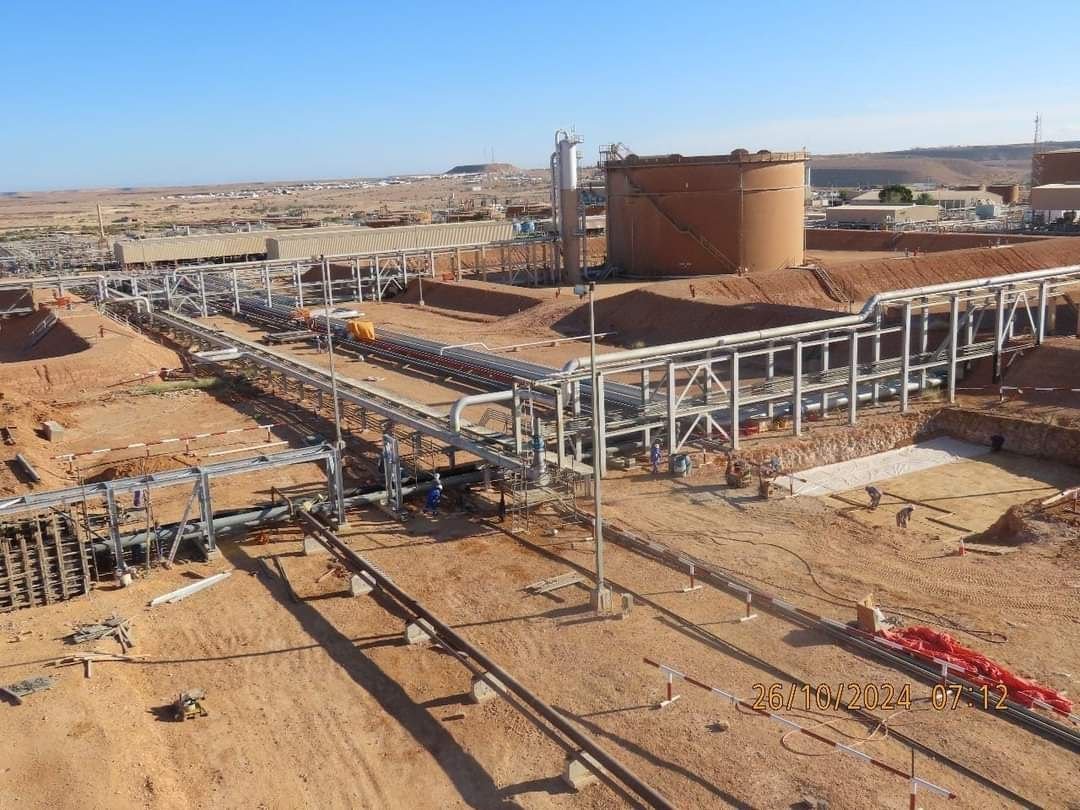
The work included preparing the Suna, Hajiya and Kamal fields, building processing and gathering facilities, and laying a pipeline across desert and mountainous terrain to the coast.
The specialized publication Middle East Economic Survey, in its issue dated August 2, 1993, reported that oil began flowing from the Masila Block on July 1, 1993, at an initial rate of about 40,000 barrels per day, before production was gradually expanded.
Construction of the Masila–Al-Shihr Pipeline
Building the pipeline was one of the project’s biggest technical challenges, given the distance between the fields and the coast and the nature of the terrain.
In May 1992, specialized reports said that Consolidated Contractors Company (CCC) had been awarded a contract worth approximately $157 million to build an oil export pipeline from the Masila fields toward the Arabian Sea coast.
According to the Yemeni Oil Exploration and Production Authority, the pipeline was completed in 1993. It was about 138 kilometers long, 24 inches in diameter, and had a maximum design capacity of about 325,000 barrels per day.
The project enabled crude oil to be transported from the processing facilities in Masila to the Al-Shihr oil terminal, also known as Al-Dhabba Port, for loading onto tankers.
The First Shipment to Overseas Markets
The Yemeni Oil Exploration and Production Authority confirms that the first shipment of Masila crude was exported through the Al-Shihr terminal on August 5, 1993, the date adopted for this event in the timeline of this file.
The authority documents that the Al-Shihr terminal was built to receive crude transported through the Masila pipeline, store it and load it onto oil tankers.
There is an important historical note: in September 2003, the Yemen Times published a report on the tenth anniversary of the export, stating that the first loading operation onto a tanker named “British Spirit,” carrying 555,000 barrels, took place on September 23, 1993. The report does not clearly explain the reason for the difference between this date and the date in the authority’s records.
We therefore adopt August 5 as the date of the first export, in accordance with the official authority, while retaining the September account in the historical documents, without conflating the two events or asserting that they were the same shipment.
Production Growth and the Terminal’s Transformation into a Strategic Outlet
The importance of Al-Shihr Port was not limited to exporting production from Block No. (14); it later became part of a wider network for transporting crude from neighboring oil blocks.
The Yemeni Oil Exploration and Production Authority says the main Masila pipeline was used to transport oil from Blocks (10, 32, 43, 51 and 53), reinforcing the importance of the Al-Shihr terminal within Yemen’s oil infrastructure.
Production in the Masila Block also expanded gradually, with additional fields developed, until it reached its historic peak of about 233,000 barrels per day in 2003, according to the authority’s data.
This figure, achieved after a decade of development, should be distinguished from the initial production level when the project began operations in 1993.
Economic and Historical Impact
The export of the first Masila shipment marked the start of a new oil resource flowing to global markets and increased Hadramout’s importance on Yemen’s oil production map.
The project also contributed to the development of specialized infrastructure, including pipelines, processing plants, storage tanks and loading facilities, and paved the way for the expansion of oil investment in the following years.
Al-Dhabba Port later became one of the most important strategic facilities linked to state revenues, a significance that became clear when export operations were suspended during periods of conflict.
The historical importance of the August 5, 1993 event lies in its transformation of Masila oil from an emerging exploration and production project into an actual export resource, establishing a phase whose economic and security effects lasted for decades.